




Gilt Floral Wall Mirror
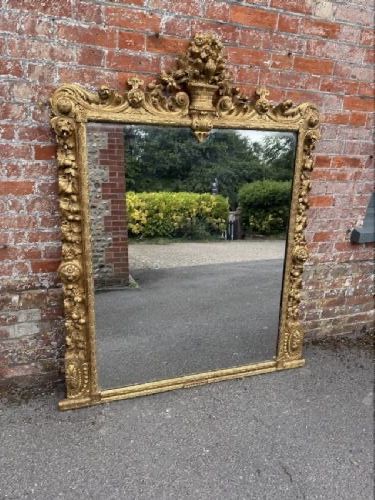
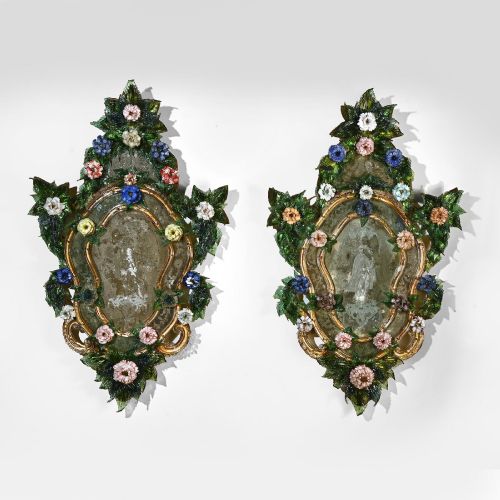
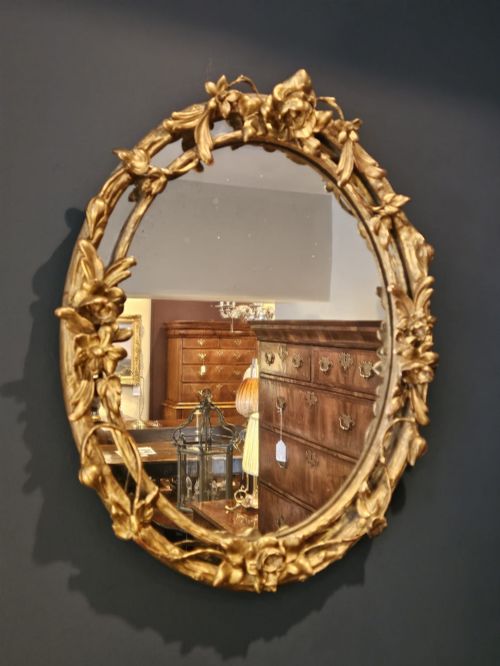
A gilt floral wall mirror brings organic warmth and reflected light to a room through carved foliage and gleaming leaf surfaces.
Gilt Floral Wall Mirror
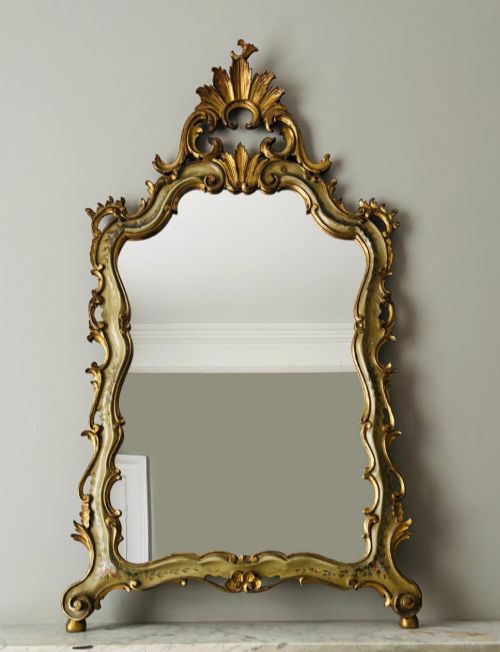
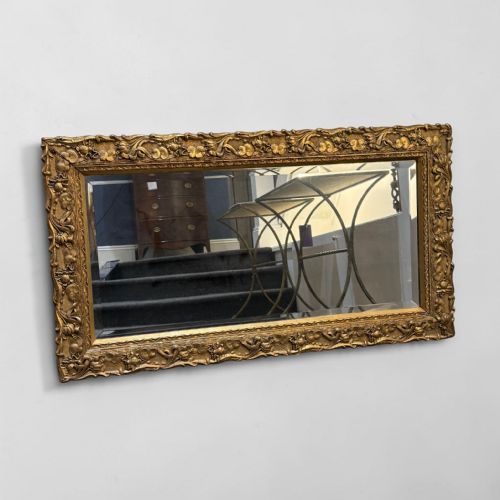
A gilt floral wall mirror unites botanical motifs with reflective glass, creating a decorative centrepiece designed to hang upon a wall. The phrase encompasses pieces ranging from compact boudoir glasses to substantial architectural overmantels.
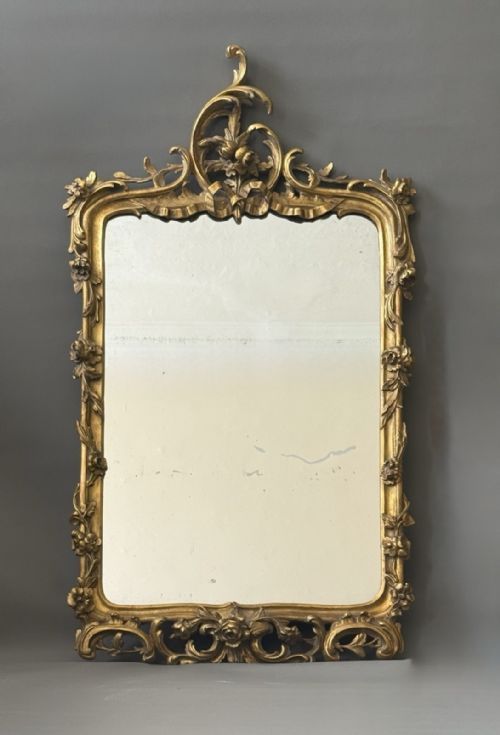
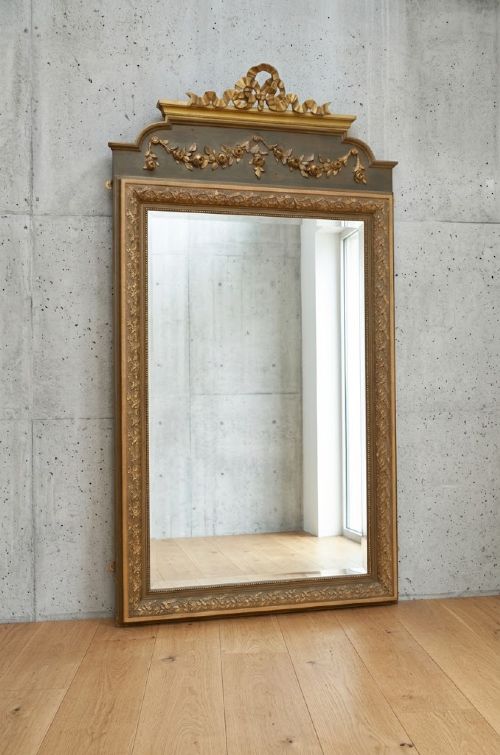
Examples span several centuries and design traditions, drawing heavily on French Rococo, Victorian, and Edwardian aesthetic movements. Buyers encounter everything from carved wooden frames adorned with roses and vines to moulded gesso creations featuring delicate ribbon crests and floral scrolls.
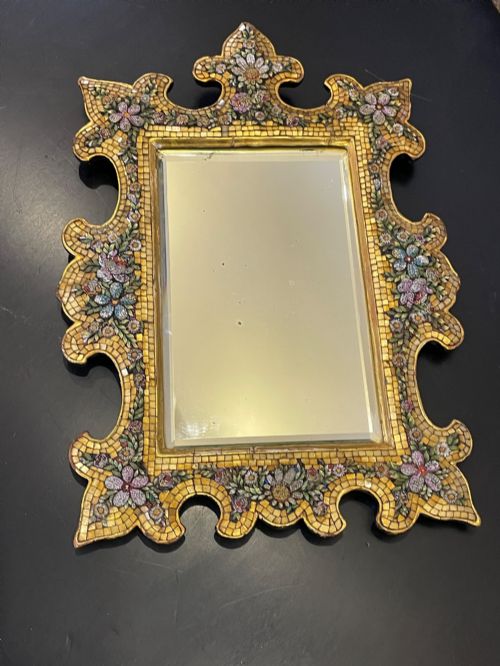
Origins stretch across England, France, and Italy, reflecting distinct regional tastes in ornamentation. Italian pieces often incorporate hand-painted details and micro mosaic work, whilst French workshops lean towards elaborate mythological and floral carvings.
What varies in quality
The depth and crispness of the carving separate the finer pieces from simpler production. Hand-carved wooden elements show distinct chisel work and naturalistic movement in the foliage, whereas massed gesso can appear uniform or brittle.
The integration of the plate glass within the frame marks another distinction. Original antique mirror plates display characteristic silvering oxidation and subtle distortion, contrasting with modern replacements fitted into period frames.
Several mirrors feature lilies of the valley and rose vines carved so deeply they appear ready to climb down the wall.
The Gilt Floral Wall Mirror Glossary
- Giltwood
- Wood that has been coated with gold leaf or gold paint. This technique provides the bright, metallic lustre characteristic of traditional frames.
- Gesso
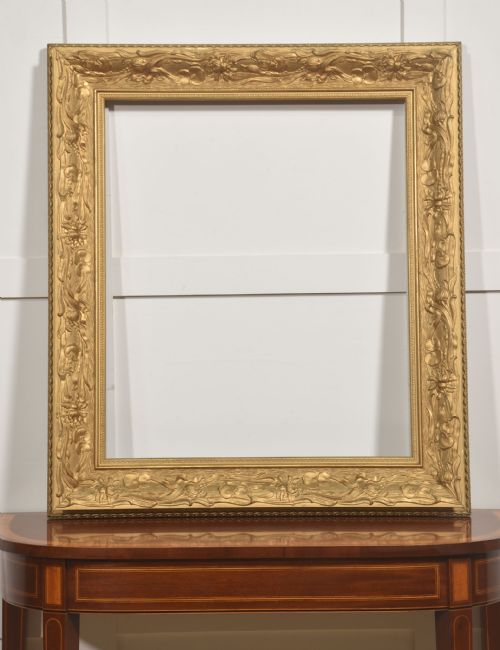
- A plaster-like mixture applied to wood frames to create a smooth surface for carving and gilding. It allows for the formation of sharp floral reliefs.
- Overmantel
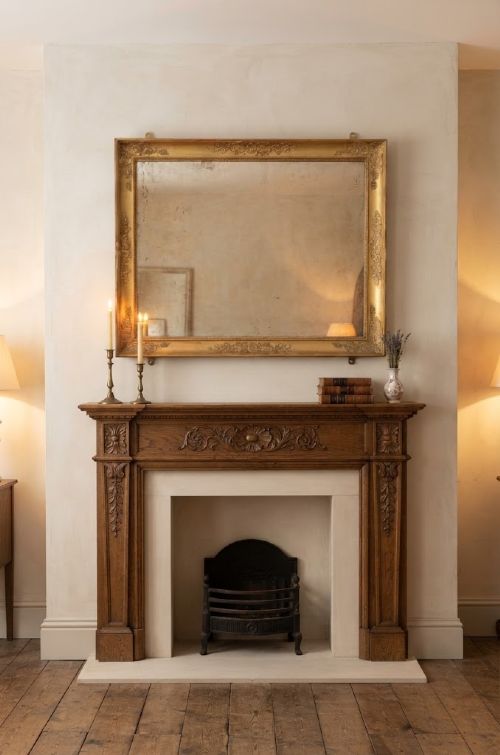
- A large mirror designed to hang specifically above a fireplace mantelpiece. These pieces often feature extended horizontal proportions and substantial floral crestings.
- Trumeau
- A decorative wall mirror incorporating a painted or carved panel above the glass. French examples frequently deploy this format within panelled rooms.
- Barbola
- A trade name for a type of ornamental work using a gesso paste to build up high-relief flowers on frames. Pieces finished in this style display tactile, three-dimensional blooms.
- Pier glass
- A tall, narrow mirror designed to hang on the wall space between two windows. They maximise available daylight in period interiors.
Gilt Floral Wall Mirror: Frequently Asked Questions
Are original mirror plates common in antique frames?
Many period pieces retain their original mercury or silvered glass, which develops characteristic dark spots and soft foxing over decades. These imperfections confirm age and authenticity.
Some mirrors have received new glass replacements over their lifetime to improve reflection clarity whilst preserving the historic frame.
How should I clean a gilt floral wall mirror?
Dust the carved foliage gently with a soft, dry brush to prevent dirt settling into the recesses of the gesso. Avoid modern chemical sprays that can strip historic gilding.
Clean the glass plate sparingly using a cloth slightly dampened with water, taking care not to let moisture touch the vulnerable wooden edges.
How do I distinguish Victorian floral mirrors from 18th century originals?
Eighteenth century pieces typically exhibit the asymmetrical curves and fluid naturalism of the Rococo movement, executed with deep hand-carved joinery. Victorian interpretations often lean towards denser, heavier symmetrical compositions with robust plaster ornamentation.
Examining the backboards, fixings, and construction joints helps reveal the manufacturing era and regional workshop traditions.