

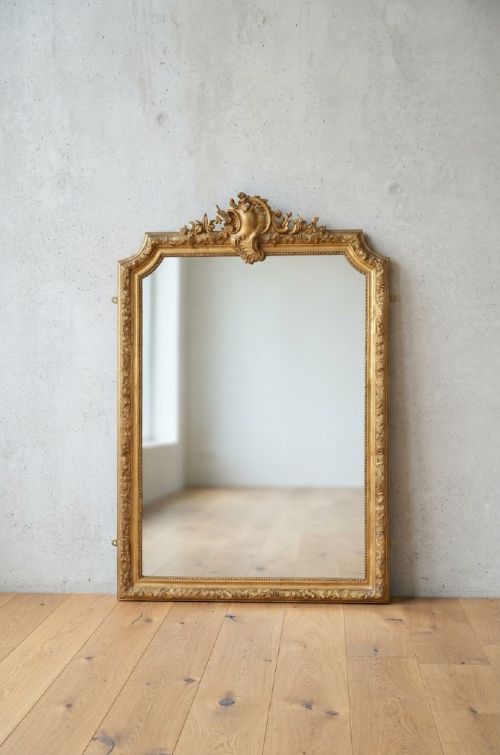
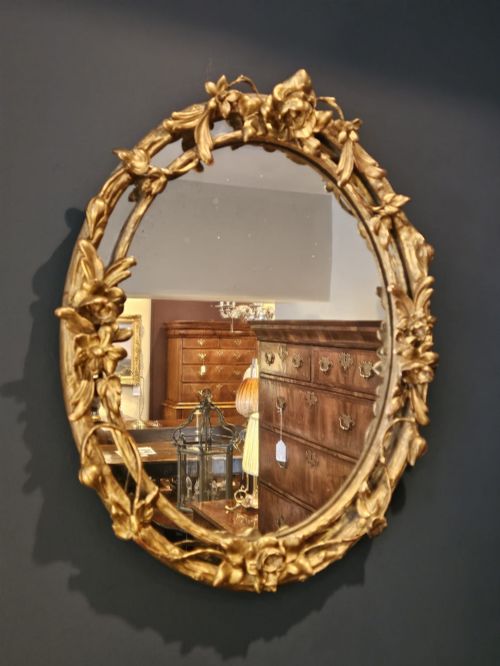
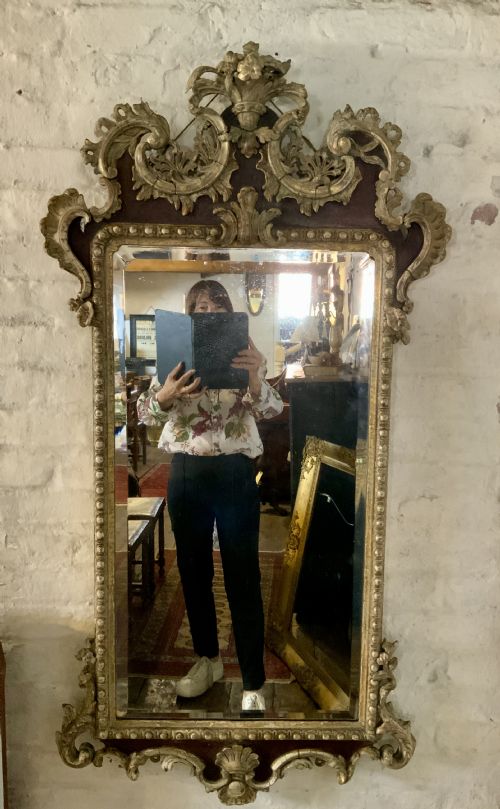
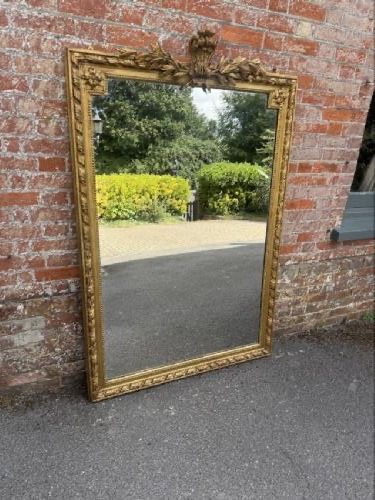
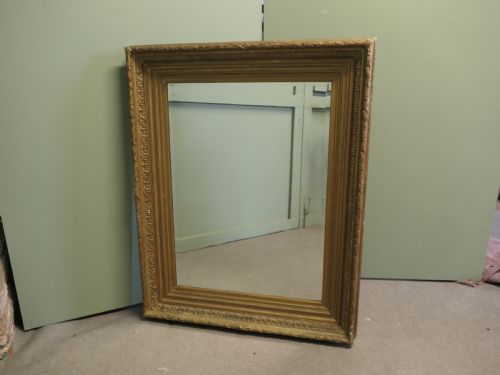
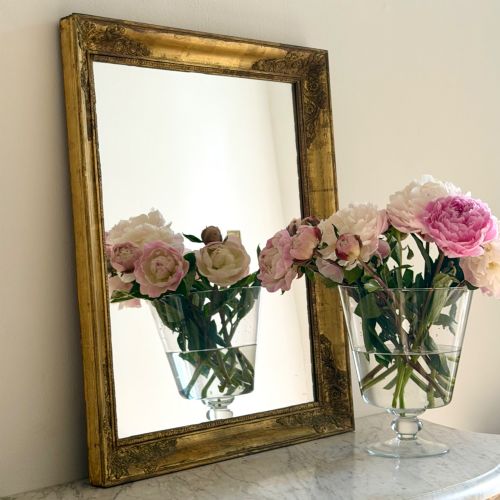
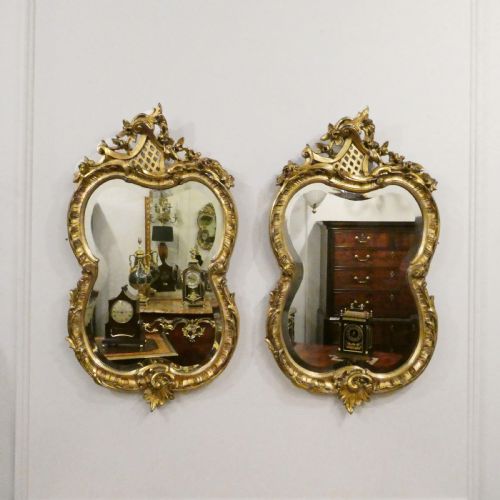
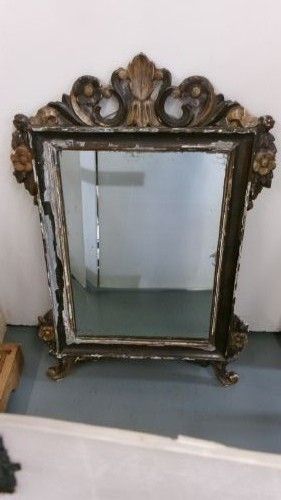


Giltwood Accent Mirror
A giltwood accent mirror brings bright reflection and layered historic style into a room through carved and gilded frames.
Giltwood Accent Mirror
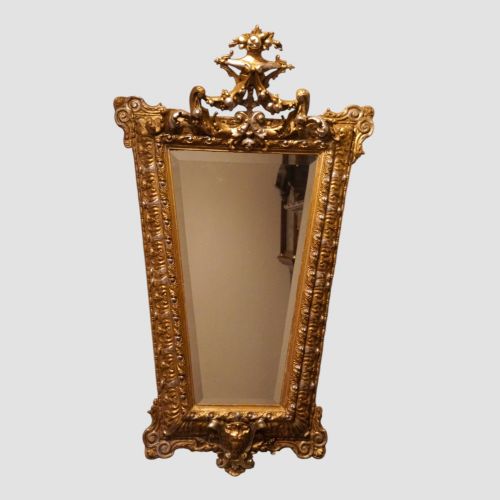
A giltwood accent mirror is a decorative looking glass framed in wood treated with gold leaf, gesso, or gilt finishes. These pieces function as wall-hanging focal points, overmantels, or pier mirrors designed to bounce light and add depth to interior spaces.
The selections available here span from the 18th century through the early 20th century, encompassing Georgian, Victorian, and Edwardian eras. Buyers frequently encounter 19th-century French and Italian examples, alongside English wall mirrors reflecting revivalist tastes.
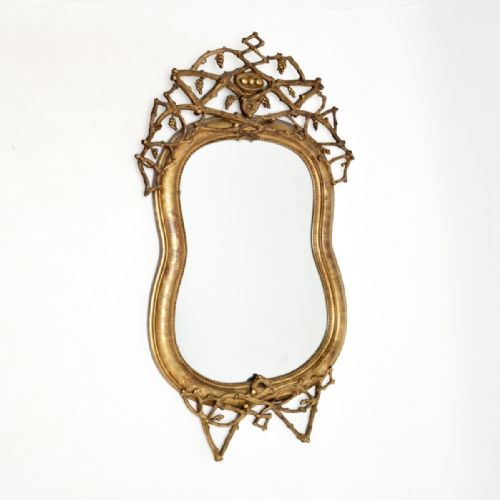
Forms range from small convex mirrors and cartouche shapes to large arched overmantels and ornate rectangular frames. Stylistic details draw heavily from Rococo, Baroque, and Adam design vocabularies executed in carved wood and gesso.
How they were made
Frames rely on carved wood foundations or moulded timber substrates built up with layers of gesso to create crisp relief ornament. Artisans applied gold leaf or metallic gilt finishes over these prepared surfaces to achieve a luminous golden sheen.
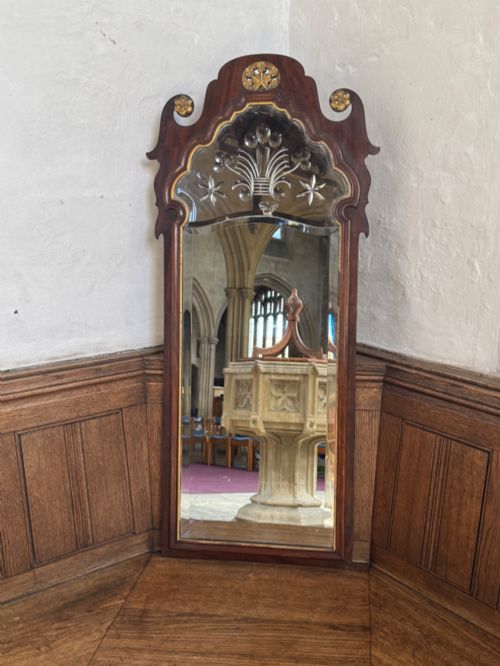
Mirrored glass plates in these historic pieces often feature bevelled edges or reverse-cut details set securely within the timber structures. Joinery methods and construction techniques align with the specific period of manufacture, from Georgian hand-carved elements to Victorian moulded gesso frames.
Listings feature 18th-century, Georgian, and 19th-century Victorian periods alongside early 20th-century revival designs.
What varies in quality
The crispness and depth of the hand-carving separate standard production pieces from finer masterwork frames. Pierced scrollwork, deep undercut foliage, and sharply defined gesso ornamentation indicate superior craftsmanship by skilled carvers.
Originality of surface finish and mirror plate preservation dictate the standing of an individual glass. Intact historical gilding with honest patination holds greater integrity than later repainted or heavily restored surfaces.
John Belchier
The Giltwood Accent Mirror Glossary
- Giltwood
- Timber coated with gold leaf or metallic powder applied over a prepared ground. This technique creates a rich decorative surface that catches ambient light.
- Gesso
- A plaster-like mixture applied to wood frames and carved or moulded into relief details before gilding. It provides a smooth base for gold leaf application.
- Overmantel mirror
- A large horizontal looking glass designed specifically to hang above a fireplace mantelpiece. These pieces often feature arched tops or elaborate decorative crestings.
- Pier glass
- A tall, narrow mirror traditionally hung on the solid section of wall between two windows. They frequently paired with narrow console tables positioned underneath.
- Convex mirror
- A round looking glass with a curved outward-bulging plate that offers a wide-angle reflection of the room. These often incorporate spherical frame details and eagle crests.
Giltwood Accent Mirror: Frequently Asked Questions
Where should I hang a giltwood accent mirror?
These mirrors suit placement above mantelpieces, in hallways, or positioned between windows to amplify natural light.
Selecting a wall location with adequate clearance lets the ornate carved frame stand out as a primary decorative focal point.
How do I identify a Victorian gilt mirror?
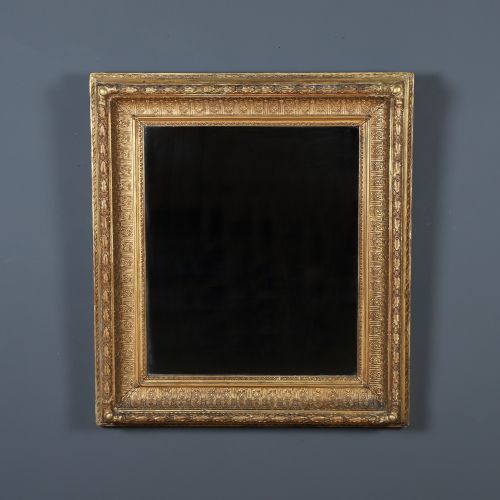
Victorian examples often feature heavier gesso ornamentation, deep moulding profiles, and distinct revival styles like Rococo or Adam.
Examining the construction behind the frame and the backing boards helps confirm the 19th-century manufacturing period.
What is the difference between giltwood and gesso?
Giltwood refers to the underlying timber finished with gold leaf, whereas gesso is the plaster mixture sculpted to form raised decorative motifs.
Frames typically combine both materials, using gesso for intricate scrollwork and relief details underneath the gold leaf layer.
Are convex mirrors original to the Regency period?
Convex mirrors gained immense popularity during the Regency and early 19th-century eras for their unique wide-angle optical reflection.
These round looking glasses frequently incorporate ball-studded frames and convex glass plates set into timber housings.