


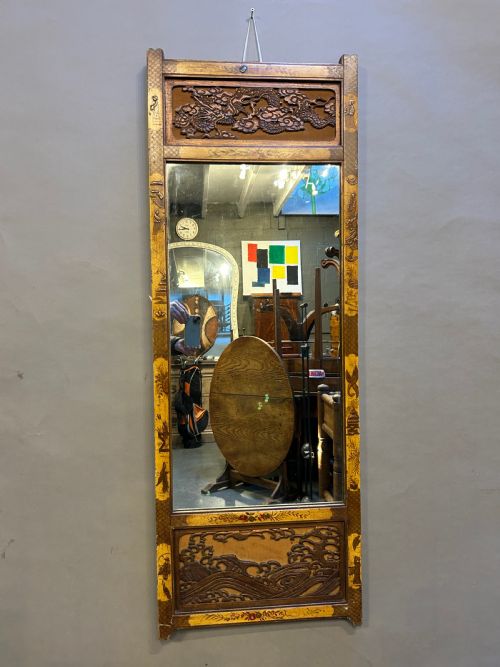


Gilded Timber Mirror
A gilded timber mirror brings warmth and reflective depth to a room through carved wood and gold leaf.
Gilded Timber Mirror
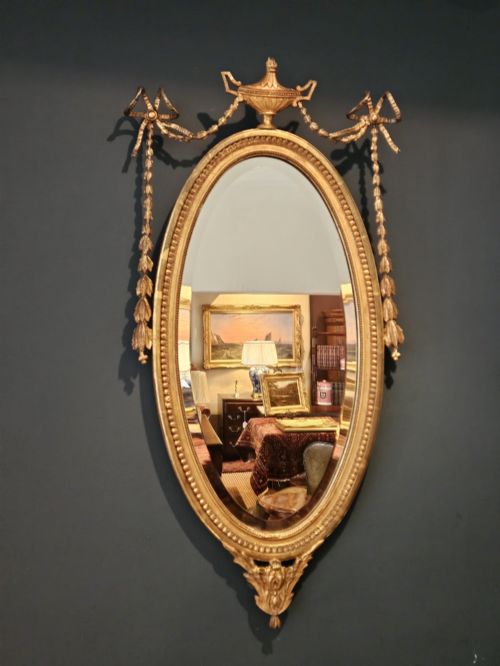
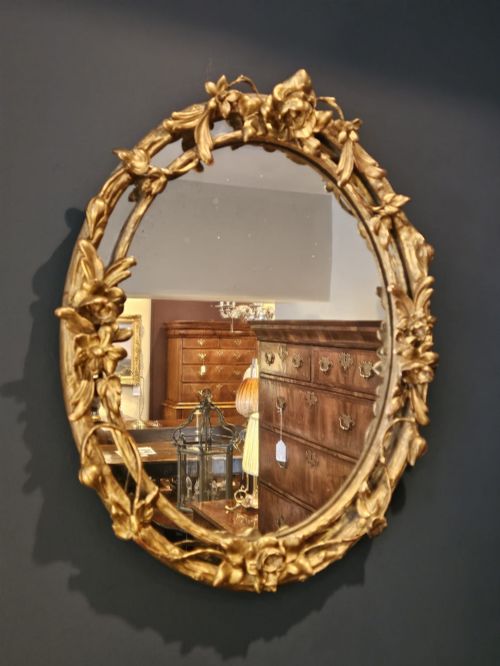
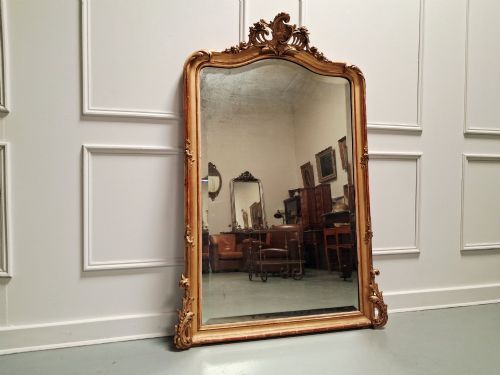
A gilded timber mirror is a decorative looking glass framed in wood treated with gold leaf or gilt. These pieces range from compact wall mirrors to large overmantel mirrors designed to sit above a fireplace. The selection spans styles such as Victorian, Rococo Revival, Georgian, and Chinoiserie.
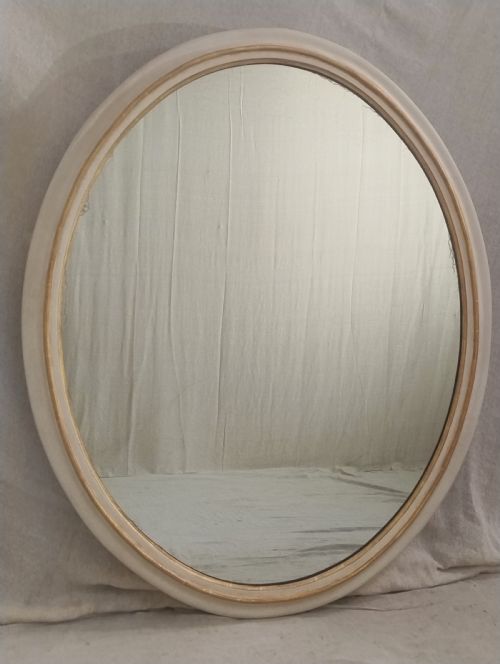
Buyers encounter various forms on this page, including oval mirrors, rectangular wall mirrors, and large decorative overmantels. Materials commonly recorded include timber, wood, and mahogany finished with gesso and gold leaf.
Origins represented in the current selection include French and British pieces spanning the eighteenth, nineteenth, and early twentieth centuries. Pieces often display carved wood details, floral motifs, or parcel gilt accents on walnut and mahogany.
Materials and Construction
Frames are constructed from timber, wood, walnut, or mahogany, providing a sturdy structural foundation for the looking glass. Skilled artisans shape these woods through hand carving to create intricate decorative profiles.
Surfaces are prepared with gesso before the application of gold leaf or gilt. This traditional preparation creates a smooth ground that accepts the fine layers of metal leaf used to achieve a brilliant reflective finish.
Materials documented across the selection include mahogany, walnut, gesso, glass, and gold leaf.
Assessing Quality
The finesse of the hand carving distinguishes standard frames from exceptional examples. Crisp detailing in floral motifs, acanthus leaves, or rococo scrolls indicates skilled craftsmanship during the period of manufacture.
The application and preservation of the gold leaf or gesso foundation also define the character of a piece. Original gilding that retains its depth and texture holds greater distinction than later surface renewals.
The Gilded Timber Mirror Glossary
- Giltwood
- Wood that has been coated with gold leaf or a gold-coloured finish. This material forms the primary visual appeal of these decorative frames.
- Gesso
- A plaster-like mixture applied to timber frames to create a smooth surface for gilding. It allows carvers to achieve sharp details before applying gold leaf.
- Overmantel
- A large mirror specifically designed to hang above a mantelpiece. These substantial pieces often dominate the wall space in a reception room.
- Parcel Gilt
- A finishing technique where only specific parts of an object are gilded while other areas reveal the natural wood. This method highlights carved details against a contrasting timber background.
Gilded Timber Mirror: Frequently Asked Questions
Where should I hang a gilded timber mirror?
These mirrors suit principal reception rooms, hallways, and bedrooms where they can capture and reflect natural light. Large overmantel formats naturally anchor the space above a fireplace.
Smaller wall-mounted examples work effectively above sideboards or console tables to create a balanced focal point in a room.
How do I identify the period of a mirror?
Dating relies on stylistic clues such as carving techniques, framing profiles, and underlying woods like mahogany or walnut. Victorian and Georgian designs often exhibit distinct decorative vocabularies associated with their respective eras.
Examining the construction of the timber backing and the characteristics of the glass provides further context for the age of the piece.
Are these mirrors heavy?
Substantial frames constructed from solid timber, gesso, and glass carry considerable weight. Large formats, particularly overmantels, require secure wall fixings and appropriate anchor points to support the load safely.
Professional installation is recommended for larger examples to ensure the weight distributes evenly against the wall.
Can these mirrors be cleaned safely?
Maintenance requires gentle dusting with a soft, dry cloth to protect the delicate gold leaf and gesso surfaces. Moisture should be kept away from the gilt frame to prevent lifting or damage.
Glass cleaner can be applied sparingly to the mirror plate itself, taking care to spray the cloth rather than the glass to avoid running onto the timber frame.