
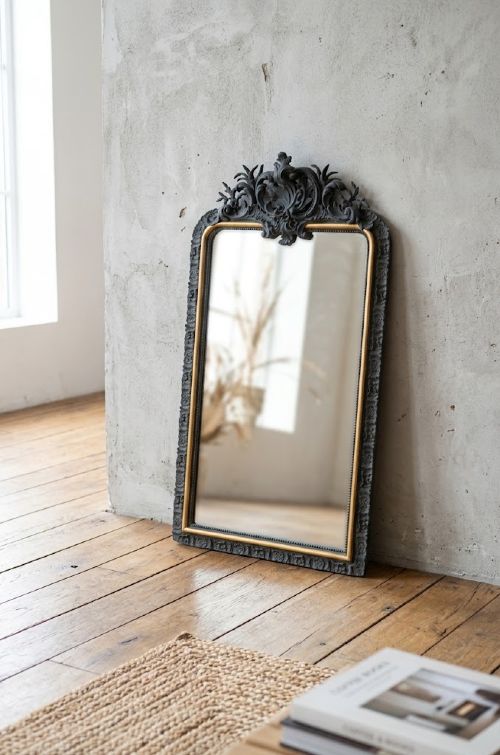
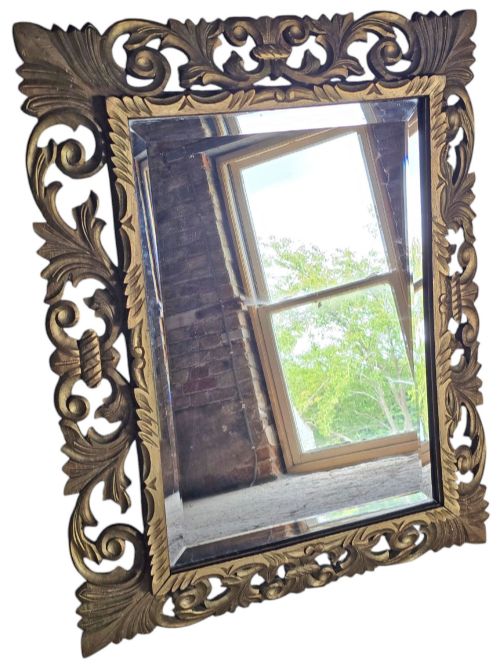

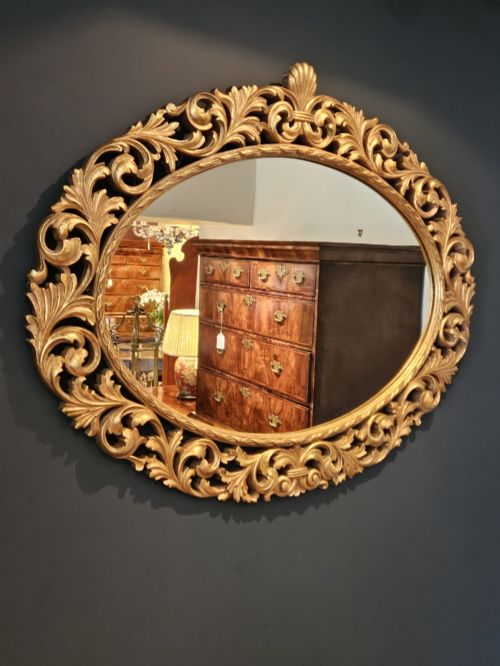
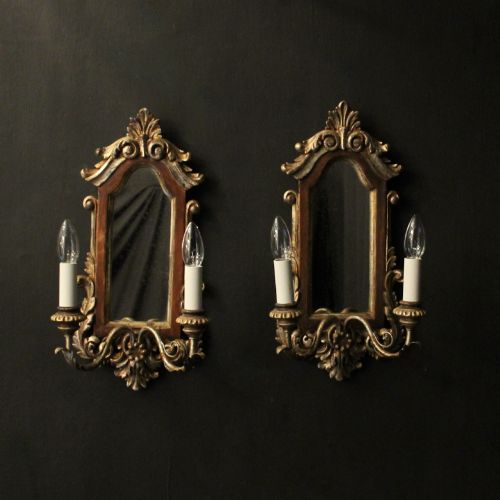
Decorative Gold Wall Mirror
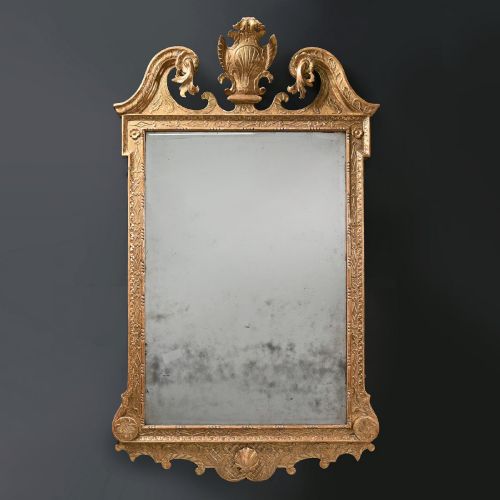
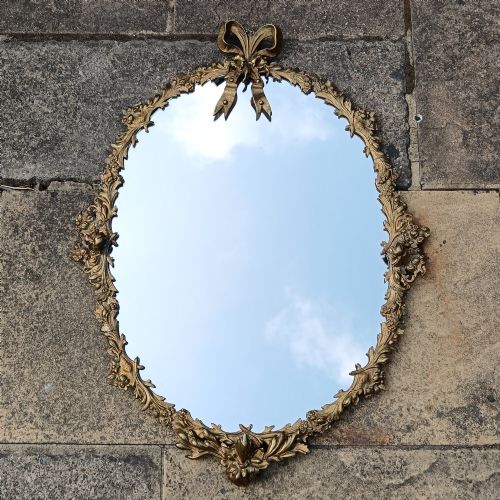
A decorative gold wall mirror brings immediate light and a sense of historic opulence to a room.
Decorative Gold Wall Mirror
When you search for a decorative gold wall mirror, you encounter pieces spanning from the eighteenth century through the Victorian era and into the early twentieth century.
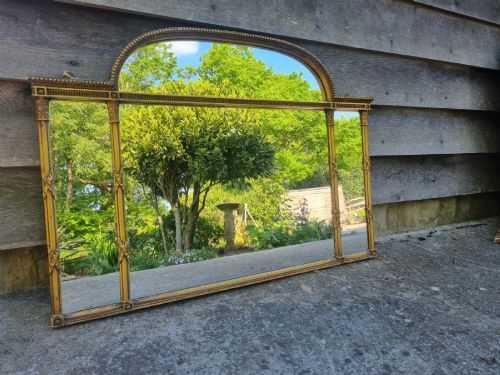
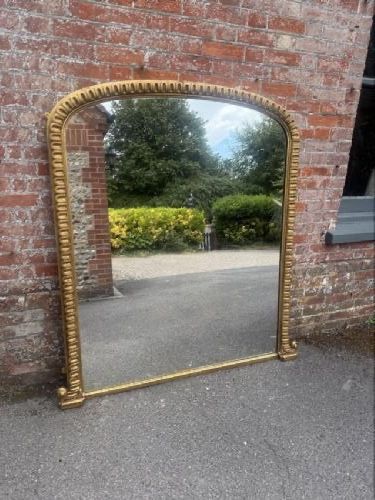
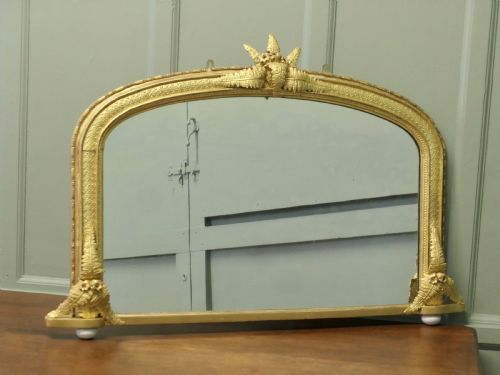
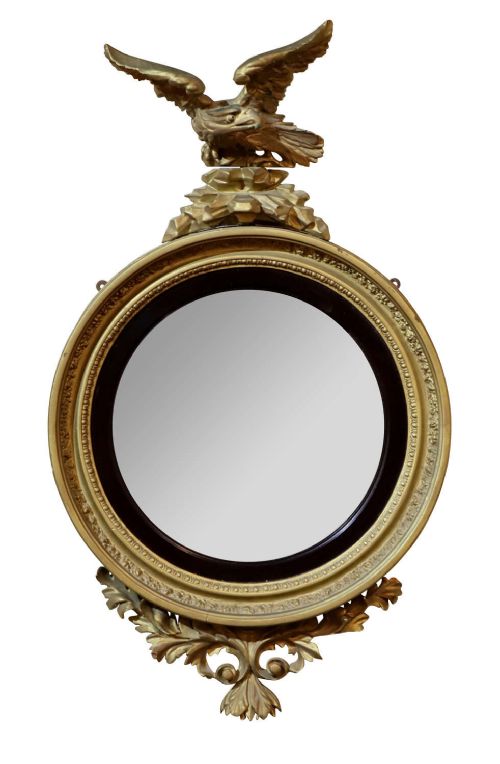
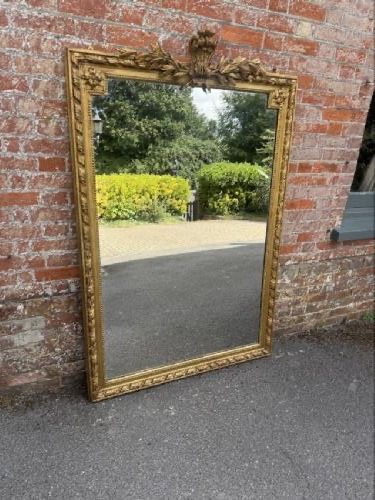
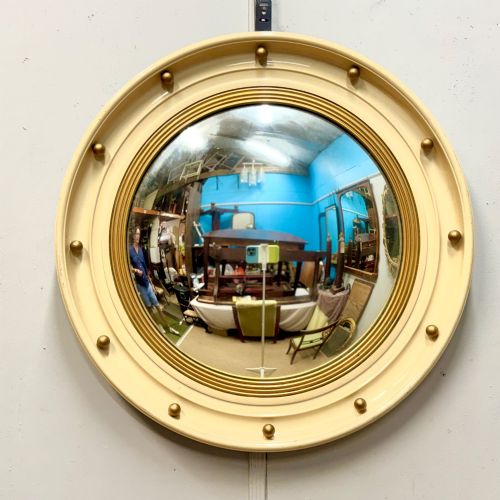
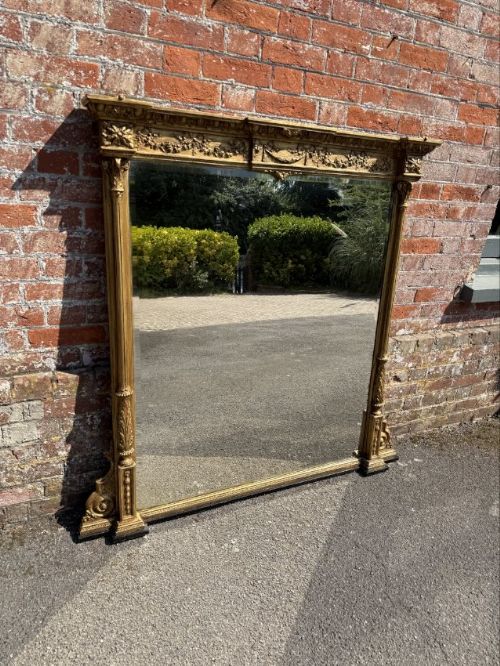
The selection on this page relies heavily on nineteenth-century examples, including grand overmantle mirrors designed for drawing rooms and smaller convex porthole or girandole styles.
Origin points range widely, taking in English Regency designs, French chateau pieces, and ornate Italian Florentine carvings.
Materials and Technique
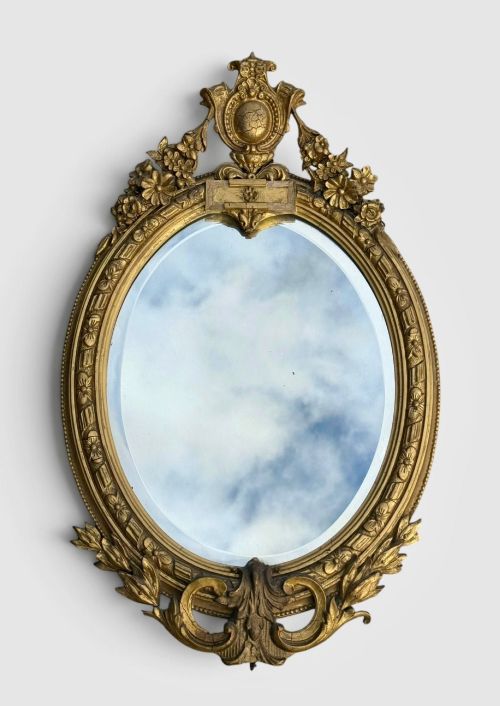
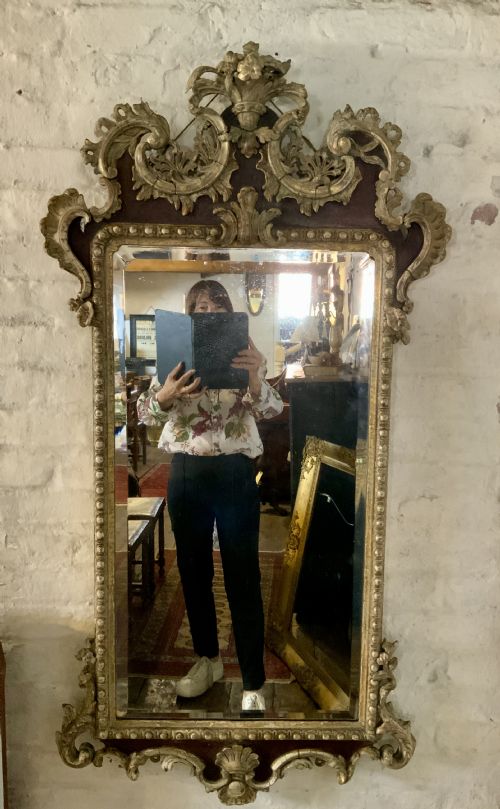
Carved timber, gesso, and wood form the structural foundation for many of these frames, providing a stable base for intricate ornamentation.
Giltwood and gold leaf application sits alongside painted surfaces and ebonised wood details to create the characteristic metallic lustre.
Glass plates vary from flat wall mirror sections to convex round plates, occasionally accompanied by engraved motifs or light foxing.
Materials documented across the pieces include natural wood, ebonised timber, carved gesso, and reflective glass.
Judging Quality
The depth and crispness of carved wooden and gesso ornament separate ambitious studio pieces from simpler production frames.
Proportion and the handling of gilding dictate how light reflects across the room and how harmoniously the frame sits against a wall.
The Decorative Gold Wall Mirror Glossary
- Giltwood
- Wood that has been coated with gold leaf or gold paint. This technique provides a luminous metallic finish characteristic of period frames.
- Gesso
- A plaster-like mixture applied to wood bases and carved before gilding. It allows for crisp relief details and elaborate scrollwork.
- Overmantle
- A large mirror specifically designed to hang above a fireplace mantel. These pieces often feature wide proportions and arched tops.
- Convex
- A rounded, bulging glass plate that gives a wide-angle reflection of the interior. These are frequently housed within circular frames.
- Girandole
- A decorative mirror equipped with attached candle sconces. The candle light reflects off the glass and gilding to brighten the space.
Decorative Gold Wall Mirror: Frequently Asked Questions
Where should I hang an overmantle mirror?
These large mirrors traditionally sit directly above a fireplace mantel to anchor the room and bounce natural light around the space.
They also function effectively on main living room walls where their grand scale can be appreciated fully.
How do I identify a Regency convex mirror?
Regency convex examples feature rounded, bulbous glass plates often accompanied by distinct decorative elements like eagle surmounts or candle arms.
Their circular frames provide a panoramic reflection of the surrounding interior.
What is parcel gilding?
Parcel gilding involves applying gold leaf to only specific carved portions of a wooden frame rather than the entire surface.
This technique highlights particular details against contrasting woods like ebonised finishes or walnut.
How do I care for antique gilt surfaces?
Historic giltwood and gesso require gentle dusting with a dry, soft cloth to protect the delicate gold leaf layers.
Avoid liquid cleaners and moisture entirely, as water can damage the underlying gesso and wood structure.