
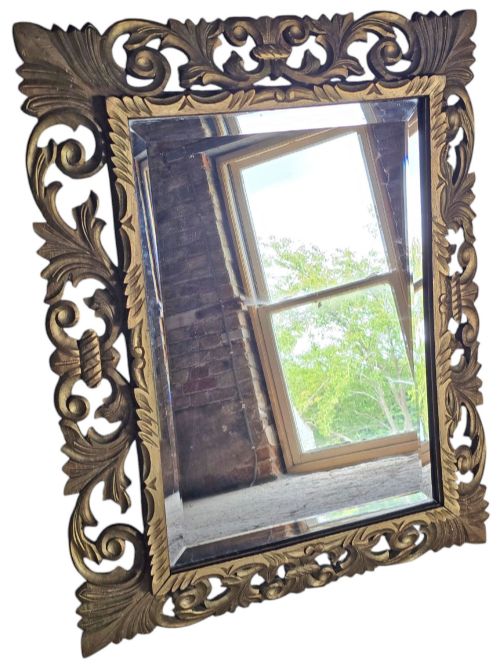
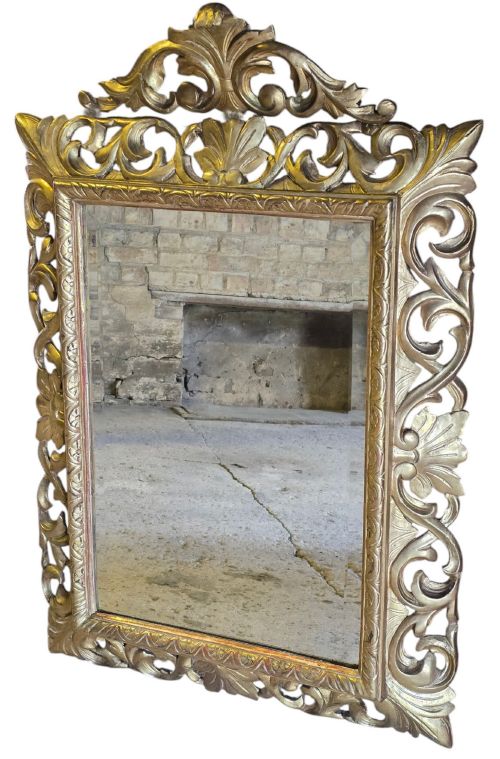
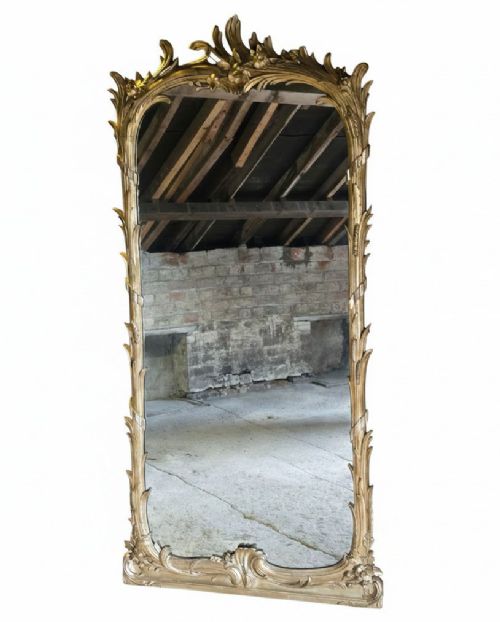
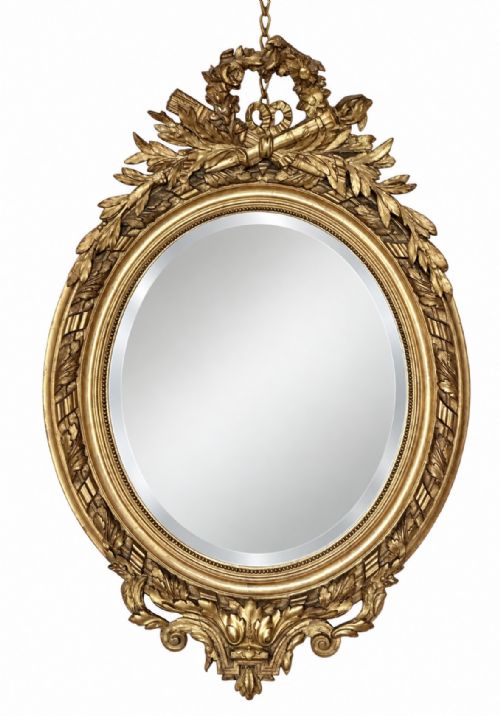


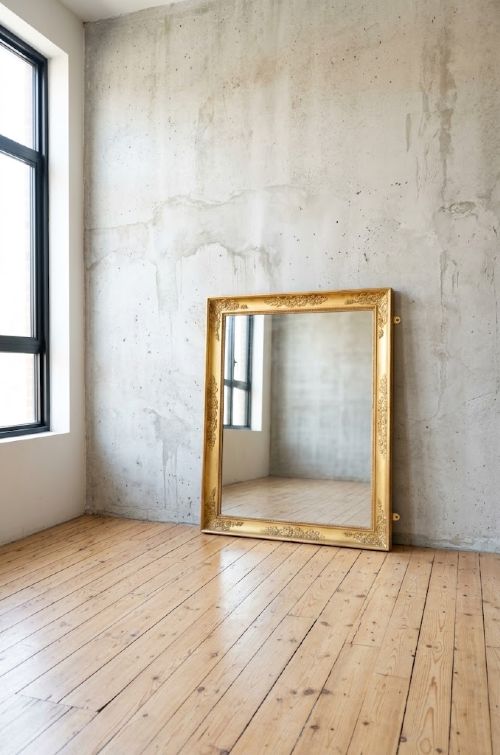
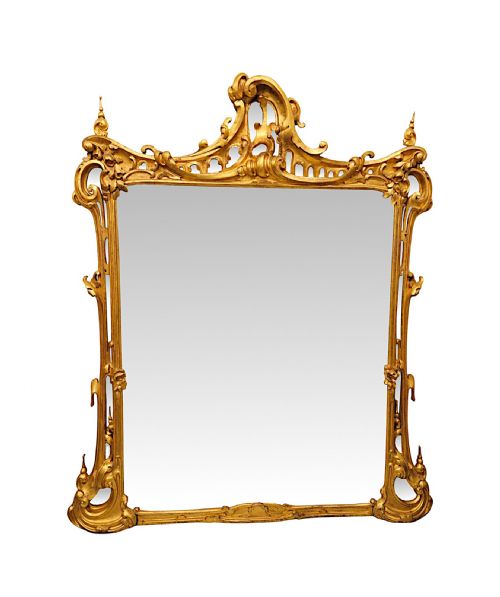
Carved Giltwood Overmantel
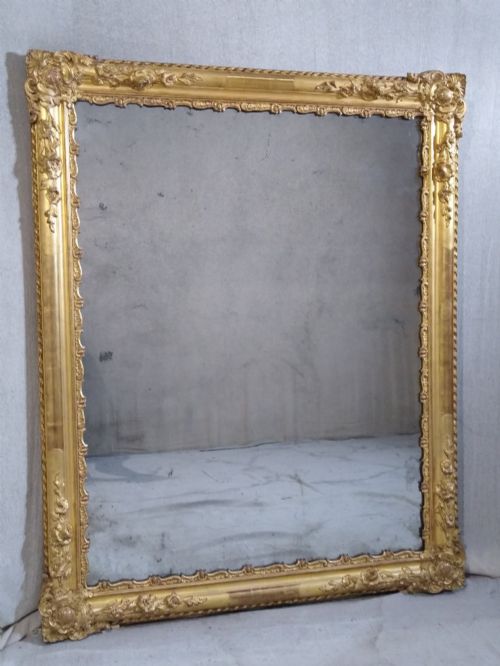
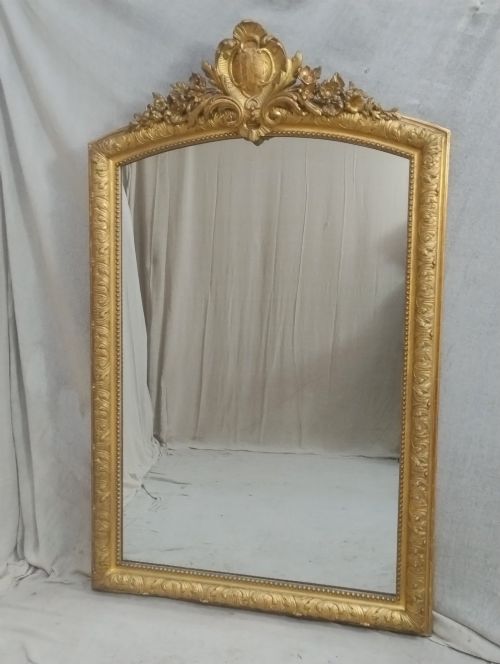
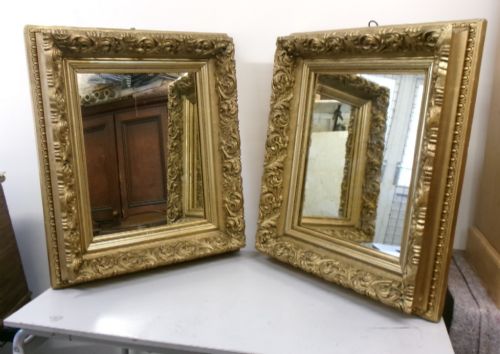
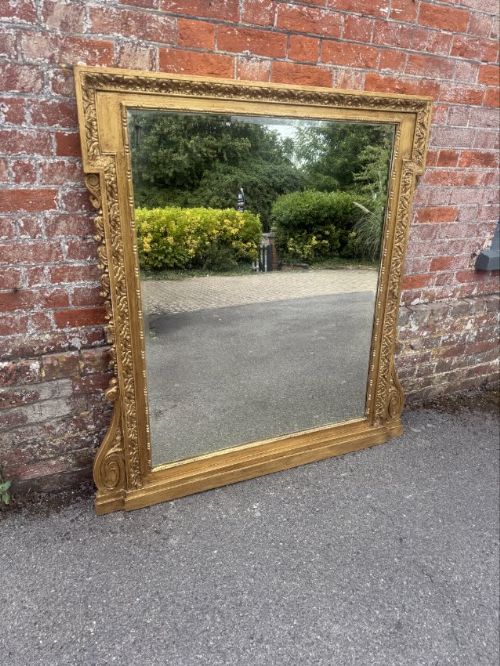
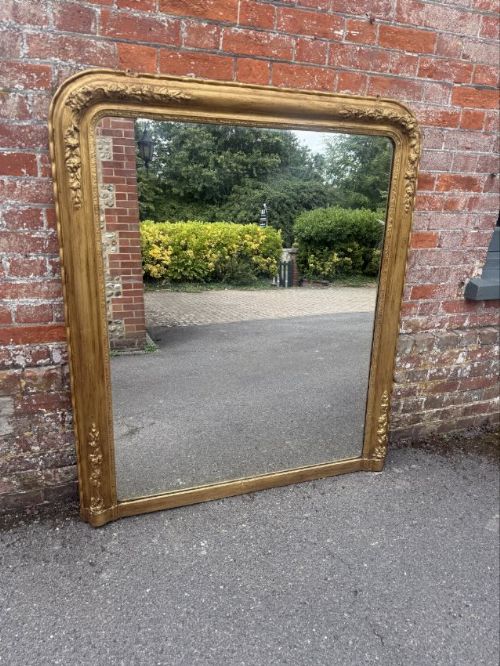
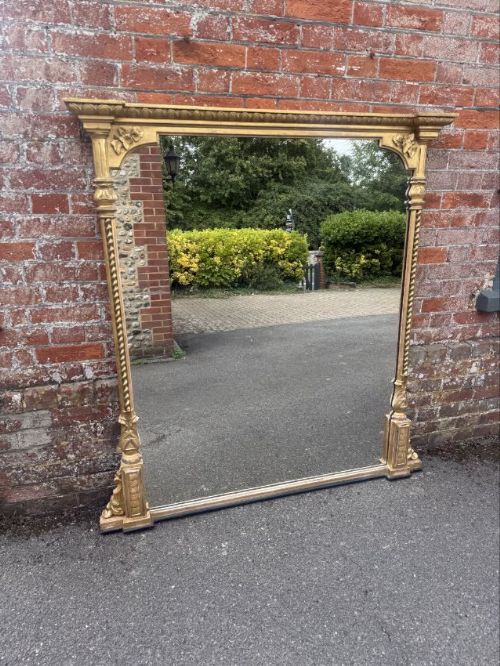
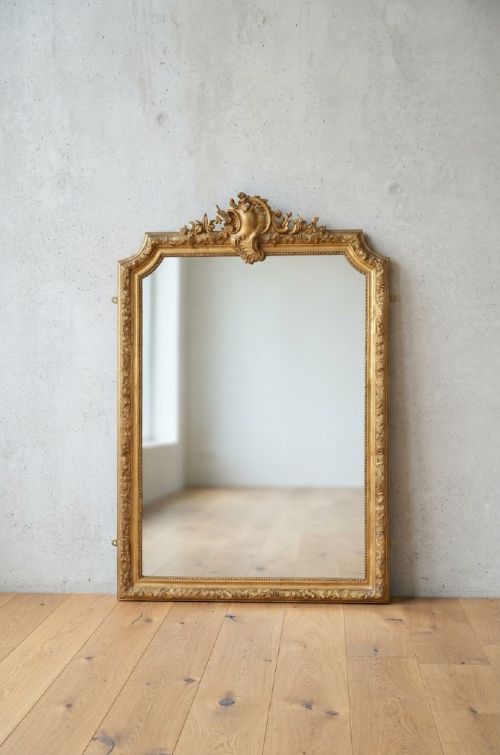
A carved giltwood overmantel sits above the fireplace, bringing scale and golden light to a room through heavy wooden frames and broad plates of glass.
The Overmantel Mirror
A carved giltwood overmantel brings together the grand proportions of the nineteenth century and the traditional placement above a domestic fireplace. These large wall mirrors are designed specifically to command the chimney breast, reflecting both natural light and the room itself. You will most frequently meet nineteenth century examples, spanning the Regency, Victorian, and mid-century French periods.
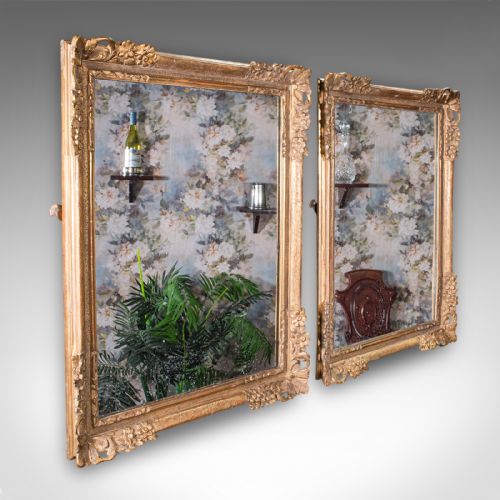
The evidence shows these mirrors appearing in various scales, from practical proportions to massive triptych or triple-plate formats and oval frames. Specific decorative elements emerge across the selection, including carved fern motifs and bird designs alongside grand architectural framing. They function primarily as monumental wall mirrors that anchor the decorative scheme of a reception room.
Materials and Construction
Makers built these substantial frames from timber before applying layers of gesso and composition material to build up intricate relief ornamentation. Gilding was then achieved using gold leaf or fine metallic finishes applied over the prepared surfaces. This combination of carved wood, moulded compa, and reflective glass created the dense, lustrous frames characteristic of the period.
The mirror glass itself was typically set as a single large sheet or divided into multiple plates, such as triptych configurations. Frames required robust construction to support both the heavy glass and the substantial decorative crestings and mouldings typical of nineteenth century overmantels.
Retail Price Guide 2026
Typical UK retail prices for carved giltwood overmantel, calculated from the Sellingantiques database of over a million retail prices indexed since 2003. This retail price guide relies exclusively on Sellingantiques data; no external sources or auction records are used, so the figures do not describe the wider market.
The listings here span the Regency, Victorian, and mid-century French periods, utilising materials such as giltwood, gesso, and gold leaf.
Defining Quality
The distinction between standard production and the finest examples lies in the depth and crispness of the hand-carved detail within the wood and gesso. Superior pieces display sculptural refinement in motifs like ferns or birds, rather than uniform moulded repetition.
Proportion and scale also dictate the standing of a piece, where well-balanced architectural framing meets flawless gilding that retains its warmth and texture over centuries.
E James Bruton Road London
The Carved Giltwood Overmantel Glossary
- Giltwood
- Timber that has been coated in gold leaf or metallic paint to give a lustrous golden appearance. This finish reflects candle and natural light brilliantly.
- Gesso
- A plaster-like mixture applied to wood frames to create a smooth surface for subsequent carving or gilding. It allows for intricate relief work.
- Composition
- A moulded material made from whiting, resin, and glue, pressed into shape and applied to frames to create rapid ornamentation. It is often found alongside hand carving.
- Triptych
- A mirror plate divided into three distinct vertical sections within a single frame. This format was especially popular during the Regency period.
- Overmantel
- A large mirror designed specifically to hang on the wall directly above a fireplace mantelpiece. Its horizontal or monumental proportions balance the hearth below.
Frequently Asked Questions
Where should an overmantel mirror hang?
These mirrors traditionally hang on the chimney breast directly above the fireplace mantelpiece, where their scale balances the hearth.
They sit low enough to reflect the room's interior rather than the ceiling, anchoring the focal point of the space.
How do I identify a Regency overmantel?
Regency overmantels date from the early nineteenth century and often display classical architectural lines, tripartite glass plates, and crisp proportions.
They rely on restrained elegance compared to later, heavier Victorian interpretations.
What motifs appear on these mirrors?
Carved details range from classical mouldings to specific naturalistic elements like fern leaves and bird designs.
Mid-century examples occasionally incorporate distinct French chateau stylistic influences into the frame.