
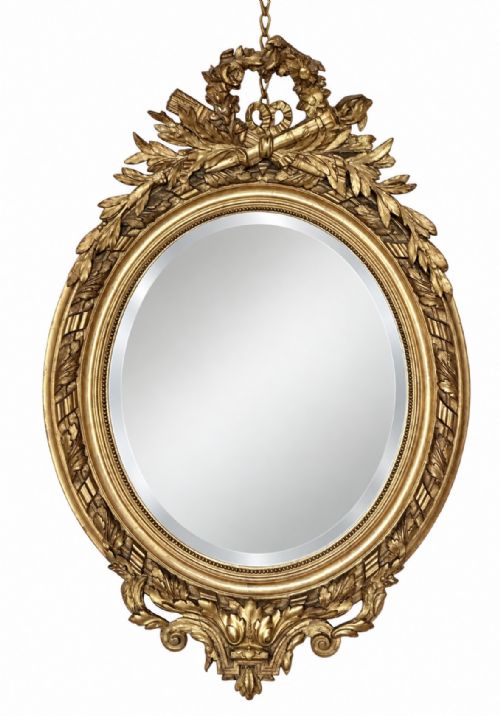
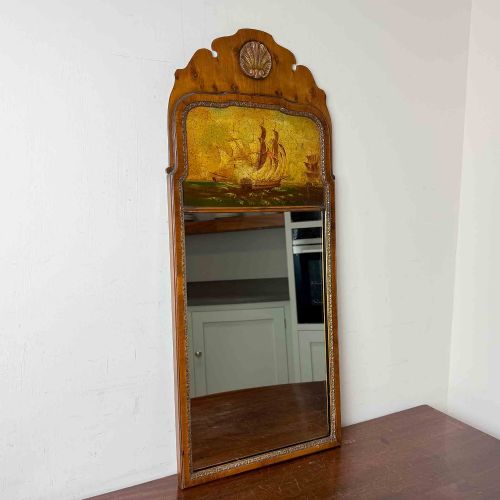
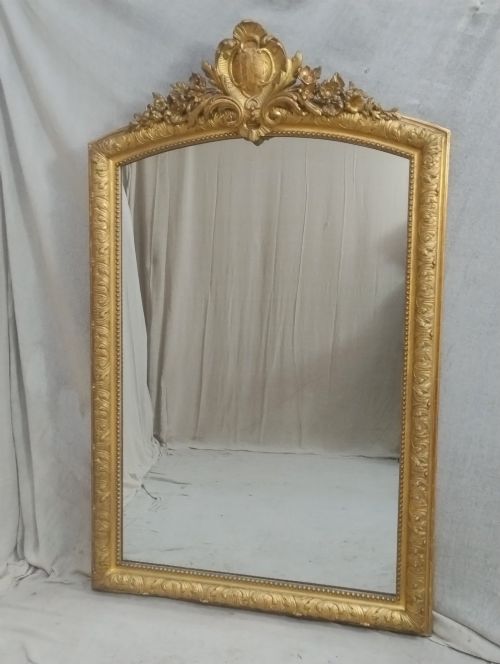
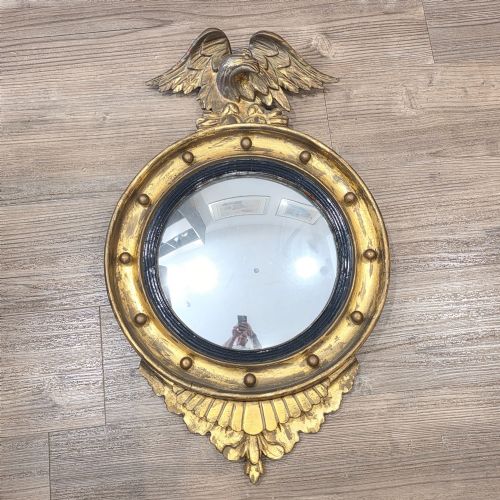
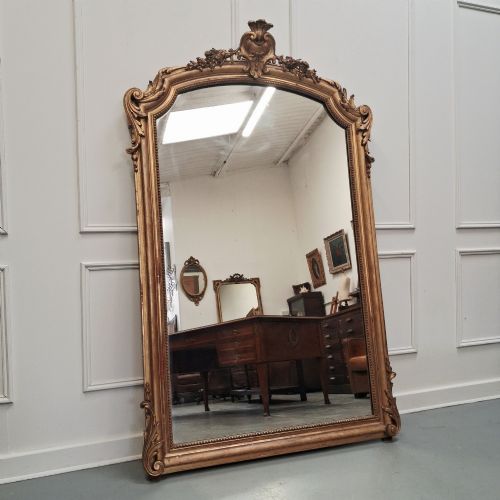
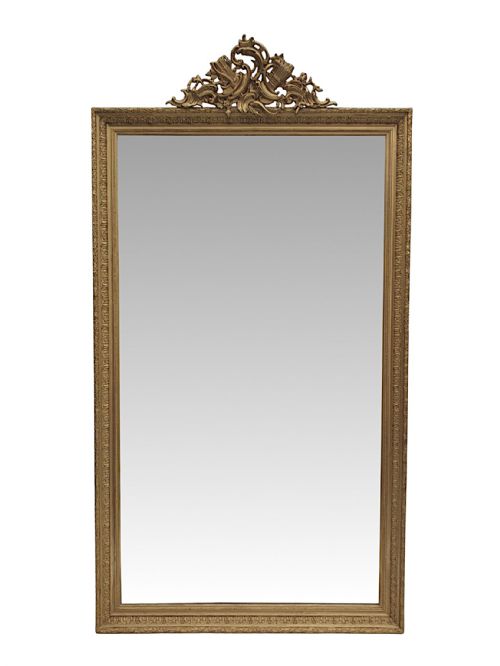
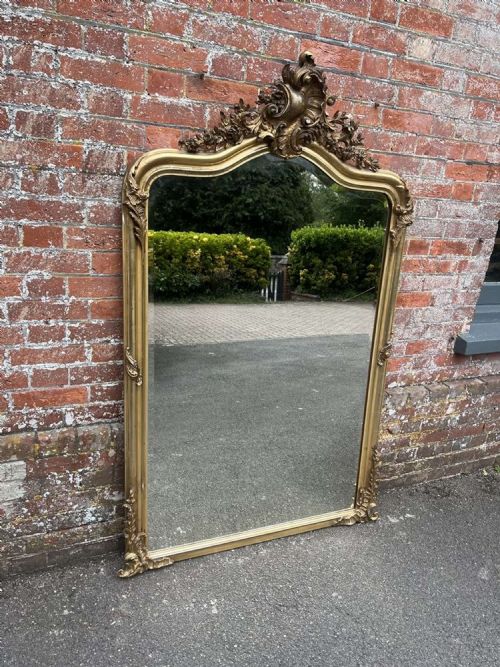
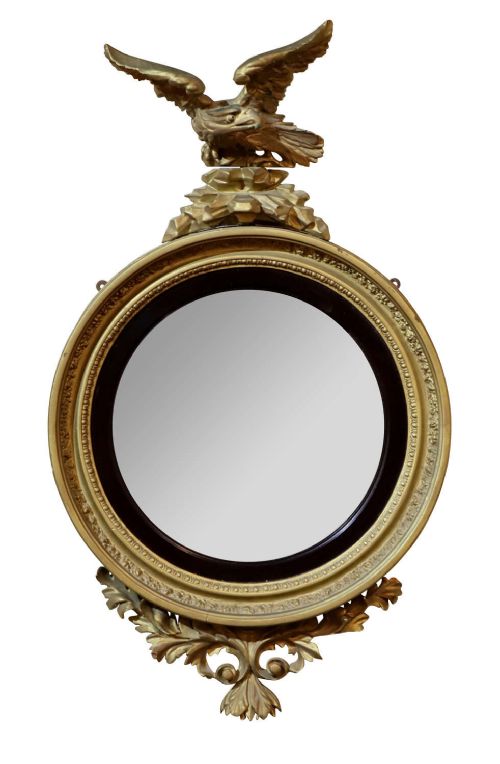
Carved Cresting Wall Mirror
Carved cresting wall mirror examples bring period presence and reflective depth to an interior through substantial frames and ornate upper crests.
What carved cresting wall mirror pieces are
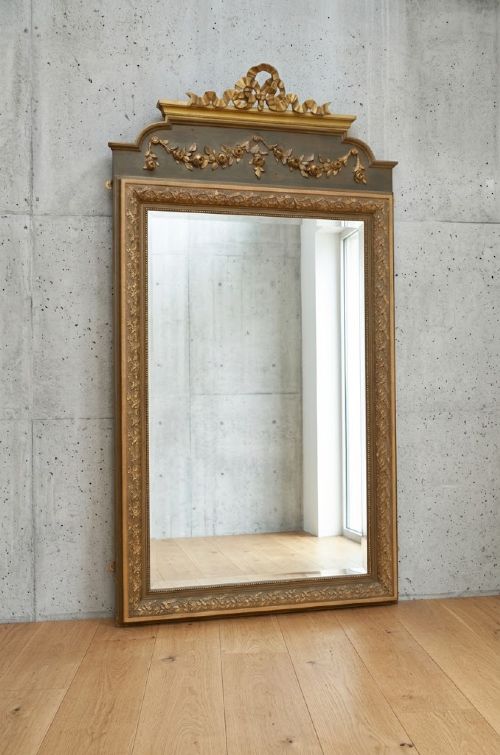
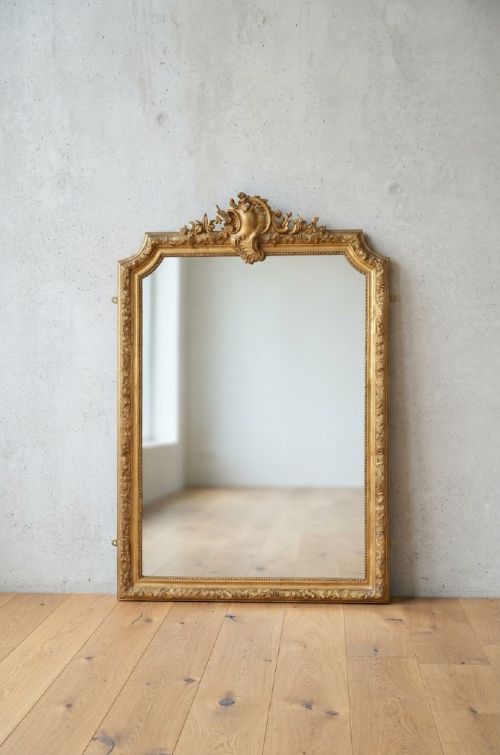
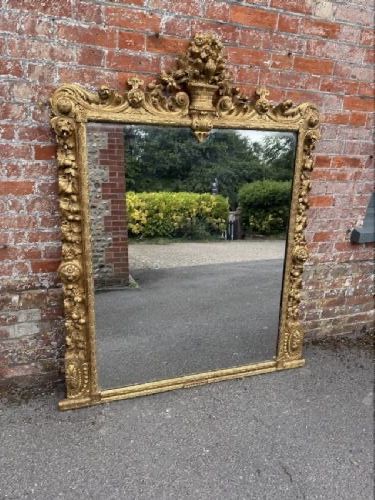
A carved cresting wall mirror combines a substantial vertical reflective plate with a decorative upper wooden superstructure designed to draw the eye upwards. These pieces serve both functional and ornamental purposes within period interiors, acting as focal points above mantelpieces or along principal walls.
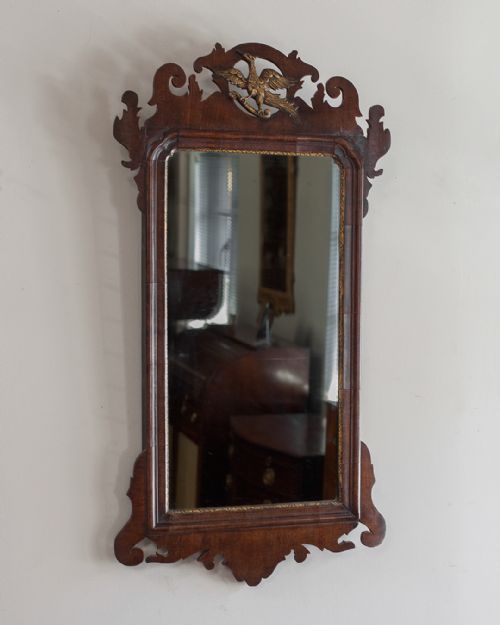
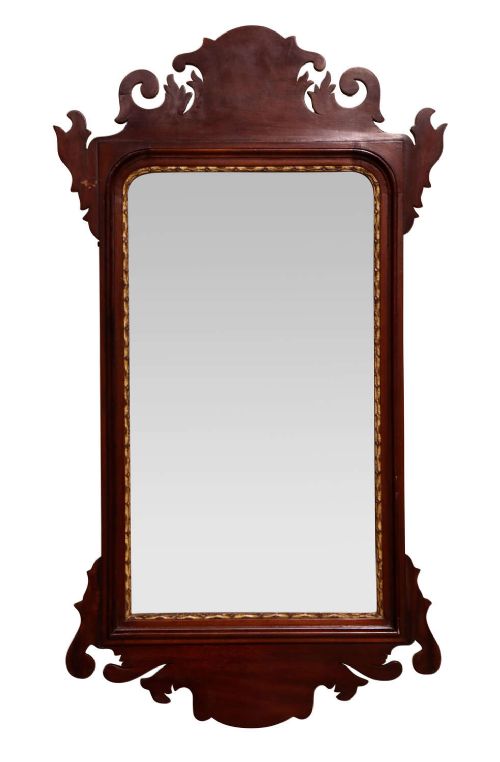
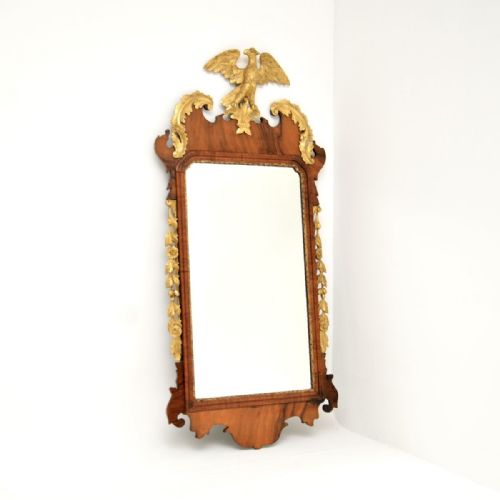
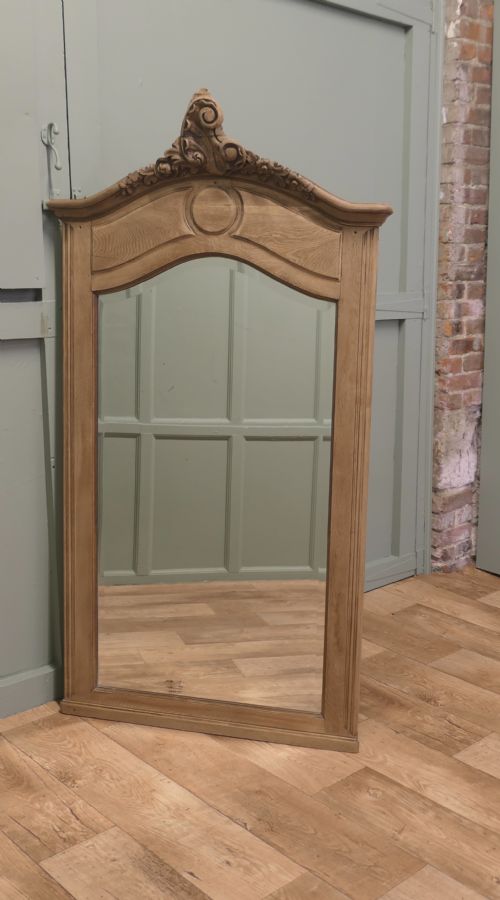
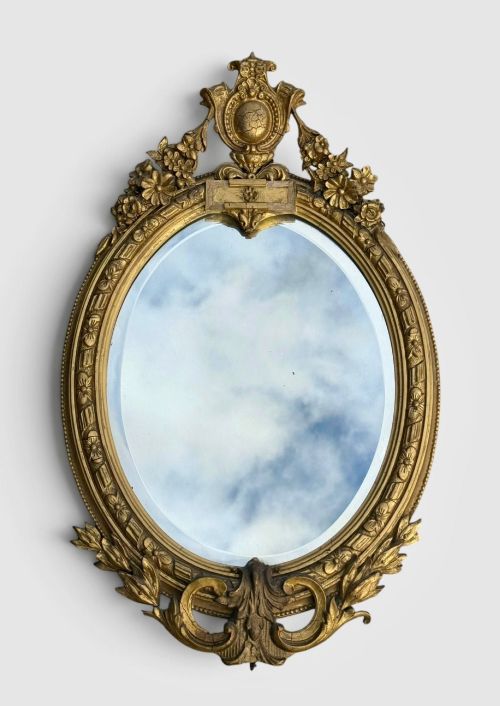
The selection ranges from impressive Louis XVI style trumeau panels dated to eighteen seventy to large nineteenth century gilt and white overmantel wall mirrors and walnut hanging wall mirrors styled after Georgian designs around nineteen hundred.
How they were made
Construction relies on primary woods such as pine and walnut, which provide the structural stability necessary for large frames and hanging hardware. Carvers shape these timbers directly or apply gesso layers to build up intricate relief decoration before gilding or painting the surface.
Makers apply gold leaf to prepared grounds to achieve lasting brilliance on gilt wood and giltwood examples. Painted wood finishes offer alternative monochromatic or contrasting schemes suited to specific interior aesthetics.
Current listings span the nineteenth century, featuring walnut, pine, glass, gesso, and gold leaf materials across diverse regional styles.
What varies in quality
Quality rests upon the crispness of the carving within the cresting and the depth of the gilding applied over the gesso and timber foundation. Superior examples display confident hand manipulation of motifs rather than monotonous repetition.
The choice of primary timber, such as figured walnut versus utilitarian pine, dictates the inherent grade of the piece. Preservation of the original reflective plate and the integrity of the gilt or painted surface further separate standard items from finer works.
The Carved Cresting Wall Mirror Glossary
- Cresting
- The decorative element mounted at the top of a mirror frame. It often incorporates carved foliage, scrolls or architectural motifs to crown the piece.
- Trumeau
- A decorative wall mirror or panel designed to fit a specific pier or wall space between windows. It frequently combines painted or carved woodwork with an integrated glass plate.
- Overmantel mirror
- A wide wall mirror specifically proportioned to hang above a fireplace mantel. These large plates visually expand room dimensions and reflect ambient light.
- Gesso
- A plaster-like mixture applied to wood surfaces to create a smooth base for gilding or painting. Careful application allows intricate relief details to be modelled before the leaf is laid.
Frequently Asked Questions
Where should a carved cresting wall mirror hang?
These mirrors suit prominent locations such as above a drawing room fireplace or along a principal hallway wall where the upper cresting receives adequate headroom and light.
Ensure the wall construction supports the combined weight of the timber frame and glass plate securely.
How do I identify a Georgian style piece?
Georgian style mirrors often utilise walnut timbers and restrained architectural proportions reflecting eighteenth century design principles. The carving remains balanced and tied closely to classical symmetry.
Such examples contrast with the more exuberant decorative flourishes found on later Victorian interpretations.
What is a trumeau mirror?
A trumeau mirror integrates a decorative upper panel, often featuring painted scenes or carved ornamentation, directly above the reflective glass. This format originated in France and gained popularity across nineteenth century interiors.
The vertical emphasis makes them suitable for narrow wall spaces.
How do I care for giltwood surfaces?
Dust giltwood frames gently with a dry, soft brush to avoid disturbing the delicate gold leaf layer. Keep them away from direct sunlight and damp conditions to preserve the gesso and wood beneath.
Avoid liquid cleaners entirely when maintaining antique metallic finishes.