



Gilt Decorated Urns
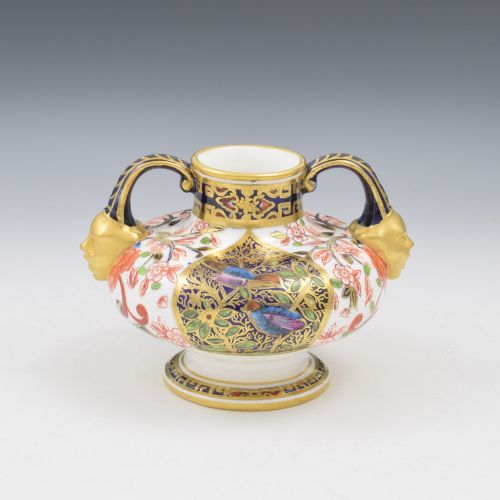
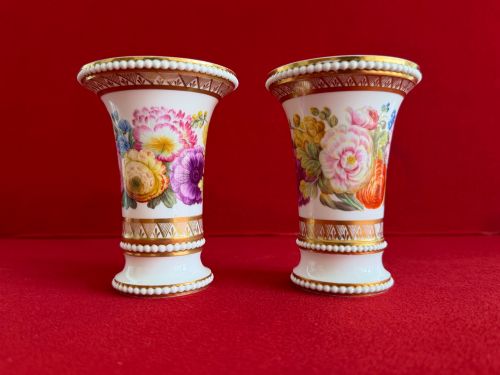
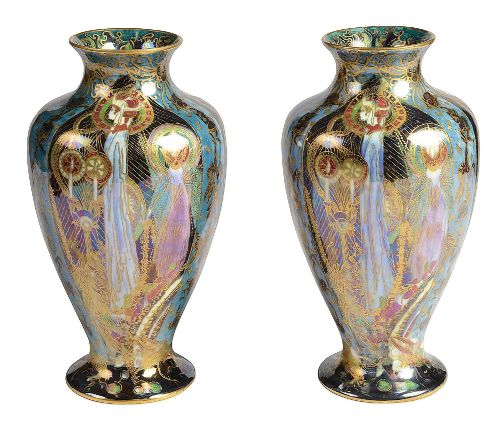
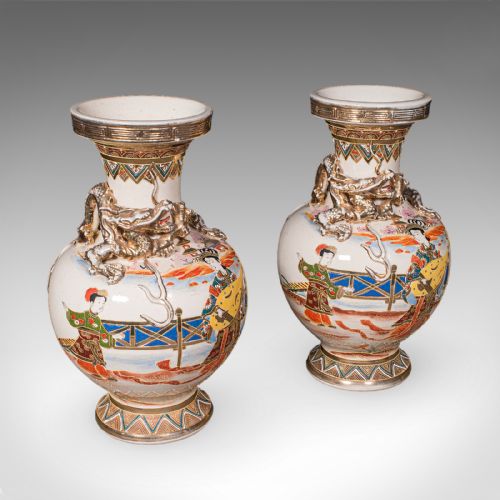
These gilt decorated urns combine rich metallic gilding with porcelain, ceramic and glass, offering a focal point for classical interiors.

Gilt Decorated Urns
When you search for gilt decorated urns, you encounter a variety of ornamental vessels designed for display rather than utility, often taking the form of baluster vases, lidded vessels, and classical pedestals. These pieces span several centuries and manufacturing traditions, reflecting diverse aesthetic movements from Georgian classical balance to Victorian revivalism and the intricate detail of the Meiji period.
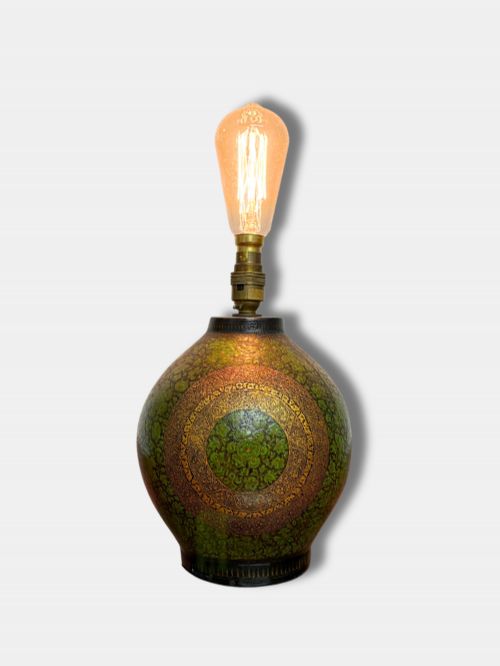
The objects on this page range widely in origin and material, encompassing English porcelain from factories like Worcester and Derby alongside Japanese Satsuma ceramics, Austrian earthenware, and Bohemian glass. Forms include pairs of decorative vases, table lamps converted from earlier vessels, and garnitures designed to sit symmetrically on a mantelpiece.
Makers and decorators working across the nineteenth and early twentieth centuries utilised specific regional styles, such as the elaborate cobalt and moriage decoration of Japanese Satsuma wares or the delicate bird and floral painting associated with English porcelain painters.
Materials and Techniques
Makers relied on fine porcelain, bone china, earthenware, and glass as the primary bodies for these vessels, shaping them on the wheel or casting them in moulds before applying glazes and enamel colours. Surface decoration often involved hand-painted scenes of birds, figures, or landscapes executed by named artists.
The characteristic gilt enrichment was achieved through the application of gold leaf or liquid gold gilding, which was then fired and burnished to create a bright metallic contrast against cobalt blue, green, or white grounds. Relief techniques such as moriage added raised clay details beneath the gilding to create tactile, dimensional patterns.
The selection includes Georgian urns, Victorian garnitures, and table lamps from the nineteen-twenties.
Judging Quality
Quality in these pieces rests upon the crispness of the porcelain or ceramic body and the precision of the hand-painted and gilt details. Superior examples feature finely executed artistry by known decorators, where brushwork is controlled and the gold burnishing retains its full lustre.
The depth and complexity of the manufacturing process also dictate the standard, such as the intricacy of raised moriage work or the harmonious balance of complex Chinoiserie and floral patterns across matching pairs and garnitures.
Flight Barr and Barr·Royal Worcester·Wedgwood·Minton·Kinkozan
The Gilt Decorated Urns Glossary
- Baluster
- A vase form with a rounded body that tapers towards the base and neck, resembling an architectural column support.
- Garniture
- A set of matching vases or urns, usually comprising three or five pieces designed to be displayed together on a mantelpiece or sideboard.
- Moriage
- A Japanese ceramic technique using piped clay slip to build up raised decorative patterns beneath glazes and gilding.
- Peachblow
- A nineteenth-century type of art glass featuring a shaded pink or red gradient finish.
- Baluster
- A vase shape characterised by a bulbous lower portion tapering to a narrow neck.
Gilt Decorated Urns: Frequently Asked Questions
How were antique urns used in period homes?
These vessels served primarily as decorative focal points on mantelpieces, side tables, and pedestals, often displayed in matched pairs or three-piece garnitures to create symmetry in formal rooms.
While some were manufactured as lidded urns or ice pails, their role was predominantly aesthetic, displaying the wealth and artistic taste of the household through rich gilding and hand-painted artistry.
How do I care for gilt porcelain?
Gilt porcelain and enamel surfaces require gentle dusting with a soft, dry cloth to prevent the accumulation of abrasive particles.
Moisture and chemical cleaners should be avoided entirely, as they can lift or dull delicate gold leaf and hand-painted enamel details over time.
Can converted table lamps be restored?
Many decorative urns and vases were fitted for electricity during the twentieth century, often involving drilled bases or mounted hardware.
Restoration possibilities depend on the original construction and the extent of any alterations made to the ceramic or glass body when the wiring was installed.
What defines Satsuma pottery?
Satsuma ware originates from Japan and is characterised by an ivory-coloured, crackle-glazed earthenware body decorated with detailed polychrome enamels and heavy gold leaf.
Later Victorian export pieces often incorporate raised moriage designs depicting court figures, landscapes, and traditional motifs.