



Dresden Porcelain Vases
These dresden porcelain vases bring vibrant nineteenth-century continental ornamentation to a room, offering collectors rich painted scenes and ornate gilding.

Dresden Porcelain Vases
When you search for dresden porcelain vases, you encounter nineteenth-century decorative vessels shaped as urns, ginger jars, and lidded forms. These pieces predominantly date from the eighteen-eighties and the broader nineteenth century, reflecting ornate continental tastes.
The objects on this page most commonly appear as pairs and lidded vessels displaying detailed figural scenes and classical motifs. Collectors find both cabinet-sized examples and larger decorative urns reflecting historic European ceramic traditions.
Makers and styles represented span Rococo Revival and Victorian continental aesthetics, often incorporating Meissen-style painting or specific workshop marks. These forms serve as prominent focal points in traditional interiors.
How they were made
Potters shaped hard-paste porcelain on the wheel or in moulds to create the distinctive bodies of vases and lidded urns. Artisans then applied enamel paints and gold leaf to the ceramic surface before firing.
Gilding and enamel work received careful hand-finishing, highlighting moulded details like cherubs and scrolling handles. The combination of ceramic bodies, colourful enamels, and gold leaf defines the physical construction of these pieces.
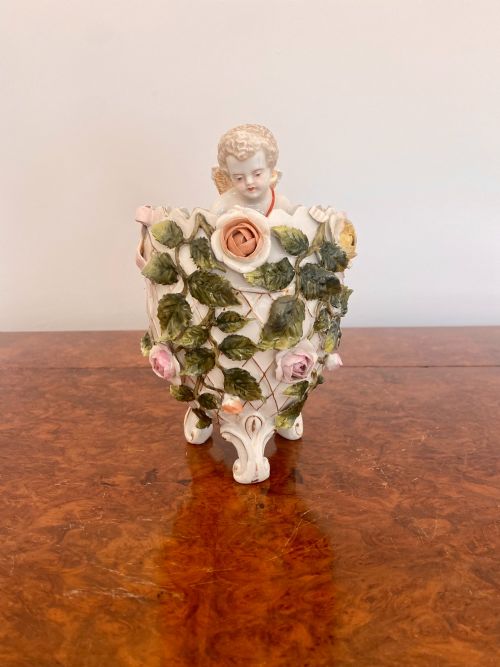
Among the porcelain figures and floral motifs, a charming cherub peers out from within a vase.
What varies in quality
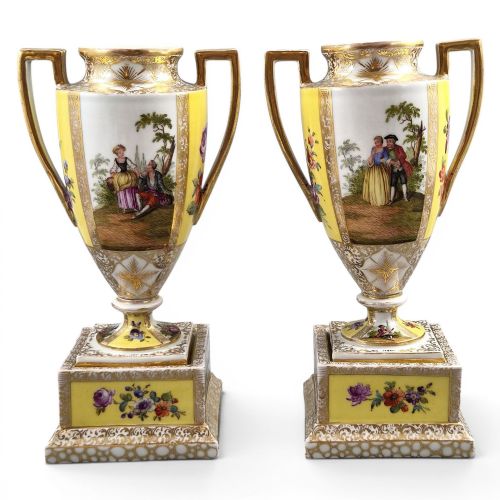
Quality in these vases rests upon the precision of the hand-painted scenes and the crispness of the moulded porcelain relief. Finer examples show superior brushwork in figurative details like Watteau-style panels and delicate facial expressions.
The application of gold leaf and enamel also distinguishes better pieces, with superior retention of gilding and richer colour depth. The overall weight, structural balance, and clarity of marks further separate standard production from exceptional work.
Helena Wolfsohn·Augustas Rex·Sitzendorf·Herend
The Dresden Porcelain Vases Glossary
- Hard-Paste Porcelain
- A durable ceramic material fired at high temperatures, composed of kaolin and petuntse. It provides a bright white body suitable for detailed enamel painting.
- Gilding
- The application of gold leaf or powdered gold to the surface of the porcelain. This technique highlights rims, handles, and moulded decorative elements.
- Enamel
- Coloured vitreous glass fused to the porcelain body during firing. It forms the vibrant painted scenes and floral patterns characteristic of these pieces.
- Rococo Revival
- A nineteenth-century design style emulating eighteenth-century asymmetry, curves, and natural motifs. It heavily influences the scrollwork and forms seen on these vases.
- Potpourri
- A lidded vessel featuring pierced or perforated sections designed to hold scented dried plant material. These vases often include intricate decorative covers.
Dresden Porcelain Vases: Frequently Asked Questions
Are these vases marked?
Many pieces feature painted or impressed marks on the underside, including monogram ciphers and pseudo-Meissen symbols like the AR mark.
These indicators help identify specific nineteenth-century decorating studios and regional porcelain workshops.
How should I clean them?
Dust porcelain surfaces gently with a soft, dry brush to prevent the accumulation of dirt within intricate mouldings and handles.
Avoid using water, chemical cleaners, or abrasives that might damage delicate enamel paints and gold leaf highlights.
Do these vases have lids?
A significant portion of the pieces listed include matching original covers, forming distinct urn and ginger jar silhouettes.
Lidded examples often incorporate decorative finials and pierced sections designed for potpourri use.
What styles are common?
Victorian continental, Rococo Revival, and Meissen-style designs dominate the visual repertoire of these nineteenth-century ceramics.
Pieces frequently display Watteau-style figural panels set against yellow, blue, or white grounds framed by heavy gilding.