




Square Pedestal Urns
Square pedestal urns bring architectural proportion and classical presence to interiors, taking the form of plant stands, vases, and tables.
Square Pedestal Urns
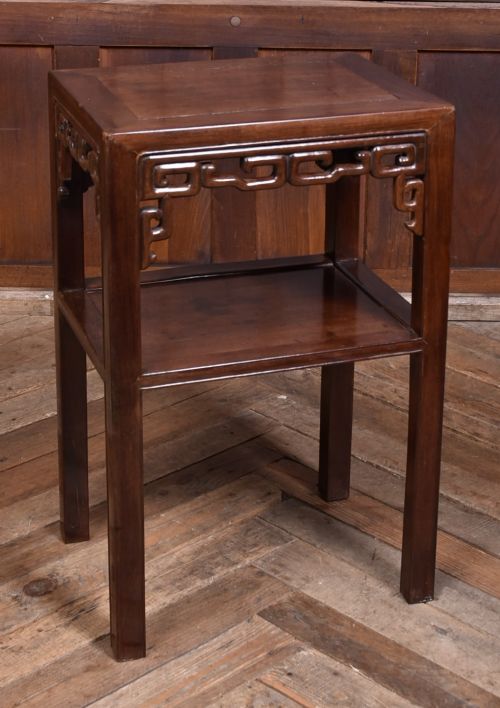
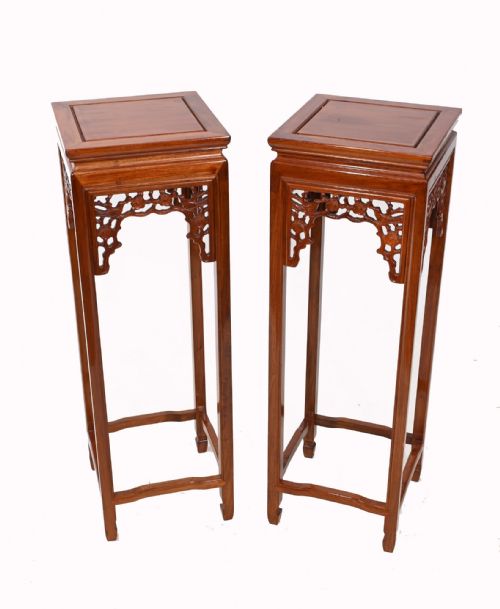
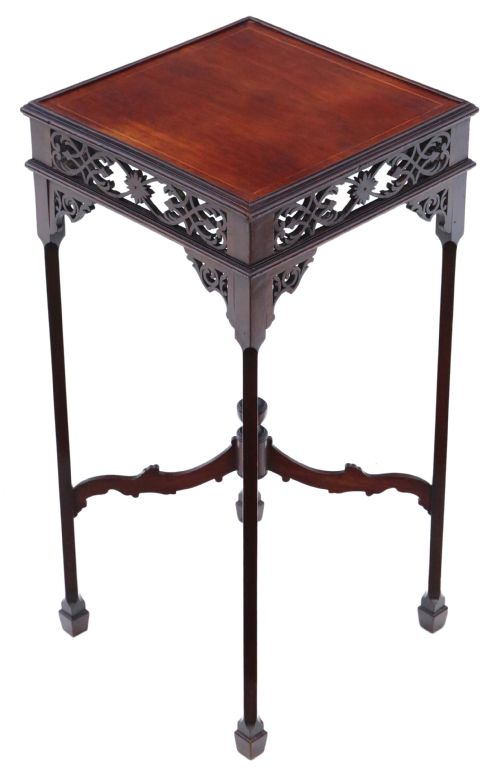
Square pedestal urns encompass plant stands, side tables, vases and display urns that share a structured, rectilinear base or support. When searching for square pedestal urns, buyers encounter 18th century, 19th century, and early 20th century pieces drawing on George III, Regency, Chippendale Revival, Victorian Garden, and Chinese Traditional styles.
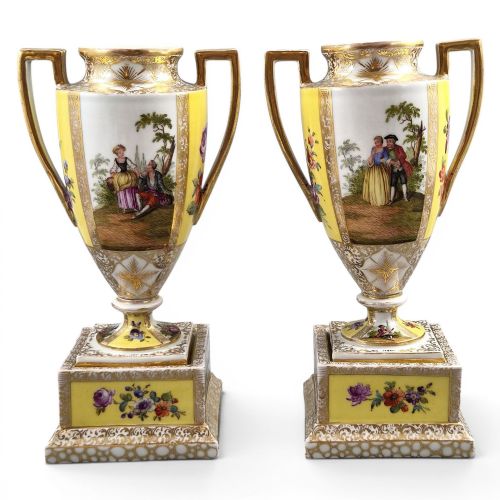
The objects on this page range from mahogany side tables and kettle stands to terracotta and hard-paste porcelain urns, alongside Chinese pedestal stand tables and painted hardwood plant stands. Mahogany and hardwood dominate the furniture forms, while porcelain and terracotta represent the decorative urns.
Makers and manufacturers represented in the selection include the Dunfermline Clay Company and Helena Wolfsohn Dresden, grounding the varied global influences from Chinese Chinoiserie to European revival periods in documented production.
How they were made
Makers utilised dense timbers such as mahogany and assorted hardwoods for the furniture stands, employing traditional joinery to construct stable square tops and supporting columns. Wood surfaces were sometimes painted or enriched with gold leaf and enamel details.
Ceramic pieces rely on hard-paste porcelain and clay, fired and decorated with enamel pigments. Helena Wolfsohn Dresden items feature characteristic royal yellow porcelain finishes, while Dunfermline Clay Company pieces utilise durable terracotta production techniques.
Royal yellow porcelain demands careful handling, yet brings an intensely sunny disposition to even the gloomiest British sitting room.
What varies in quality
Quality separates through the crispness of carved wooden details in George III and Chippendale Revival pieces, alongside the precision of joinery on mahogany side tables and plant stands. Heavier, denser hardwoods and well-executed painted decoration elevate the standing of furniture forms.
In porcelain and terracotta pieces, the finesse of hand-painted enamel work and the clarity of the glaze distinguish superior specimens. Factory marks, such as those from Dresden or established clay companies, provide tangible evidence of workshop standard.
Dunfermline Clay Company·Helena Wolfsohn Dresden
The Square Pedestal Urns Glossary
- Hard-paste porcelain
- A durable, vitrified ceramic material fired at high temperatures, composed of kaolin and petuntse. It provides a crisp white body ideal for detailed enamel painting.
- Terracotta
- A porous, unglazed or glazed fired clay of a brownish-red colour. It appears frequently in garden pedestals and utility vessels.
- Chippendale Revival
- A late 19th century design movement reinterpreting mid-18th century English mahogany furniture forms. It borrows carved motifs and proportions from Thomas Chippendale's pattern books.
- Chinoiserie
- European artistic interpretation of Chinese and East Asian decorative motifs. This style manifests in painted hardwood stands and oriental table designs.
- Kettle stand
- A small occasional table designed to hold a heated water vessel. These pieces often feature square tops and slender supports matching pedestal proportions.
Square Pedestal Urns: Frequently Asked Questions
What are square pedestal urns used for?
These pieces function primarily as elevated display surfaces for plants, decorative bowls, and vases within interiors and gardens. Their structured bases provide vertical interest and architectural stability in a room.
Historically, specific forms like kettle stands served functional dining purposes, while porcelain urns remained purely decorative. Today, they adapt easily as side tables or plant stands in diverse room schemes.
How do I date a mahogany plant stand?
Dating relies on examining timber selection, construction methods, and stylistic revival markers. 18th century examples display hand-cut joinery and period-specific proportions associated with George III designs.
Later 19th century and 1920s reinterpretations often incorporate machine assistance or combine historical styles like Chippendale Revival with contemporary hardware.
Are porcelain urns and wooden stands usually sold together?
Many listings present porcelain urns as matched pairs, occasionally accompanied by associated wooden or painted pedestals. Ceramic vessels and wooden stands were frequently produced separately and united later.
Examining the base and interior glaze helps determine whether a ceramic urn and its hardwood stand share a contemporaneous origin or represent a later pairing.
How do I care for antique hardwood stands?
Antique mahogany and hardwood require stable environmental conditions away from direct sunlight and extreme humidity fluctuations. Regular dusting with a dry, soft cloth preserves the timber finish.
Applying occasional appropriate wax polish maintains the lustre of the wood without building up heavy residues on carved details or painted surfaces.