



Gilded Porcelain Cover Vases
These gilded porcelain cover vases combine elaborate ceramic forms with metallic ornamentation, serving as decorative centerpieces for refined interiors.

Gilded Porcelain Cover Vases
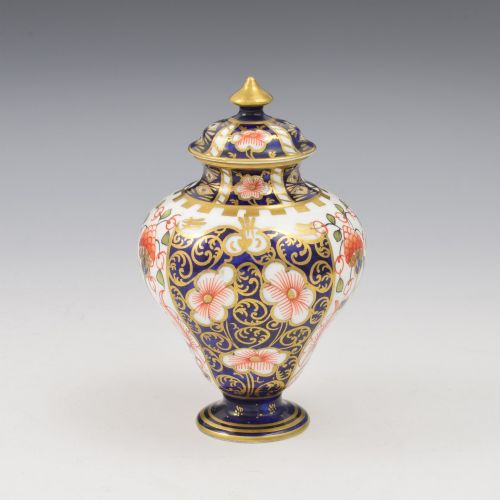
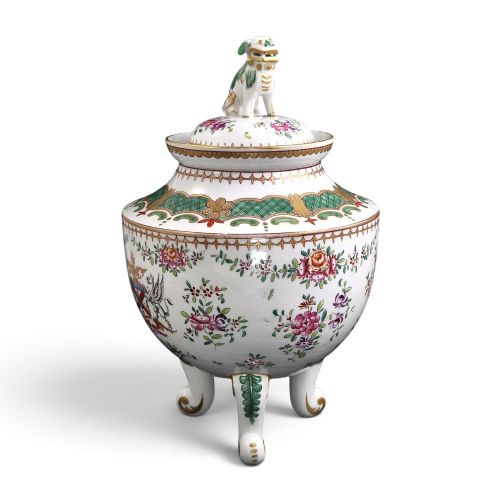
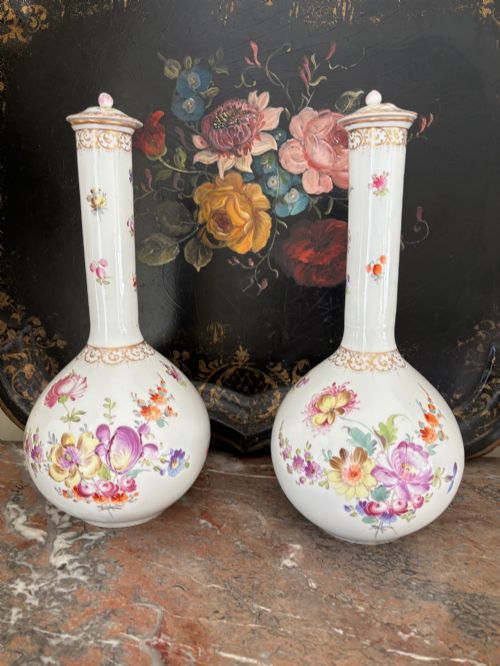
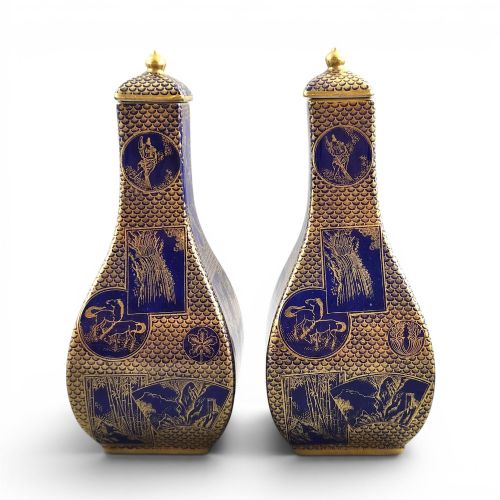
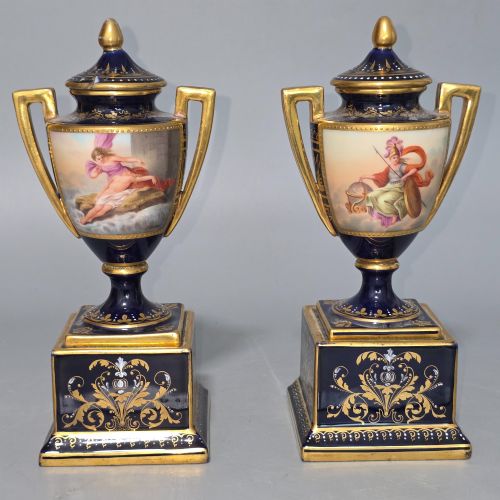
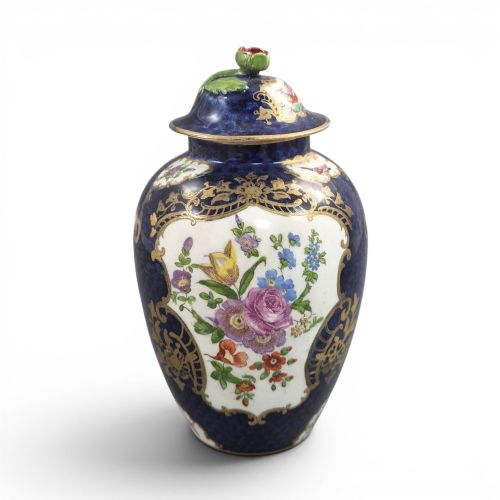
Makers ranged from major English factories like Royal Worcester and Coalport to continental porcelain houses such as Vienna, Dresden, and Samson Paris. Forms vary from bulbous pedestal vases to classical amphorae and ginger jars.
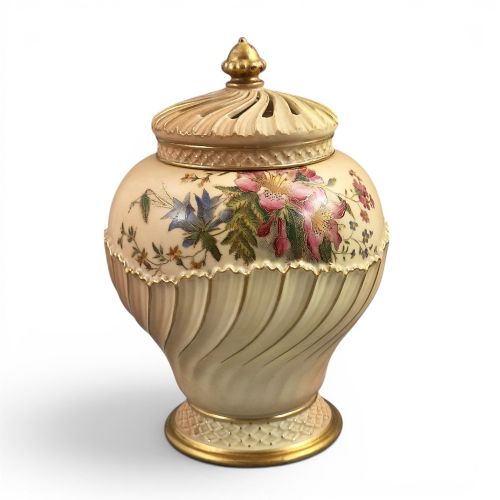
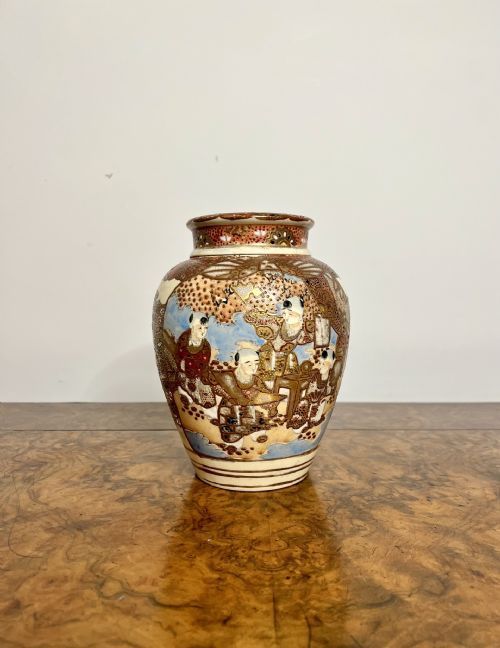
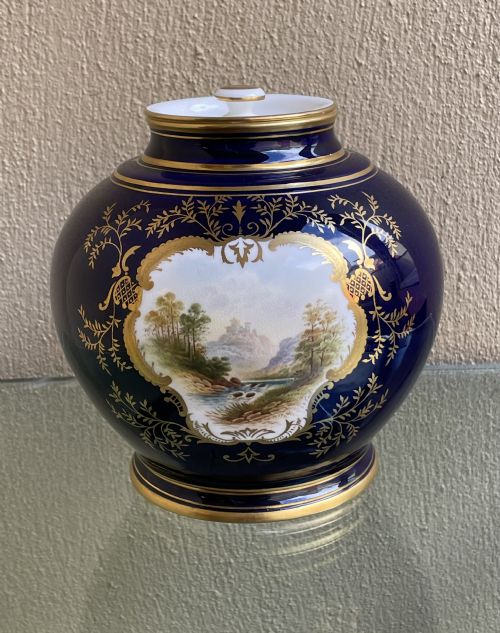
Decoration often spans hand-painted floral motifs, landscape scenes, armorial designs, and Japanese Imari patterns. Many incorporate pierced covers or specialised lids designed for domestic display.
How they were made
Manufacture relied on hard-paste or soft-paste porcelain bodies, shaped into vessels and fitted with matching covers. Earthenware and ironstone also appear among specific English productions.
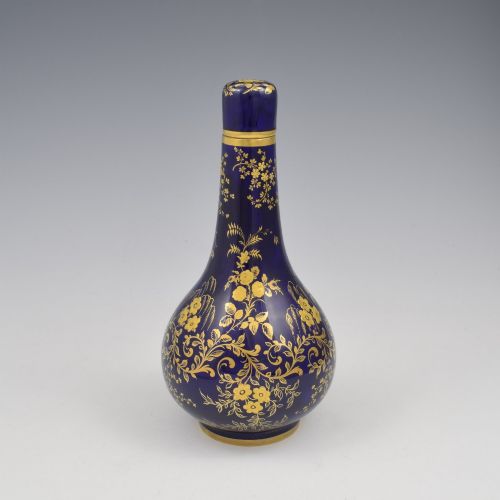
Surface ornament combined hand-painted enamel colours with gold leaf, gilt, and ormolu mounts. Firing techniques fixed intricate underglaze blue grounds, scale blue patterns, and blush ivory finishes prior to final gilding.
Listings span nineteenth-century pieces to mid-twentieth-century productions, incorporating earthenware, ironstone, and hard-paste porcelain.
What varies in quality
Quality rests upon the precision of the hand-painted execution and the application of the gilding. Master painters such as Baldwyn, Ayrton, or Richard Budd elevated factory output into notable artistic achievements.
The weight and crispness of the porcelain form, alongside the complexity of the cover design, distinguish standard production wares from exceptional signed studio pieces.
Royal Crown Derby·Samson Paris·Sitzendorf·Derby Porcelain·Mason's Patent Ironstone·Vienna Porcelain·Booths Silicon China·Royal Worcester·Crown Staffordshire·Spode·Coalport·Kyoto Satsuma·Royal Vienna·Helena Wolfsohn Dresden·Royal Winton·Berlin·Augustas Rex·Hadley's Worcester
The Gilded Porcelain Cover Vases Glossary
- Gilding
- The application of gold leaf or powdered gold to the surface of the porcelain. This decorative technique highlights rims, handles, and painted panels.
- Imari
- A style of Japanese porcelain decoration featuring dark blue, iron red, and gold. European factories frequently copied these distinct patterns during the nineteenth century.
- Pot Pourri
- A vessel with a pierced or perforated cover designed to hold dried scented flowers. These containers allowed fragrance to diffuse while concealing the contents.
- Hard-Paste
- A durable ceramic paste composed of kaolin and petuntse, fired at high temperatures. It formed the basis for much of the continental porcelain listed here.
- Ormolu
- Gilded bronze mounts applied to ceramic bodies. This material enhances the architectural presence of classical urns and amphorae.
Gilded Porcelain Cover Vases: Frequently Asked Questions
What are gilded porcelain cover vases?
These are ceramic vessels fitted with lids and embellished with gold leaf or gilding. They were produced across various European and Asian kilns for ornamental display.
Craftsmen shaped them into ginger jars, urns, and pedestal vases, often adding hand-painted panels or floral scenes.
How were lidded vases used historically?
Owners placed them on mantelpieces, sideboards, and pedestals as decorative focal points within formal reception rooms. Some variations, such as pot pourri jars, held scented botanicals to freshen indoor air.
The covers kept contents dust-free or simply completed the sculptural silhouette of the vessel.
How do I identify the maker?
Makers marked their pieces using painted factory ciphers, impressed stamps, or pattern numbers underneath the base. Signatures from specific artists also appear on painted panels.
Comparing the ground colour, paste type, and decorative style helps attribute unmarked examples to specific periods.
How do I care for antique porcelain?
Keep gilded porcelain vases away from direct sunlight to preserve the integrity of the enamel colours and gold leaf. Dust them gently with a soft, dry cloth.
Avoid using water or cleaning solutions, particularly on areas with hand-painted overglaze gilding.