
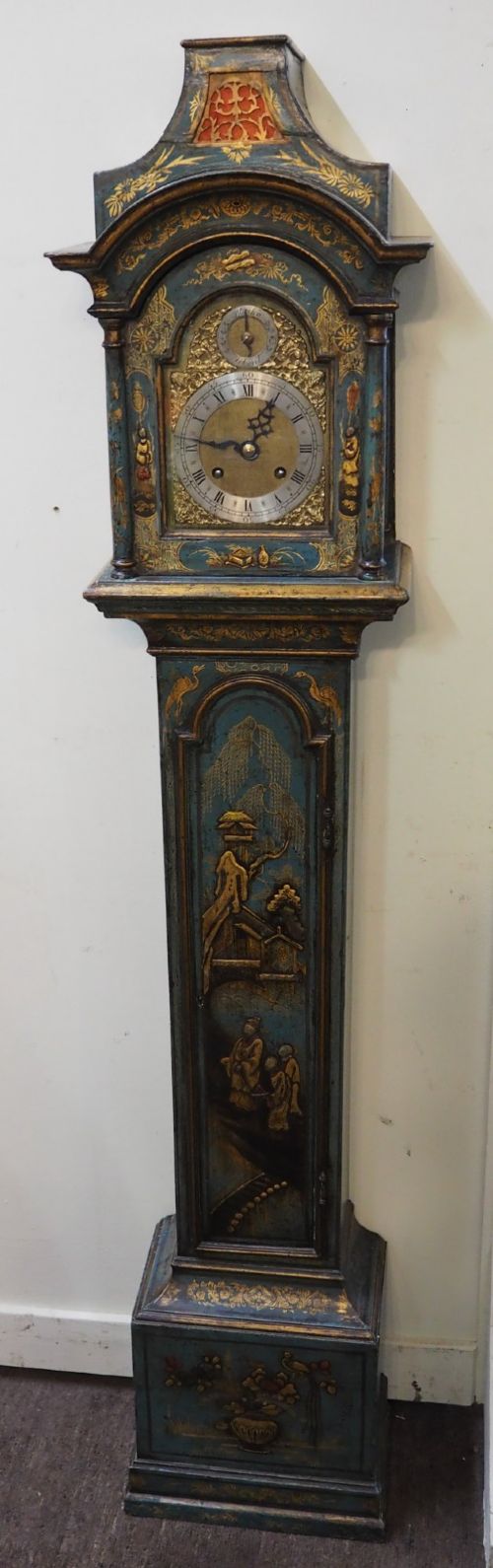
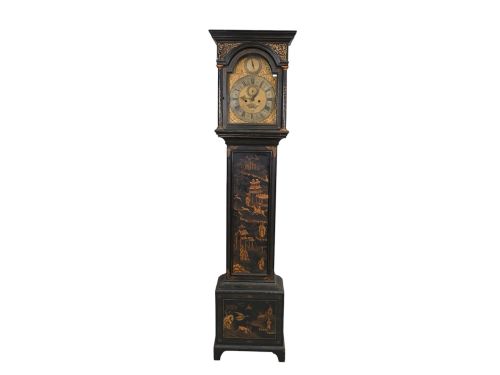


Gilt Chinoiserie Grandfather Clock
These gilt chinoiserie grandfather clock examples bring ornamented lacquerwork and tall timber cases together to mark time in any grand interior.
Gilt Chinoiserie Grandfather Clock
A gilt chinoiserie grandfather clock combines tall wooden case construction with lacquered surfaces and metallic decoration. These horological pieces appear in forms spanning the Georgian period and the 18th century alongside later Chinoiserie Revival interpretations from the 20th century.
Buyers encounter longcase clocks alongside shorter grandmother clocks. The examples on this page originate from makers in London, Reading, and Edinburgh, utilising various shades of lacquer including blue, green, and dark tones.
Early Georgian and George III examples share floor-standing architecture that houses weights and pendulums. Alongside standard timekeepers, automaton clocks and eight-day movements appear within the recorded titles.
How they were made
Craftsmen built timber carcasses from wood before applying layers of lacquer. Surfaces received detailed gilt and japanned decoration depicting traditional motifs, figures, and landscapes.
Gilding with gold leaf highlighted specific decorative elements across the lacquered wood. Brass components formed dials, movements, and visible hardware, protected behind glass door panels.
Gilt Chinoiserie Grandfather Clock Retail Price Guide 2026
Typical asking prices for gilt chinoiserie grandfather clock among the pieces listed under this phrase on Sellingantiques today, from the lower quarter to the upper quarter. They describe what is for sale here now, not the wider market.
Listings feature longcase clocks spanning the Georgian era and the 1930s, constructed in wood, brass, glass, and lacquered finishes.
What varies in quality
The sophistication of the japanned and lacquered decoration distinguishes simpler specimens from finer works. Hand-painted details and the depth of the gold leaf application set individual pieces apart.
Named clockmakers working in centres like London or Reading impart historical significance to specific movements. The preservation of the original lacquer surface and the proportional balance of the longcase structure dictate overall distinction.
William Kipling London·Wise of Reading·Gardner of London·Robert Berry
The Gilt Chinoiserie Grandfather Clock Glossary
- Chinoiserie
- European decorative art influenced by Chinese design motifs and aesthetics. This style flourished across furniture and clock cases during the Georgian era.
- Japanned Wood
- European furniture finished with varnishes and metallic decoration to imitate Asian lacquerware. Artisans built up layers of resin and applied gold leaf details.
- Longcase Clock
- A tall, floor-standing pendulum clock enclosed in a wooden case. These timepieces are commonly known as grandfather clocks.
- Grandmother Clock
- A scaled-down version of the traditional longcase clock. These shorter variants appeared during the 19th and 20th centuries.
- Automaton Clock
- A timekeeper featuring moving figures or mechanisms that activate at set intervals. Examples include automated elements integrated into the dial display.
Gilt Chinoiserie Grandfather Clock: Frequently Asked Questions
How do I wind an 8-day clock?
An eight-day movement requires winding via the dial holes using a matching key every week. Care must be taken not to overwind the weights or springs.
Maintaining a regular winding schedule keeps the movement beating accurately without placing undue strain on the historic gears.
What is the difference between a grandfather and a grandmother clock?
Grandfather clocks are full-sized tallcase timekeepers that stand directly on the floor. Grandmother clocks represent smaller, more compact variants produced in later periods.
Both styles utilise similar weight-driven mechanisms, but their proportions differ significantly to suit varying room scales.
Where should I place a lacquered clock?
These wooden cases require stable indoor environments away from direct sunlight and strong heat sources. Fluctuating temperatures can affect the timber and delicate lacquer surfaces.
Positioning the clock against a sturdy interior wall ensures the pendulum swings plumb and the case remains secure.
How do I identify a Georgian movement?
Georgian movements often feature brass dials with engraved maker details and cast spandrels in the corners. Eighteenth-century examples commonly run for eight hours or eight days between windings.
Examining the internal brasswork and signature engravings helps separate genuine period pieces from later revival items.