
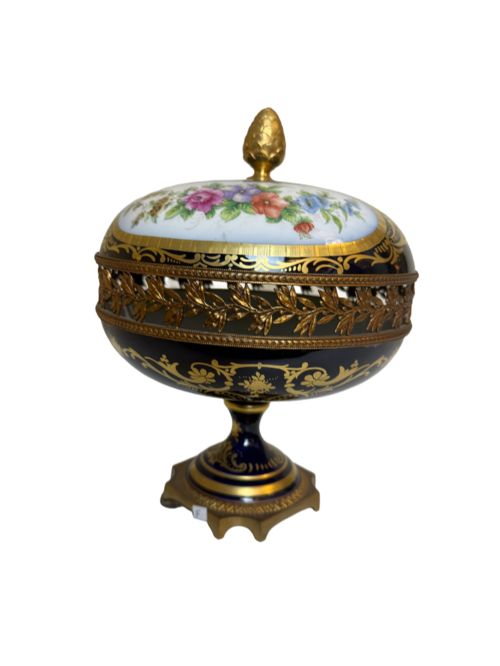


Gilt Ceramic Compote
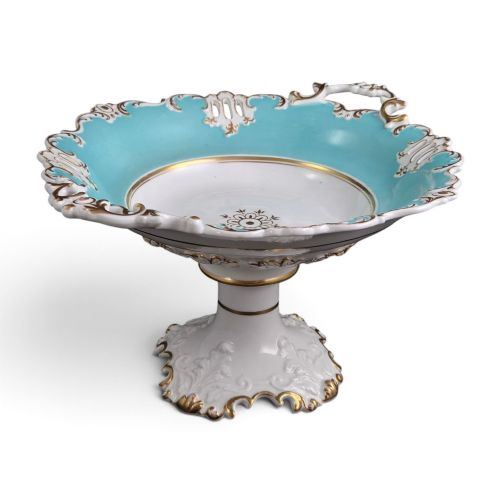
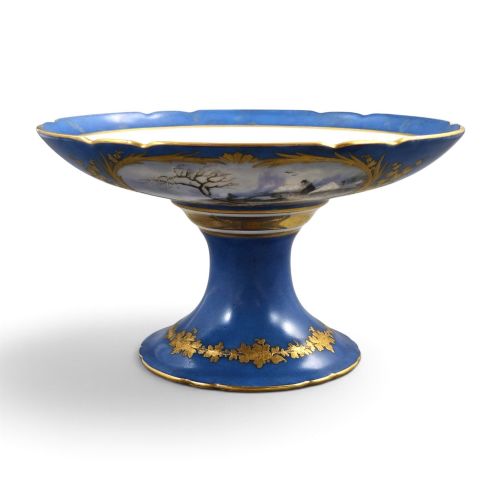
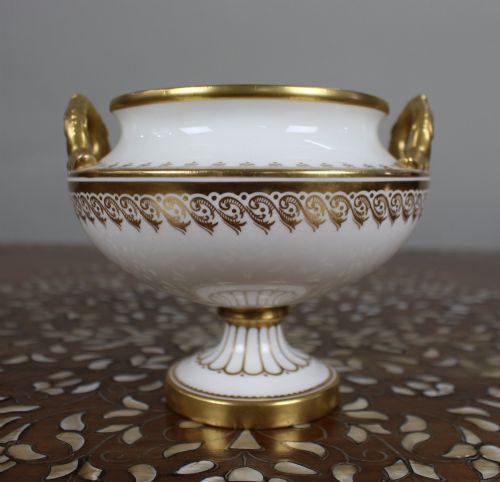
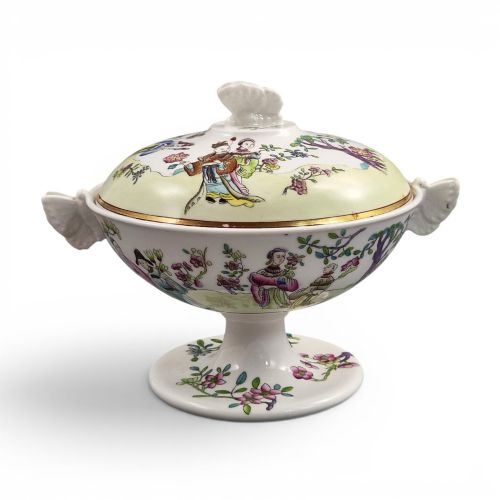
These gilt ceramic compote pieces bring formal display to a table, combining glazed porcelain bowls with rich metallic gilding.
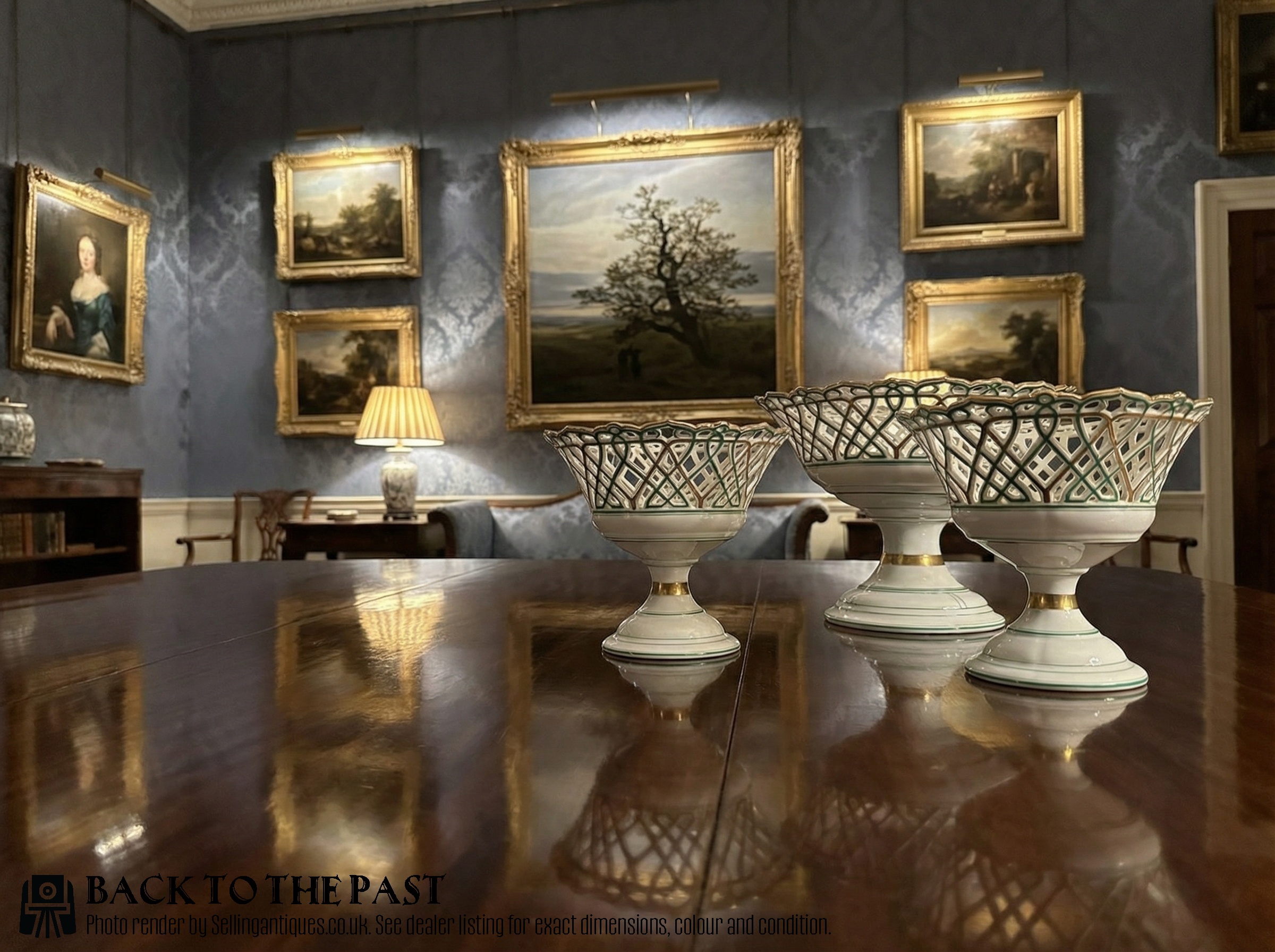
Gilt Ceramic Compote
A gilt ceramic compote serves as an elevated centrepiece bowl, designed for fruit or floral display across dining tables and sideboards. These raised vessels sit on pedestals, columns or feet, elevating the presentation above standard tableware.
The selections available span multiple eras, including Georgian, Victorian and Edwardian periods, alongside nineteenth century French and English workshops. Forms range from tazzas and pedestal bowls to elaborate centrepieces adorned with applied figures and cherubs.
Stylistic influences draw heavily from Rococo revival, Neoclassical and French Empire traditions, incorporating elaborate handles, lattice pierced borders and hand painted botanical or Chinoiserie motifs.
Materials and construction
Makers utilised fine ceramic bodies such as bone china, felspar porcelain and soft paste porcelain, shaped into bowls, baskets and urns. These ceramic forms were frequently combined with cast or chased ormolu mounts and gilt bronze frames.
Surface decoration relied on applied hand gilding, gold leaf and enamel painting over coloured grounds in turquoise, blue and white. Delicate details such as putti, cherubs and applied roses were modelled separately and attached before firing.
Several Victorian centrepieces feature small cherubs peering over the edge as if supervising the fruit.
Measures of quality
Quality rests upon the crispness of the porcelain modelling and the depth of the hand applied gilding. Superior examples feature finely sculpted figures, clean pierced lattice work and hand painted details executed without transfer printing.
The integration between ceramic components and metal mounts, such as ormolu or gilt bronze bases, indicates the standard of manufacture. Well executed pieces maintain structural balance and secure joints between disparate materials.
Coalport·Sèvres·Spode·Limoges·Schierholz·Wedgwood·Swansea·Royal Worcester
The Gilt Ceramic Compote Glossary
- Compote
- A raised vessel with a pedestal or base, used for serving fruit or sweets.
- Tazza
- A shallow saucer shaped dish mounted on a stem and foot, originating from Renaissance forms.
- Ormolu
- Gilt bronze ornamentation applied to furniture, ceramics and clocks, popular in French decorative arts.
- Putti
- Depictions of plump winged infants or cherubs, frequently modelled in high relief on nineteenth century centrepieces.
- Felspar porcelain
- A dense ceramic body developed in the nineteenth century using felspathic rocks to improve durability.
Gilt Ceramic Compote: Frequently Asked Questions
What is a gilt ceramic compote used for?
These elevated bowls served traditionally for presenting fruit, sweetmeats or floral arrangements during formal dining courses.
Today they function primarily as decorative centrepieces on dining tables, sideboards or entrance consoles.
How do I identify a Victorian compote?
Victorian examples often display heavy gilding combined with vivid turquoise or blue grounds, frequently incorporating Rococo revival scrolls.
Maker marks, registration diamonds or specific paste types help narrow the production date within the nineteenth century.
Can I use these bowls for serving food?
Historic ceramic gilding and older glaze formulations are sensitive to modern detergents, acidic foods and cutlery abrasion.
Displaying them dry protects the delicate gold leaf, enamel painting and mounted ormolu from unnecessary wear.
What is the difference between a compote and a tazza?
A compote generally refers to a deeper pedestal bowl designed for holding fruit or floral centrepieces.
A tazza is typically shallower and flatter, resembling a wide saucer raised on a central foot.