




Green Gilt Decorative Bowls
These green gilt decorative bowls bring rich colour and polished metal details to a room, offering both function and striking visual presence.
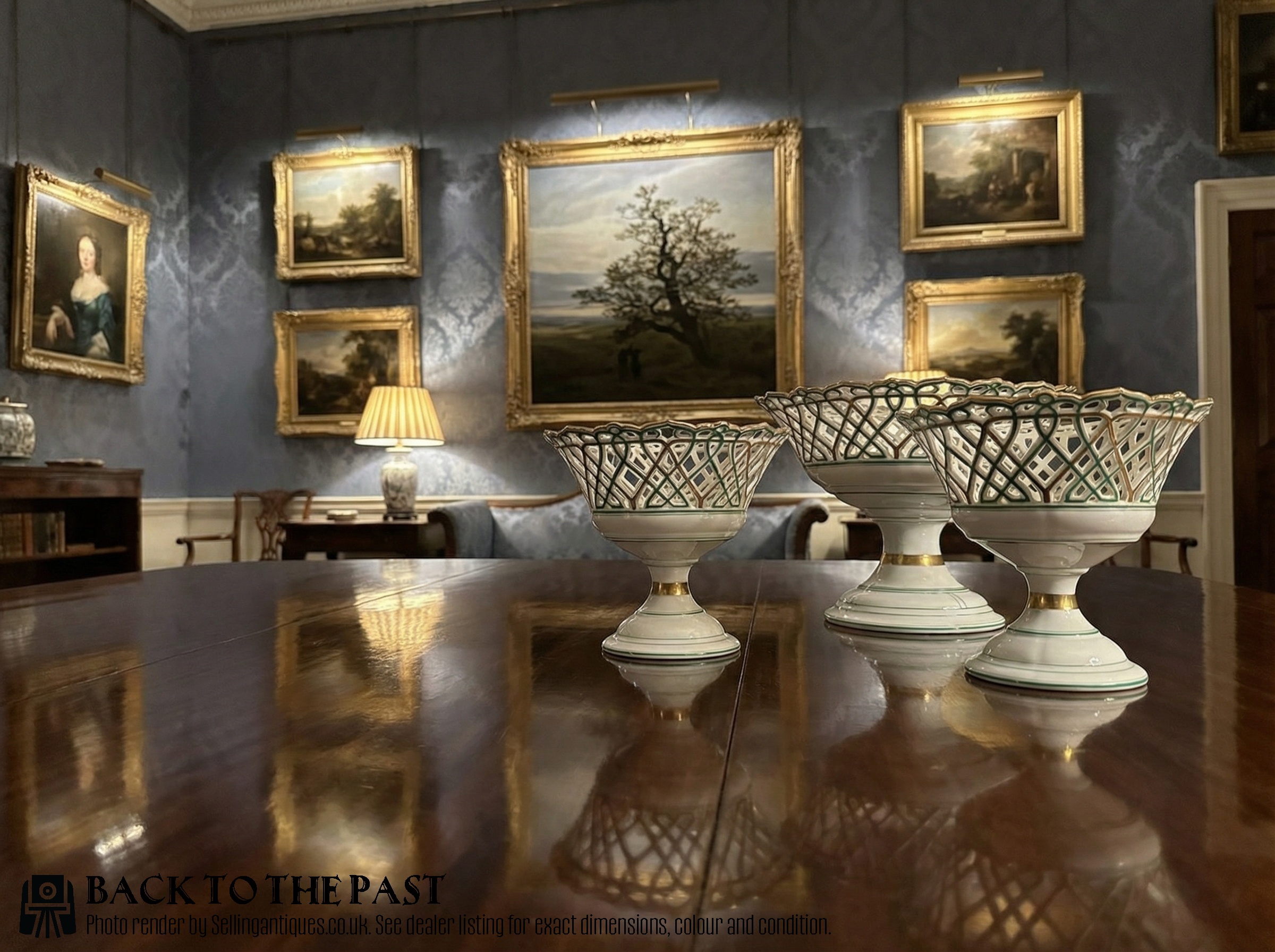
Green Gilt Decorative Bowls
Green gilt decorative bowls encompass a diverse array of ceramic, glass, and stone vessels designed primarily for display rather than domestic service. Pieces appearing on this page span several distinct periods including the Georgian, Regency, Victorian, and Edwardian eras, alongside later twentieth-century examples.
The forms range from porcelain cabinet dishes and opaline glass scallop shell dishes to substantial centrepieces and lustre bowls. Makers and manufacturers utilise various stylistic influences, drawing upon Rococo Revival, Art Nouveau, and Art Deco traditions to shape the final appearance.
Materials and construction methods
Ceramic bodies such as bone china, ironstone, and porcelain provide the foundational structure for many of these vessels, shaped either by throwing or moulding before undergoing high-temperature firing. Artisans then apply specialised glazes, including lustre finishes and enamels, to achieve rich green colourations across the surface.
Gilding techniques involve the application of gold leaf or gilt details, which are meticulously painted or leafed onto the ceramic, glass, or stone. Additional decorative elements like champlevé enamel or gilt bronze detailing are integrated during assembly, particularly on nineteenth-century French centrepieces and tazzas.
Materials span porcelain, bone china, ironstone, opaline glass, green onyx, and gold leaf.
Distinctions in craftsmanship and design
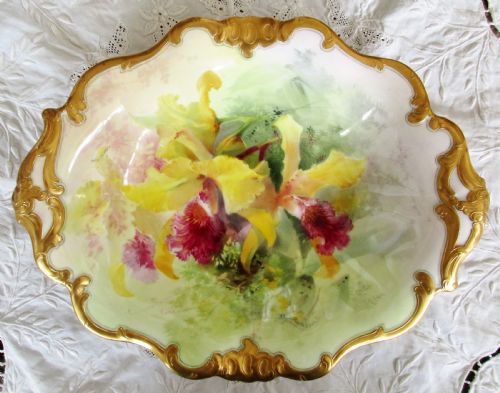
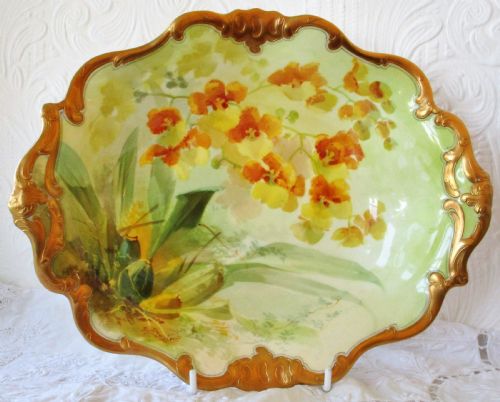
The standard of execution in the hand-painting and gilding largely defines the distinction between ordinary production and finer examples. Precision in intricate motifs, such as floral studies or mythical creatures, demonstrates the hand of a skilled artist rather than a standard factory output.
Material selection also dictates the character of each piece, from translucent bone china to heavy green onyx and opaline glass. The integration of complex mounts, such as champlevé enamel or ormolu work, adds a structural and artistic depth that elevates the piece.
Royal Doulton·Wedgwood·Mason·David Dewsberry·Daisy Makeig-Jones
The Green Gilt Decorative Bowls Glossary
- Lustre Glaze
- A type of ceramic glaze containing metallic oxides that produce an iridescent, metallic sheen upon firing. This technique creates shifting colour effects across the surface of the bowl.
- Champlevé Enamel
- An enamelling technique where troughs or cells are sunk into a metal surface and filled with vitreous enamel powder before firing. It produces vibrant coloured patterns bordered by the exposed metal.
- Cabinet Dish
- A decorative ceramic plate or dish intended strictly for display in a cabinet rather than for dining use. These pieces usually feature elaborate painted scenes or botanical studies.
- Ormolu
- Finely ground high-carat gold applied to a bronze base object, commonly used for decorative mounts and architectural details on nineteenth-century pieces. It provides a bright, durable metallic finish.
- Tazza
- A shallow bowl or saucer mounted upon a stem and foot, designed to elevate fruit or sweetmeats on a table. In decorative contexts, it functions as a centrepiece display item.
- Porringer
- A small, low-rimmed bowl, often featuring one or two small handles, historically used for porridges or soft foods. In decorative ironstone or ceramic forms, it serves as a cabinet or table ornament.
Green Gilt Decorative Bowls: Frequently Asked Questions
What were green gilt decorative bowls used for?
These vessels were primarily created to ornament fine interiors, displayed on side tables, cabinets, or mantelpieces to catch the light. Many forms, such as cabinet dishes and centrepieces, were meant solely for visual appreciation rather than functional service.
Some smaller forms, like opaline shell dishes or porringers, originated as utilitarian tableware before transitioning into decorative collector items. Their combination of rich green glazes and gold leaf suited formal Victorian and Edwardian drawing rooms.
How do I identify a lustre glaze?
A lustre glaze displays a distinctive iridescent sheen that shifts and reflects light differently depending on the viewing angle. This effect results from metallic compounds added to the ceramic surface during the kiln firing process.
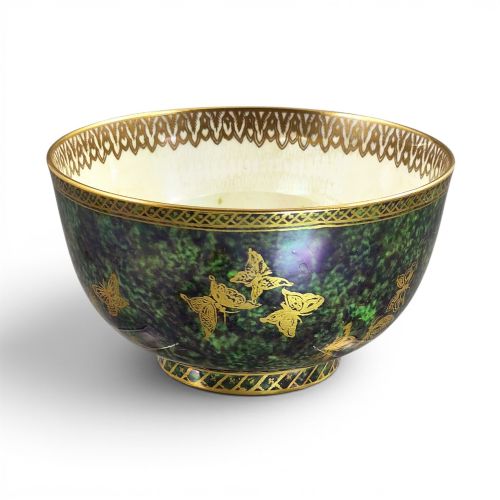
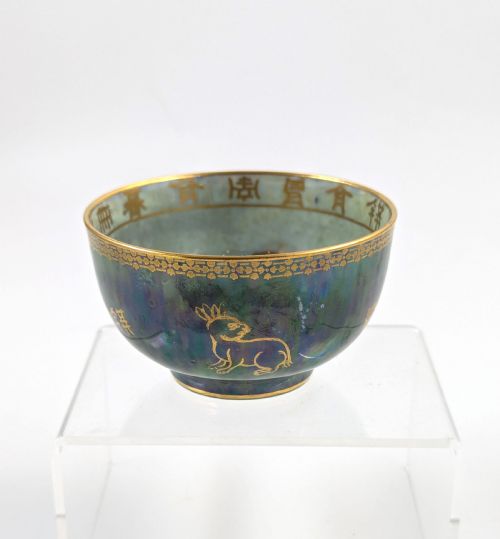
Pieces by designers like Daisy Makeig-Jones utilise this technique to depict imaginative subjects such as dragons or butterflies. The reflective quality distinguishes them from standard opaque or glossy ceramic finishes.
How can I tell the period of a bowl?
Dating relies on examining the stylistic cues, such as the flowing organic lines of Art Nouveau or the geometric symmetry of Art Deco. Maker marks, backstamps, and the specific type of glaze or material also provide clear chronological markers.
For instance, nineteenth-century French pieces often incorporate heavy ormolu mounts and champlevé enamel, whereas early twentieth-century lustre ware frequently bears specific factory ciphers. Comparing these elements with documented production eras helps confirm the age.