
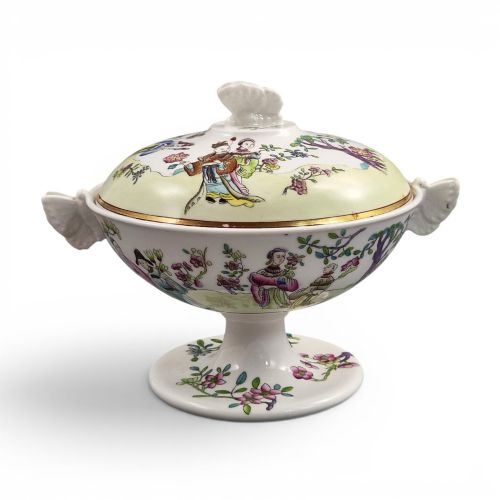


Antique Porcelain Tazza
An antique porcelain tazza is an elevated pedestal dish designed for display or dessert, combining porcelain bowls with decorative metal mounts and hand-painted details.
Antique Porcelain Tazza
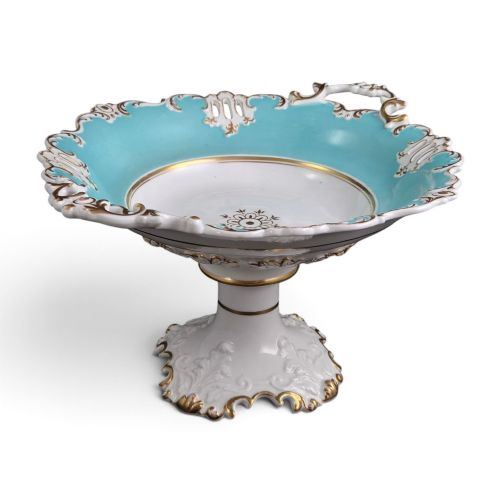
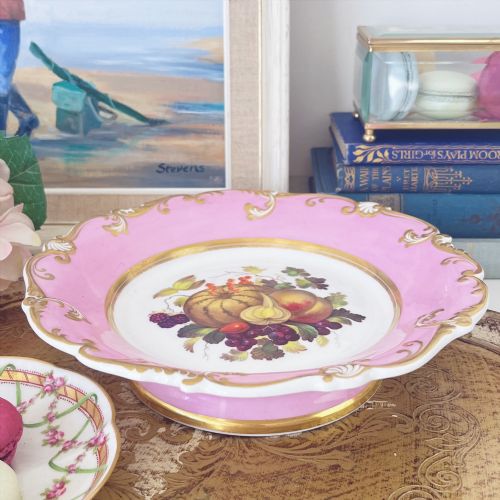
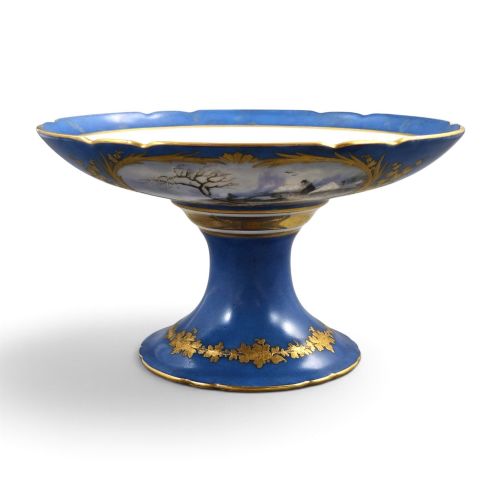
An antique porcelain tazza is a raised pedestal dish or comport primarily used for serving fruit or acting as a table centrepiece during formal dining. You will most frequently encounter nineteenth-century English and French examples featuring painted floral motifs, gilt accents, and shaped rims.
The form bridges practical tableware and decorative art, evolving from Georgian pedestal bowls into elaborate Victorian comports. Makers utilised porcelain alongside gilt bronze and ormolu mounts to create dramatic tiered table settings.
Materials and Construction
These pieces rely on hard-paste or bone china bodies shaped into pedestals, bowls, and plates, often finished with coloured enamel grounds. Artisans applied gold leaf and gilding by hand to accentuate moulded borders and handles.
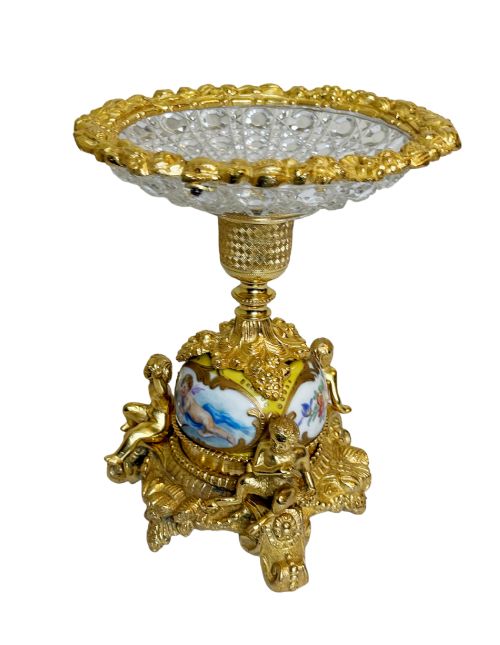
Many French and English comports incorporate cast metal elements, securing the porcelain dish within gilt bronze, ormolu, or champlevé enamel mounts. This combination of ceramic and metal required specialist bronze-smiths working alongside ceramic painters.
Some Victorian dessert services include butterfly handles that seem ready to flutter off the porcelain rim.
Evaluating Quality and Craftsmanship
Quality rests upon the crispness of the porcelain moulding and the precision of the hand-painted decoration. Finer examples display meticulous botanical or scenic artwork executed by skilled studio painters rather than transfer printing.
The weight and detail of the metal mounts dictate the tier of the piece. Heavy, finely chased gilt bronze or ormolu mounts indicate superior workshop production compared to lighter, simpler brass fittings.
Coalport·H & R Daniel·Sèvres·Spode·John Ridgway·Thomas Moorcroft for E.J.D Bodley·Louis Pierre Malpass
The Antique Porcelain Tazza Glossary
- Tazza
- A shallow bowl or plate mounted on a stem and foot, used originally for serving wine or fruit. The form derives from Renaissance metalwork vessels.
- Comport
- A pedestal dish or stand used for serving dessert or holding fruit at the table. It is synonymous with the tazza in nineteenth-century dining services.
- Ormolu
- Finely ground high-carat gold mercury-gilded onto a bronze base. This technique creates a rich golden finish on decorative mounts.
- Champlevé
- An enamelling technique where troughs or cells are carved into the metal surface and filled with vitreous enamel before firing. It frequently appears on French nineteenth-century mounts.
Antique Porcelain Tazza: Frequently Asked Questions
What is an antique porcelain tazza used for?
These elevated dishes served as dessert plates or fruit stands on formal dining tables during the Georgian and Victorian periods.
Today, they function primarily as decorative centrepieces on sideboards, mantelpieces, or dining tables where their painted bowls can be admired.
How do I date a porcelain tazza?
Dating relies on identifying factory marks, ceramic bodies such as bone china or soft-paste porcelain, and stylistic cues like Rococo Revival scrolls.
Nineteenth-century examples often combine moulded porcelain with gilt bronze or ormolu mounts characteristic of Victorian and French manufacturing periods.
Can I use my tazza for serving food?
While these pieces were originally designed for holding fruit or sweetmeats, nineteenth-century pigments and older glazes can be sensitive to modern foods and dishwashers.
It is generally advisable to treat antique porcelain comports as decorative objects rather than active tableware.
How do English and French tazzas differ?
English makers like Coalport and Spode focused heavily on refined bone china bodies with intricate hand-painted botanical designs and shell edges.
French pieces, particularly those in the Sèvres style, frequently integrated elaborate gilt bronze, ormolu, and champlevé enamel mounts into the pedestal design.