
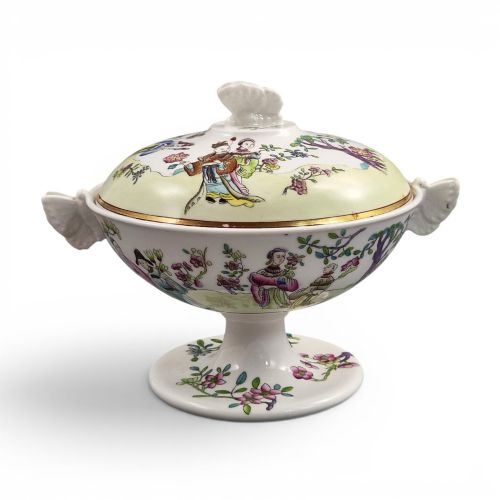
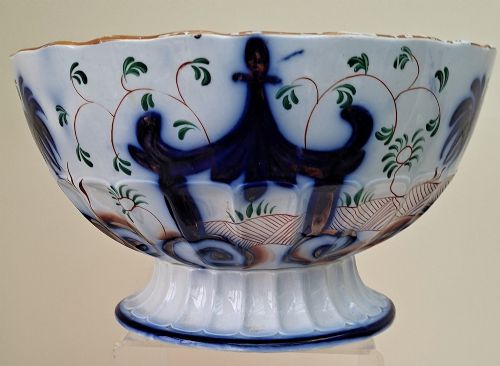
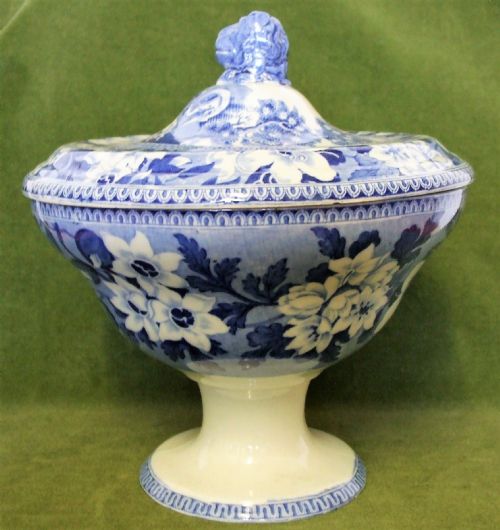


White Ceramic Pedestal Bowl
These white ceramic pedestal bowl pieces bring raised display forms and footed presence to a table, offering classic proportions for fruit and floral arrangement.
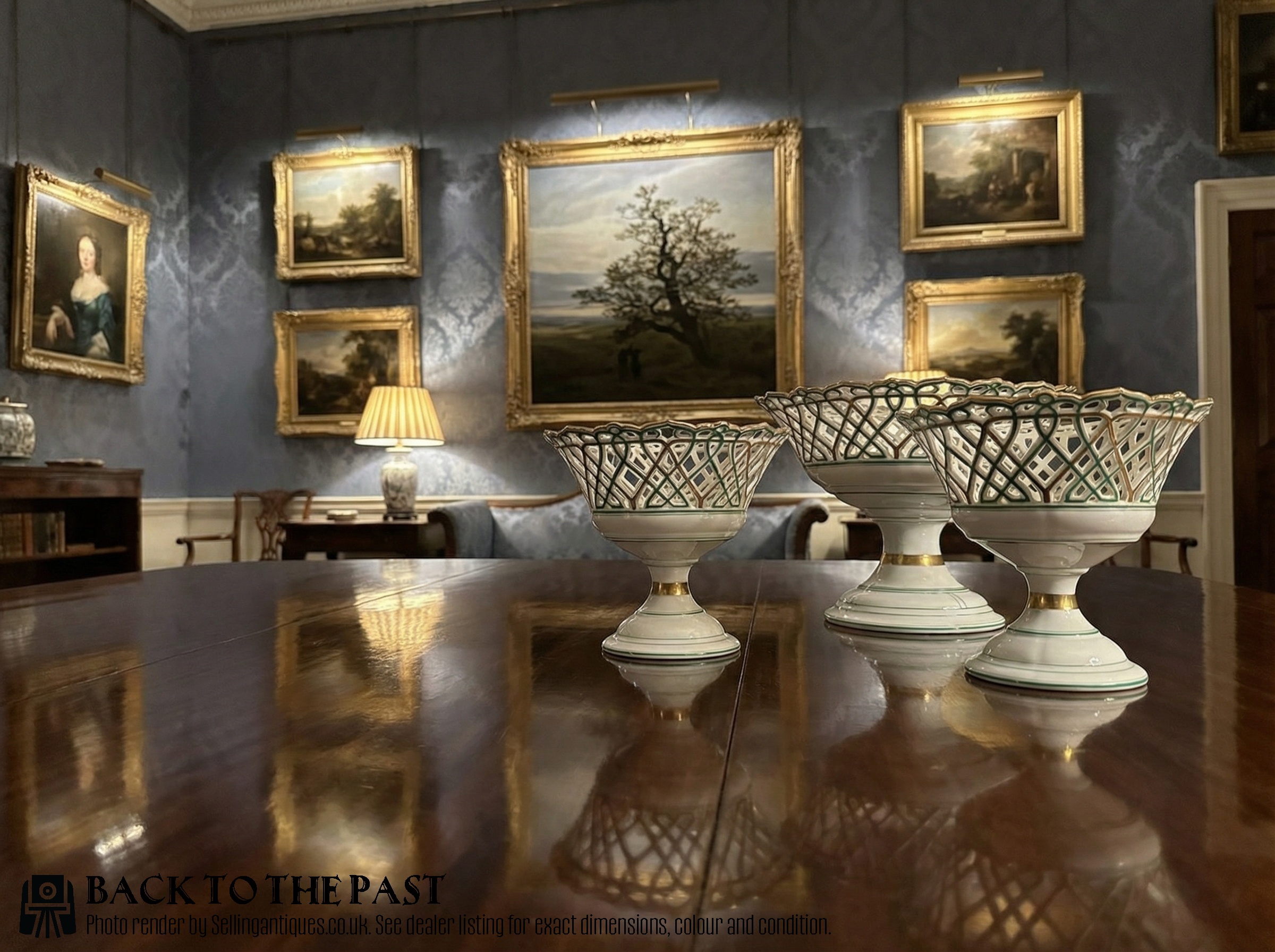
White Ceramic Pedestal Bowl
A white ceramic pedestal bowl stands on a raised foot or column, lifting the main vessel above the surface of a table or sideboard. These items appear across the Georgian, Victorian, and Edwardian periods in forms ranging from fruit bowls and comports to large centrepieces.
The materials span porcelain, earthenware, and pearlware, often finished with white or blue and white transfer patterns, gilding, or applied floral decoration. Buyers encounter footed bowls, compotes, and basket designs created for display and service.
Materials and construction
Potters shaped these pieces using porcelain, ironstone, earthenware, and pearlware, frequently firing the clay before applying intricate glazes and transfer-printed designs. Some vessels incorporate moulded elements such as butterfly handles, lattice work, or applied ceramic roses and putti.
Finishing touches often involve gold leaf, gilding, or hand-painted enamel details over the white ceramic body. Workshops utilised specialised kilns to achieve the smooth white glazes and stable footed bases characteristic of these pedestal forms.
Some nineteenth-century makers populated their white ceramic centrepieces with three-dimensional porcelain roses and busy putti climbing the stems.
Assessing quality in pedestal bowls
Quality depends on the crispness of the moulding, the clarity of transfer printing or hand-painted enamel, and the delicacy of applied figures or handles. Better examples maintain balanced proportions between the pedestal base and the upper bowl without distortion from the kiln.
The sophistication of the glaze and the precision of gilding separate standard production items from finer works. Pieces featuring complex modelled figures or reticulated lattice walls demonstrate higher technical ambition from the maker.
John Rogers and Son·Ulisse Cantagalli·Schierholz Plaue·Minton·Mason
The White Ceramic Pedestal Bowl Glossary
- Pedestal bowl
- A vessel raised upon a central foot or column. This construction elevates the contents for display.
- Comport
- A raised dish or bowl used for serving fruit or sweetmeats at dessert. These footed forms match the pedestal bowl category.
- Ironstone
- A durable type of heavy earthenware patented in the nineteenth century. It resists chipping while supporting intricate moulded designs.
- Transfer printing
- A method of applying engraved designs to ceramics using paper and ink. This technique enabled consistent patterns on blue and white ware.
White Ceramic Pedestal Bowl: Frequently Asked Questions
What is a pedestal bowl used for?
These vessels served historically for presenting fruit, sweetmeats, or floral centrepieces during formal meals. Today they function as standalone decorative objects or table centerpieces.
Their elevated design draws the eye upward, making them suitable for placement on sideboards, dining tables, or mantelpieces.
How do I clean a ceramic pedestal bowl?
Dusting with a soft, dry cloth is usually sufficient for regular maintenance of antique ceramic surfaces. Avoid harsh chemical cleaners that might damage delicate gilding or hand-painted enamels.
Submerging antique pieces in water should be approached with caution, particularly if they feature old repairs or exposed earthenware bodies.
How can I tell the period of a bowl?
Dating relies on examining the ceramic body, glaze characteristics, and any maker marks on the underside. Pearlware and early ironstone indicate specific late eighteenth and nineteenth-century manufacturing windows.
Stylistic cues such as Rococo Revival curves or Victorian aesthetic details further narrow down the era of production.