


Antique Fruit Bowl Set
An antique fruit bowl set brings heavy Victorian silver, Chinese porcelain baskets and Arts and Crafts copper directly to the dining table.
Antique Fruit Bowl Set
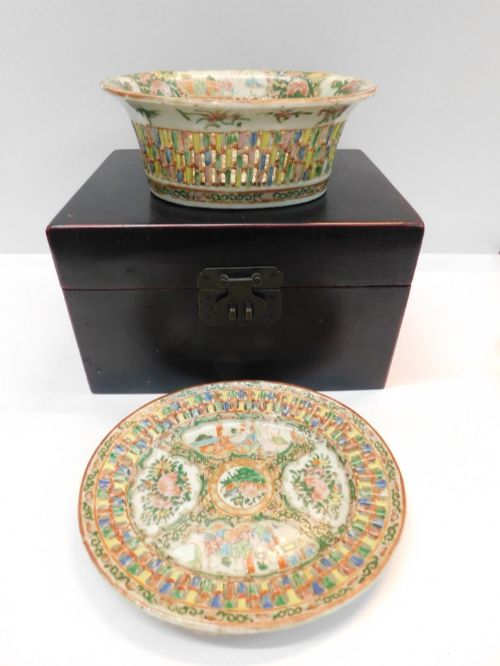
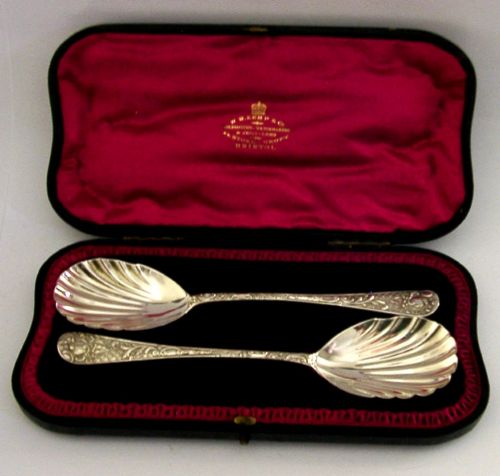
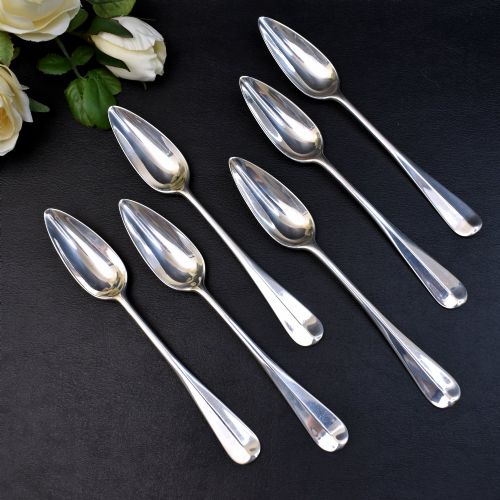
An antique fruit bowl set comprises matching vessels and serving pieces intended for dessert or table service. Collectors searching this phrase encounter groupings that range from cased silver berry spoons and grapefruit sets to porcelain baskets with stands.
The selections on this page span the nineteenth and early twentieth centuries, drawing together styles from Georgian and Victorian periods through to Edwardian, Art Deco and Arts and Crafts designs. English silver plate, sterling silver and Chinese export porcelain dominate the available forms.
Buyers will find individual serving spoons alongside complete sets of dessert dishes, lattice bowls and pedestal bowls mounted with copper and enamel. Each combination reflects the formal dining habits of past decades.
How they were made
Makers utilised traditional metalworking techniques, casting and hammering sterling silver and silver plate into serving spoons, fruit forks and pedestal bowls. Artisans also worked with copper, mounting pieces with Ruskin cabochons and enamel details.
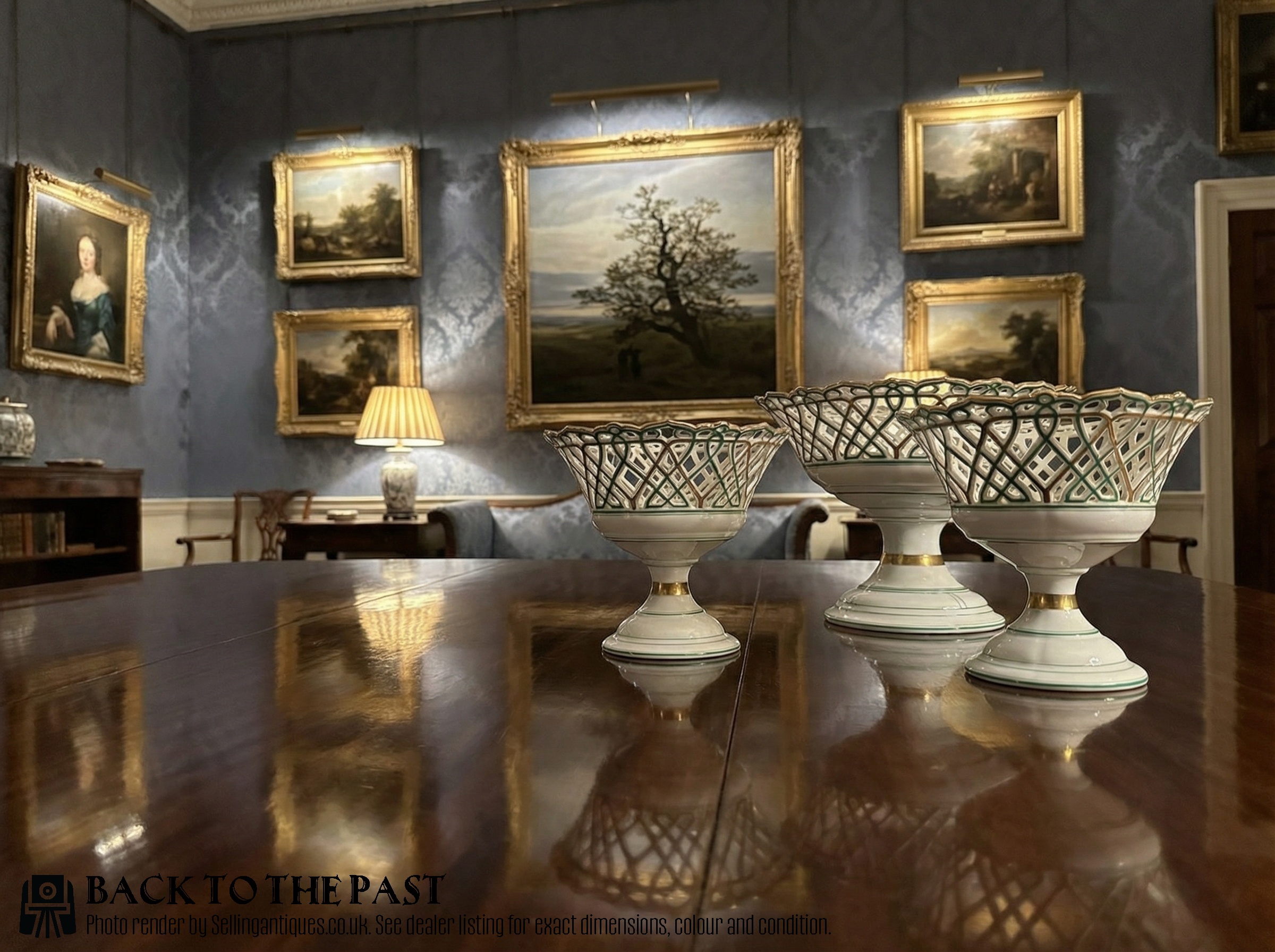
Ceramic sets rely on Chinese porcelain and English pottery bodies, often featuring reticulated lattice work and hand-painted fruit motifs. Stoneware and porcelain were glazed and fired before receiving gilt highlights or delicate pierced decoration.
Enclosure and presentation required additional craftsmanship, with fitted velvet-lined cases housing cased sets of berry spoons, sifters and grapefruit utensils.
Listings feature sterling silver, silver plate, copper, porcelain, enamel and velvet across periods from the nineteenth century to the 1930s.
What varies in quality
Quality rests in the crispness of the chasing on silver handles and the depth of the gilding applied to berry spoons. Superior pieces maintain intact silver plate and well-defined engravings without excessive wear.
In ceramic sets, the fineness of the reticulation and the precision of hand-painted porcelain details separate standard items from finer works. Intricate openwork on chestnut baskets and stands requires high technical skill during the firing process.
The integrity of fitted presentation cases and matching utensil counts also influence the standing of a set, as original boxes protect the contents over generations.
Hamilton and Inches·Royal Worcester·Roberts and Belk·Mathew Hall
The Antique Fruit Bowl Set Glossary
- Berry spoon
- A large serving spoon with an embossed bowl, frequently gilded and chased with fruit designs during the Victorian period. These pieces were specifically intended for serving soft fruits.
- Reticulated
- Describes ceramic or metalwork featuring an openwork lattice pattern formed by cutting or piercing the material before firing or casting. This technique creates delicate basket-weave effects.
- Cabochon
- A polished gemstone or enamel piece cut in a convex, unfaceted form, commonly set into Arts and Crafts copper metalwork. They add decorative colour to pedestal bowls.
- Silver plate
- A base metal, often copper or Britannia metal, coated with a thin layer of silver through electroplating or old Sheffield plating methods. It provided an accessible alternative to solid sterling silver.
- Famille rose
- A palette of Chinese porcelain enamels dominated by opaque pink, developed during the Qing dynasty. Pieces often feature elaborate floral and fruit decorations.
Antique Fruit Bowl Set: Frequently Asked Questions
What is included in an antique fruit set?
These sets typically include a combination of serving bowls, decorative baskets, and matching utensils such as berry spoons, grapefruit spoons, or dessert dishes.
Depending on the era, a set might also feature fitted presentation cases lined with velvet to house silver flatware alongside ceramic bowls.
How were silver fruit spoons used?
Victorian and Georgian silver fruit spoons were designed for serving delicate soft fruits like strawberries and berries, often accompanied by a sifter for powdered sugar.
Over time, specialised utensils evolved for specific table courses, including grapefruit spoons and dedicated dessert service flatware.
How do I care for antique silver plate?
Silver plate requires gentle cleaning with non-abrasive polishes and soft cloths to preserve the underlying metal layer beneath the silver coating.
Storing pieces in dry, tarnish-resistant environments or fitted velvet cases helps maintain the finish without wearing down the engraved details.
What styles are common in these sets?
The pieces span multiple design movements, featuring Victorian and Edwardian chased silver, Arts and Crafts hammered copper with cabochons, and Qing dynasty porcelain.
Art Deco examples introduce cleaner geometric lines in silverplate, while Georgian designs showcase traditional engraved handles and parcel-gilt finishes.