



Pierced Porcelain Centrepieces
Pierced porcelain centrepieces are grand table bowls and baskets designed to hold fruit or flowers, bringing eighteenth and nineteenth century elegance to a room.
Pierced Porcelain Centrepieces
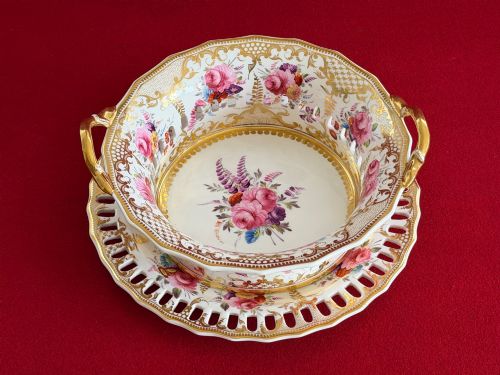
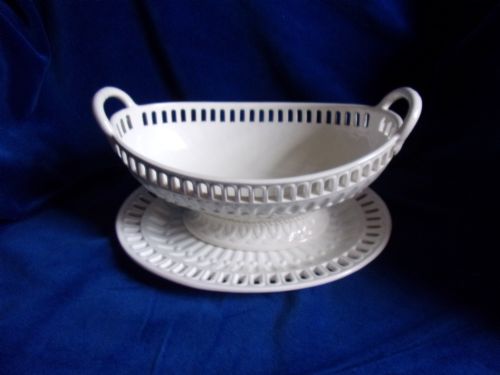
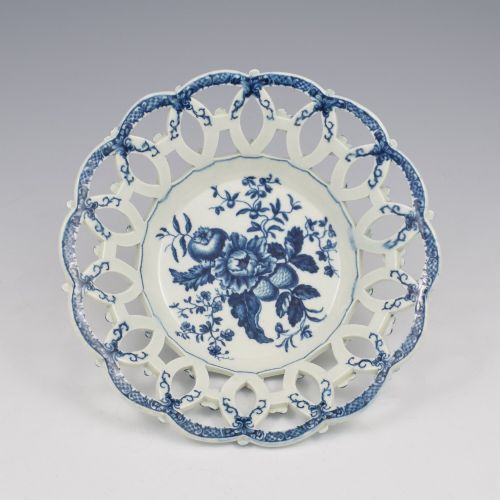
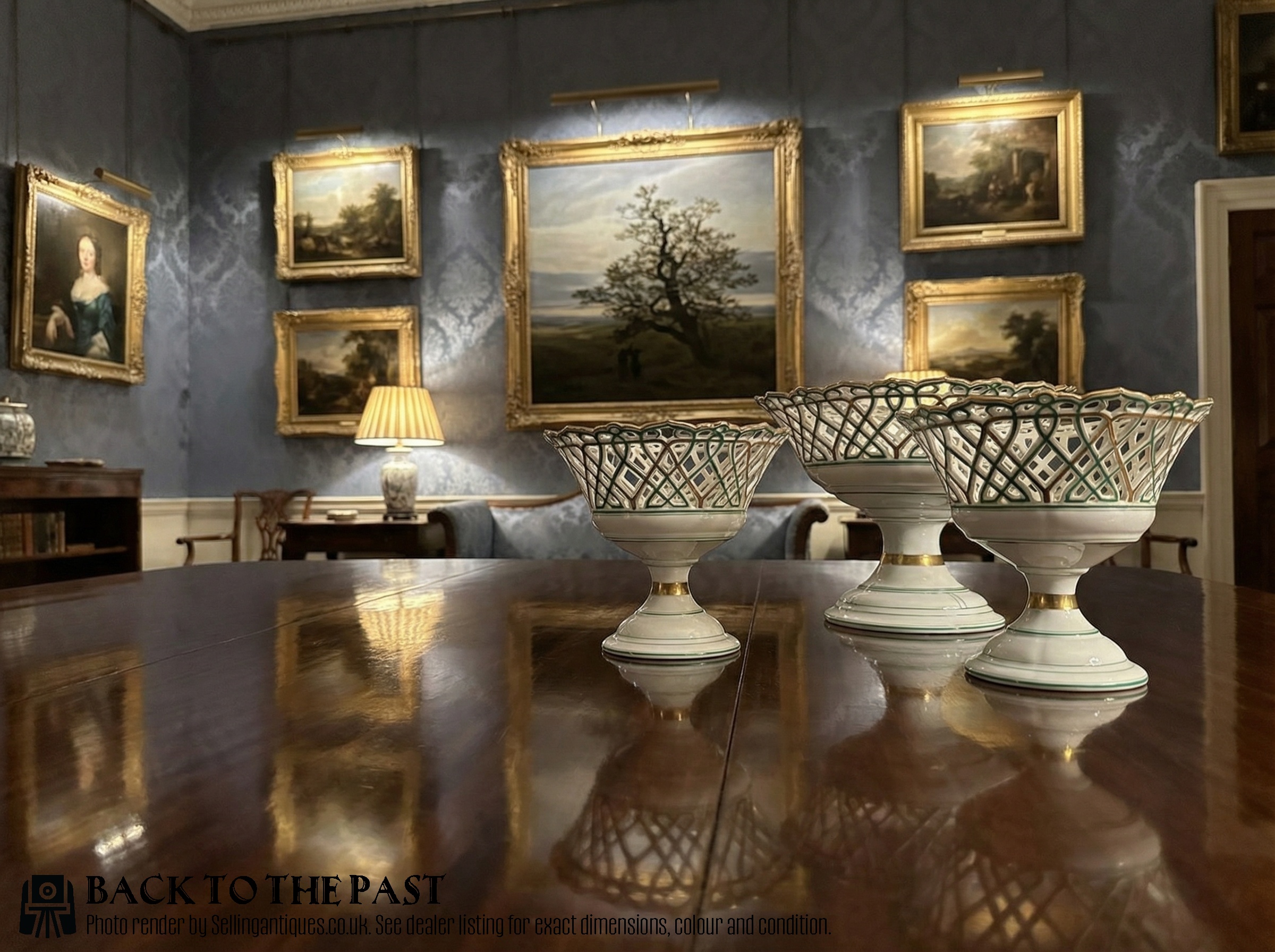
Pierced porcelain centrepieces comprise openwork baskets, bowls, and comports designed for display on dining tables or sideboards. The selection available spans eighteenth-century English works and continental European productions from the nineteenth century.
Makers shaped these objects into circular bowls, oval dishes, and lidded chestnut baskets, often incorporating lattice walls or half-pierced galleries. Styles range from early Georgian and Rococo forms to French Empire and Victorian interpretations.
Buyers encounter everything from simple nineteenth-century lattice bowls to elaborate German centrepieces adorned with applied figures. These vessels serve primarily as decorative focal points rather than utilitarian tableware.
How they were made
Potters utilised soft-paste and hard-paste porcelain pastes, shaping them by hand or moulding the bodies before piercing the wet clay to create intricate openwork lattices. Artisans applied cobalt blue glaze and gold leaf highlights to accentuate the moulded rims and pierced panels.
Detailed floral elements, leaves, and putti were often modelled separately and applied by hand to the exterior surfaces of the bowls and baskets. Firing the pieces required careful placement in the kiln to prevent warping of the delicate pierced walls.
Pierced Porcelain Centrepieces Retail Price Guide 2026
Typical asking prices for pierced porcelain centrepieces among the pieces listed under this phrase on Sellingantiques today, from the lower quarter to the upper quarter. They describe what is for sale here now, not the wider market.
German artisans occasionally crammed so many tiny porcelain roses onto a single basket that the flowers outnumbered the leaves.
What varies in quality
Quality rests on the crispness of the openwork piercing and the finesse of any applied decorative elements such as flowers and figures. Early examples display sharper hand-tooled details in the lattice work compared to later mass-produced alternatives.
The sophistication of the painting, particularly the control of cobalt underglaze and the application of gilding, separates standard decorative vessels from exceptional artistic achievements. The overall balance of the form and the preservation of the delicate porcelain edges dictate the desirability of each piece.
Derby Porcelain·Schierholz Plaue·Meissen·Sevres
The Pierced Porcelain Centrepieces Glossary
- Soft-paste porcelain
- A glassy porcelain composition fired at lower temperatures than hard-paste, common in eighteenth-century English factories. It produces a warm, creamy body that absorbs glaze softly.
- Cobalt underglaze
- A blue pigment applied to the unfired ceramic body before glazing and firing. This technique ensures the colour becomes permanent and deeply integrated into the surface.
- Comport
- A large ornamental bowl or dish raised on a high foot, used for serving fruit or sweets. These pieces form the structural centre of many table arrangements.
- Lattice
- An open framework of crisscrossed porcelain strips forming geometric patterns. This decorative piercing lightens the heavy appearance of the ceramic body.
- Putti
- Depictions of plump, winged infant figures modelled in relief on the exterior of continental European porcelain. They add a theatrical element to the composition.
Pierced Porcelain Centrepieces: Frequently Asked Questions
What were pierced porcelain centrepieces used for?
These vessels stood at the centre of dining tables to hold fresh fruit, sweetmeats, or flowers during formal meals. Their openwork design allowed air to circulate around delicate contents while providing an impressive visual display for guests.
Over time, their role shifted from dining table utility to static interior decoration on sideboards and mantelpieces. Collectors today continue to appreciate them as sculptural centrepieces rather than functional serving dishes.
How do I date an antique porcelain centrepiece?
Dating relies on examining the paste composition, glaze characteristics, and stylistic markers such as Rococo curves or Victorian ornamentation. Early pieces often feature hand-modelled elements and softer glazes unique to eighteenth-century kilns.
Factory marks, where present on the base, provide direct evidence of origin and production era. Comparing the intricacy of the piercing and painting styles to documented examples helps narrow down the manufacturing decade.
How should I display a porcelain centrepiece?
Place these pieces on sturdy surfaces away from high-traffic areas to protect their delicate pierced walls and applied figures. Natural light highlights the intricate lattice work and fine glaze details without causing fading.
Avoid overcrowding the surrounding space so the openwork design remains the visual focus of the room. Using a dedicated stand or table allows the piece to be viewed from multiple angles.