
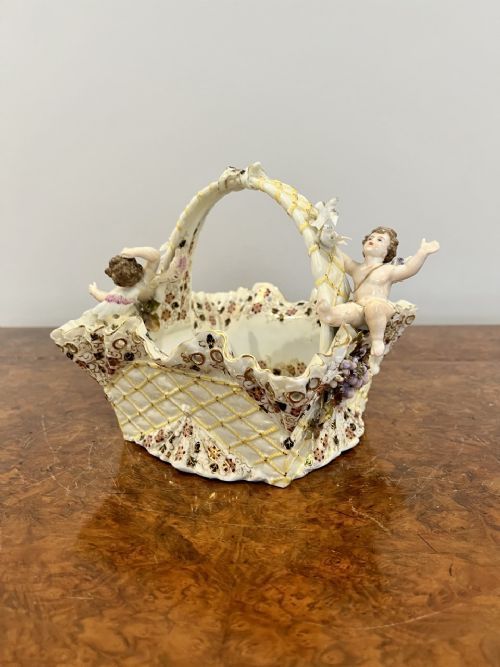


Gilded Porcelain Compotes
These gilded porcelain compotes combine rich gold leaf and delicate ceramic forms to anchor a formal dining table with height and distinction.
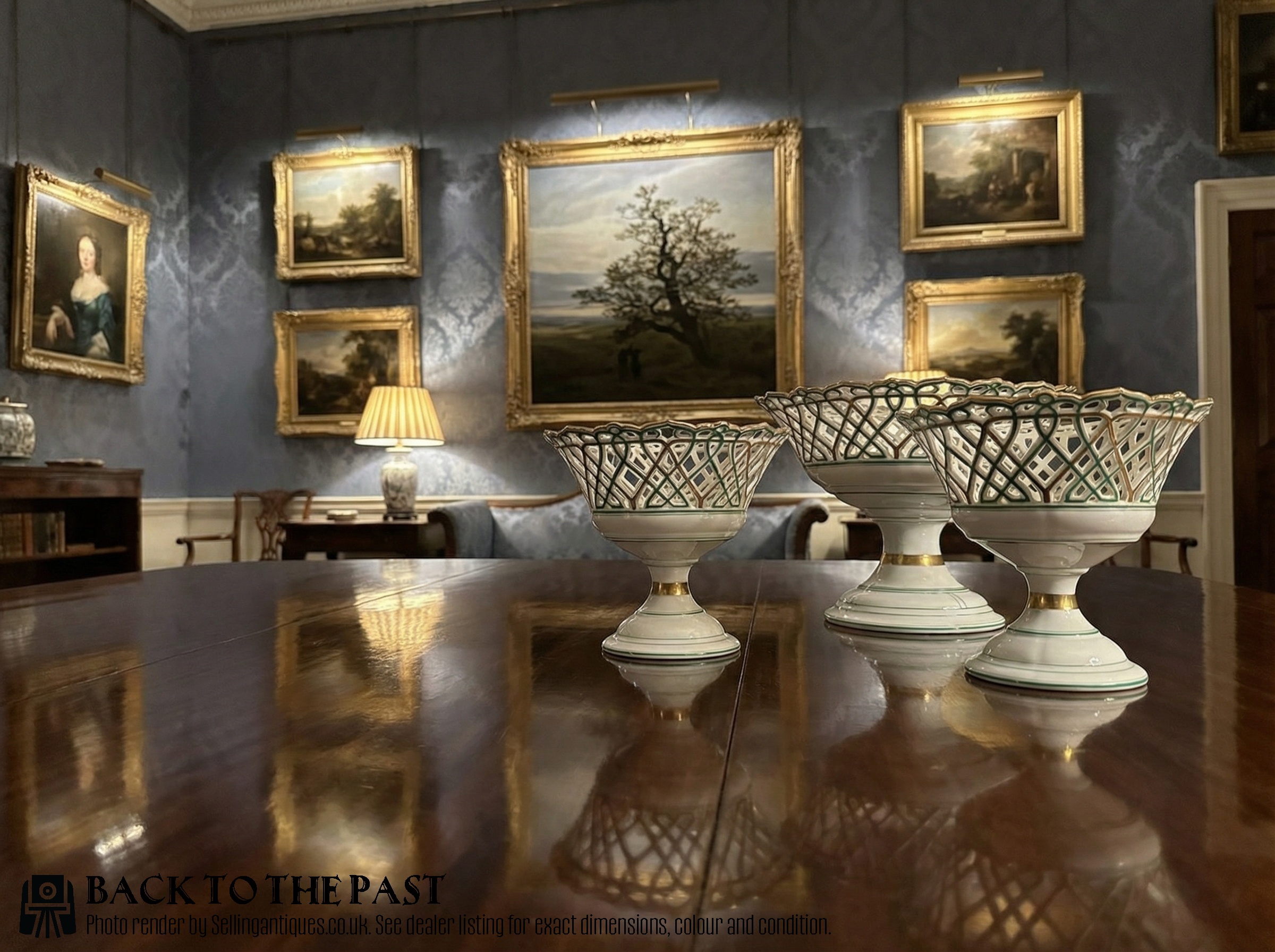
Gilded Porcelain Compotes
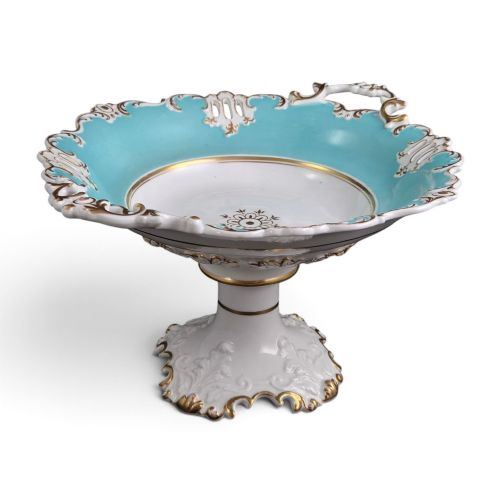
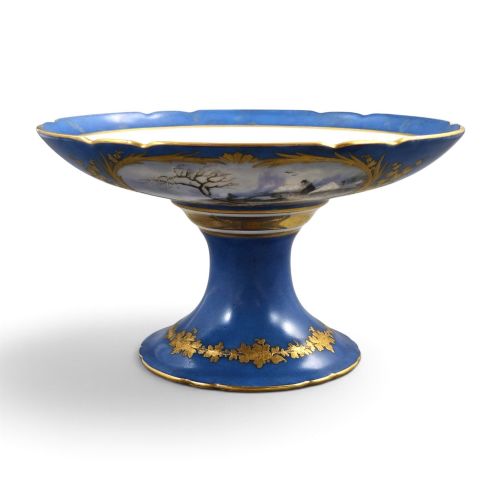
Gilded porcelain compotes bring elevated display vessels to the table, taking the form of tazzas, pedestal bowls, and large centrepieces designed for fruit or decorative arrangements. You will frequently encounter 19th-century English and continental pieces that utilise traditional pedestal designs with elaborate gilt ornamentation.
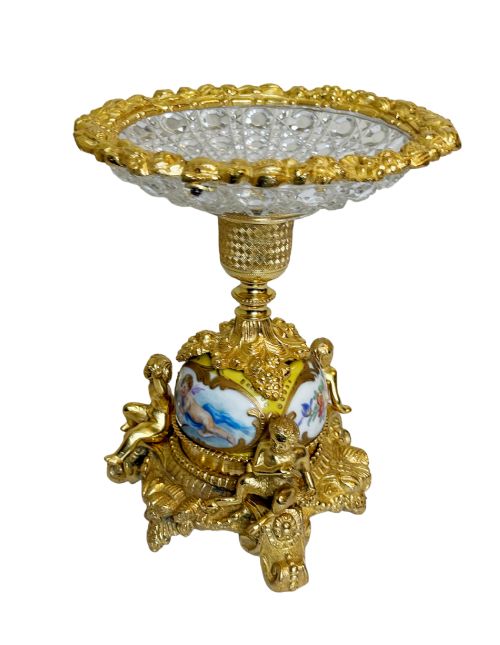
The selection ranges from Victorian bone china tazzas and Mason's ironstone comports to French porcelain basket bowls and German figural centrepieces featuring cherubs. These footed vessels served both functional dessert service duties and purely ornamental roles in period interiors.
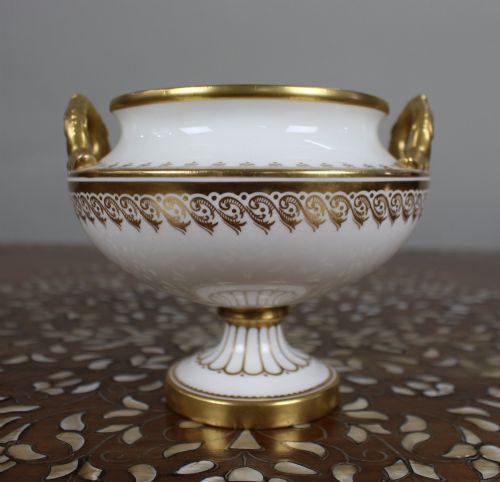
Makers utilised various forms including two-handled urns, lattice bowls, and shell-mounted pedestals to create height and visual interest. The surviving examples reflect the Victorian appetite for richly decorated tablewares that combined hand-painted floral motifs with heavy gilding.
Materials and Craftsmanship
Makers relied primarily on fine porcelain, bone china, and ironstone as the structural body, shaped into pedestals, bowls, and baskets. Artisans then applied gold leaf, gilt, and enamel paints by hand to highlight moulded details, handles, and borders.
Many compotes integrate mixed media, combining porcelain bowls with cast gilt bronze, ormolu mounts, and cut crystal elements. Figural compotes incorporated sculpted putti and cherubs, modelled separately before being attached to the main pedestal structure.
Listings here feature 19th-century British and continental porcelain, ranging from simple bone china comports to elaborate gilt bronze and cut crystal centrepieces.
Assessing Quality and Execution
Quality rests in the precision of the hand-painted decoration, where delicate botanical studies or figurative work by known porcelain artists elevate a standard compote into a masterwork. The crispness of the moulding in figural elements like putti and cherubs further distinguishes superior pieces from standard production wares.
The application and retention of the gilding indicate the original workshop's standing, with burnished gold leaf showing superior durability and lustre compared to simpler gilt paints. The integration of mounts, whether ormolu or gilt bronze, demonstrates whether a compote was conceived as a unified composition or assembled from generic parts.
Coalport·Sèvres·John Ridgway·Thomas Moorcroft for E.J.D Bodley·Royal Worcester·Samson
The Gilded Porcelain Compotes Glossary
- Comport
- A shallow bowl raised on a high foot, used traditionally for serving fruit or sweetmeats at the end of a formal meal. It is synonymous with the term compote in British antique usage.
- Tazza
- An Italian term for a shallow saucer-like dish mounted on a stem and foot, frequently utilised in 19th-century porcelain tablewares for dramatic height. These pieces often feature pierced lattice rims or painted scenic reserves.
- Ormolu
- Finely ground high-carat gold applied to a bronze base using a mercury amalgamation process, creating a rich golden finish found on French mounts. This technique was widely employed on 19th-century garnitures and centrepiece bases.
- Putti
- Representations of small, chubby male children, often winged, derived from classical art and frequently modelled supporting porcelain bowls or lounging on shells. They are a defining sculptural motif of Victorian figural centrepieces.
- Bone china
- A type of soft-paste porcelain incorporating bone ash, developed in England to create a whiter, more translucent body capable of supporting intricate moulded shapes and bright enamels.
Gilded Porcelain Compotes: Frequently Asked Questions
What is a compote used for?
Compotes served as elevated serving dishes for fruit, nuts, and sweetmeats during formal Victorian dessert courses. They were placed centrally on the table to provide height and structure to the table setting.
In modern settings, they function effectively as decorative centrepieces, holding seasonal displays or standing alone as sculptural ornaments on sideboards.
How do I date a porcelain compote?
Dating relies on examining the style of the gilding, the paste composition, and any factory marks stamped or painted on the base. Victorian pieces frequently exhibit eclectic revivals like Rococo or Aesthetic Movement motifs.
Comparative analysis of the hand-painted subjects and framing scrolls also helps narrow the period of manufacture down to specific decades within the nineteenth century.
How should I clean a gilded porcelain compote?
Gilded surfaces require gentle dusting with a soft, dry cloth to prevent abrasion of the delicate gold leaf and enamel paints. Moisture and commercial cleaning agents can strip historical gilding from the porcelain body.
Keep these vessels out of direct sunlight and away from areas of high humidity to preserve the integrity of both the ceramic body and any gilt bronze mounts.