









Gilt Bronze Mounted Planter
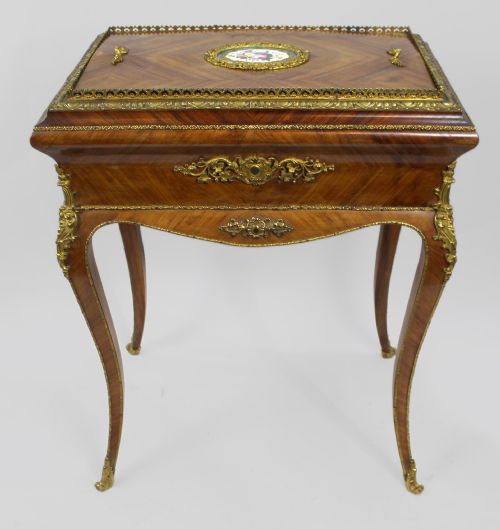
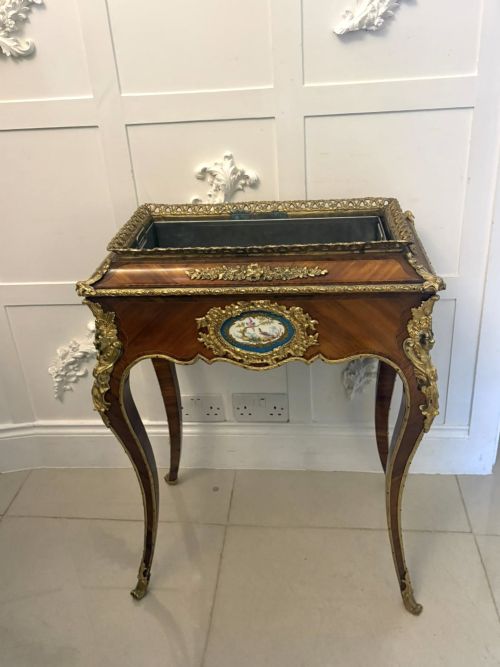
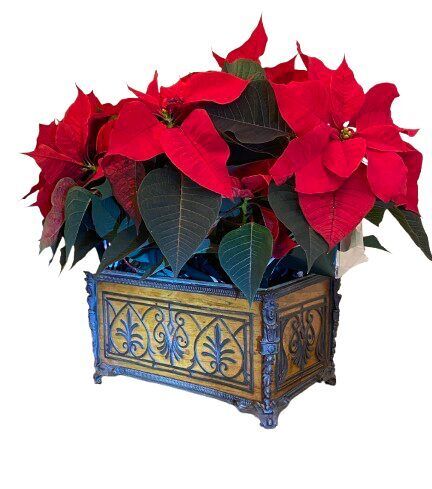
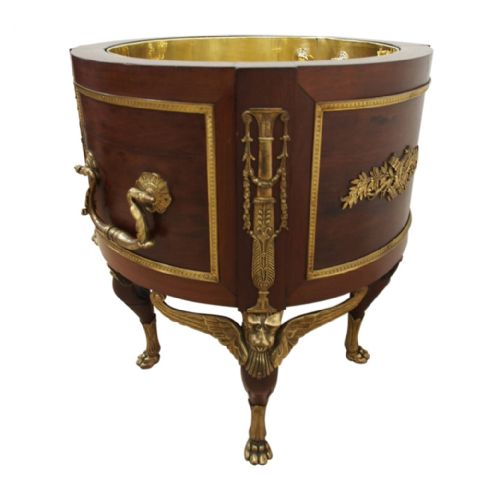
These gilt bronze mounted planter pieces combine ornamental metalwork with ceramic, glass or wood to display plants with nineteenth-century elegance.
Gilt Bronze Mounted Planter
A gilt bronze mounted planter functions as an ornamental vessel designed to hold plants, frequently taking the form of a jardiniere, jardiniere table or classical urn. The pieces appearing here originate primarily from the nineteenth century, reflecting periods such as the Victorian era and Napoleon III reign.
Materials and construction
Craftsmen built the bodies of these planters from hardwoods including kingwood, burr walnut, mahogany, olive wood and ebonised timber, often incorporating marquetry inlay or porcelain plaques. Ceramic elements like majolica, cloisonne enamel, cut glass and alabaster provide contrasting textures within the wooden and metal frameworks.
Decoration relies heavily on cast ormolu and gilt bronze mounts, which frame the panels, form handles and accentuate the structural lines. These metal elements required skilled channelling, casting and gilding to complement the primary materials of the vessel.
Gilt Bronze Mounted Planter Retail Price Guide 2026
Typical asking prices for gilt bronze mounted planter among the pieces listed under this phrase on Sellingantiques today, from the lower quarter to the upper quarter. They describe what is for sale here now, not the wider market.
The documented periods across these items range from the early nineteenth-century Restauration era through Victorian times to the Edwardian period.
Distinctions in craftsmanship
Quality rests in the crispness of the gilt bronze or ormolu casting, where finely chased details and heavy gilding distinguish superior mounts from softer, simpler metalwork. The integration between the metal mounts and the underlying wood, porcelain or glass reveals the precision of the joinery.
The choice of primary timber and secondary ornamentation elevates certain examples, such as those featuring detailed marquetry, Sevres-type porcelain plaques or complex cloisonne enamel work. Structural integrity in heavier stands and tables also dictates the standing of a piece.
The Gilt Bronze Mounted Planter Glossary
- Jardiniere
- An ornamental pot or stand designed to hold flowers or plants, typically used as a decorative centrepiece in a room. These vessels appear in ceramic, wood and metal.
- Ormolu
- A gilded bronze application technique utilising a mercury amalgam to achieve a rich gold-coloured finish on decorative metal mounts. It defines much of the French decorative hardware.
- Cloisonne
- An ancient technique for decorating metal object surfaces by adding compartments soldered to the metal body and filling them with coloured enamel paste. These panels create vibrant surface patterns.
- Marquetry
- The art of applying pieces of veneer to a structure to form decorative patterns, pictures or designs. Cabinet-makers used varied coloured woods to achieve pictorial depth.
Gilt Bronze Mounted Planter: Frequently Asked Questions
What is a jardiniere table?
A jardiniere table combines a functional furniture form, such as a side table or stand, with a built-in metal-lined container for plants or flowers. These pieces allowed nineteenth-century households to incorporate greenery directly into formal reception rooms.
They often feature gallery edges or removable liners to protect the surrounding wood veneers from water damage during use.
How do I care for wood and ormolu?
Maintenance requires keeping wooden surfaces conditioned with appropriate wax while protecting the gilt bronze mounts from excessive moisture and abrasive cleaners. Gentle dusting with a soft cloth preserves both the timber grain and the metallic sheen.
Avoid placing live plants directly into unlined wooden vessels to prevent water penetration and subsequent warping of the veneers.
Where were these planters placed?
These decorative vessels occupied prominent positions in nineteenth-century drawing rooms, boudoirs and conservatories, often set against walls or used as freestanding centrepieces. Their dual function as furniture and plant holders made them versatile display items.
Matching pairs were frequently positioned on side tables or flanking fireplace hearths for balanced interior schemes.