

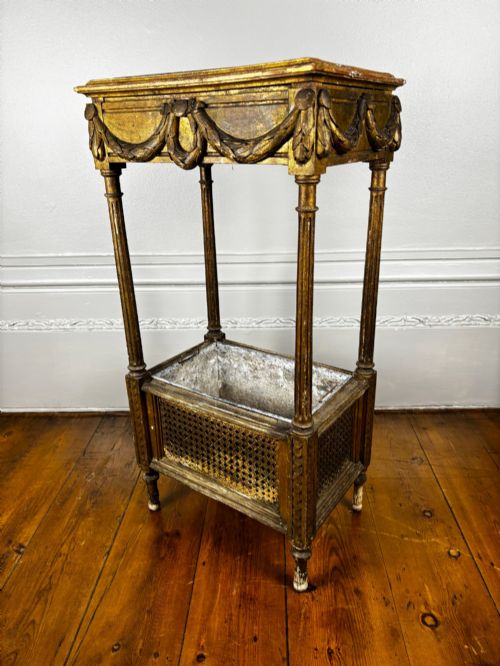
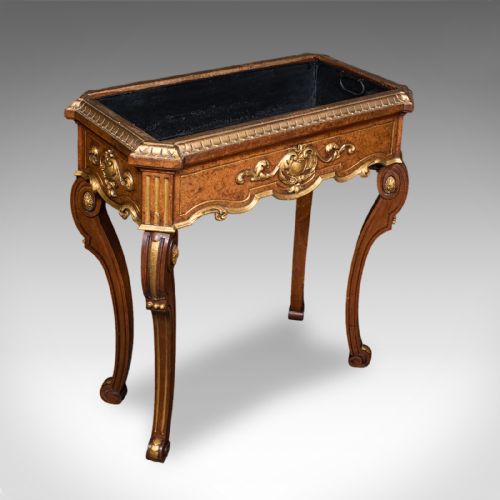
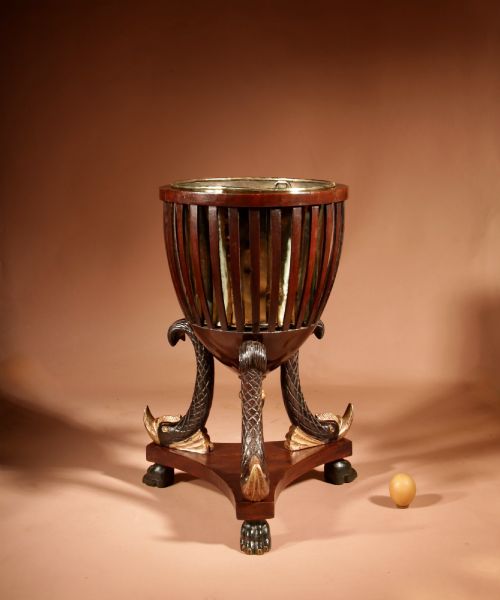

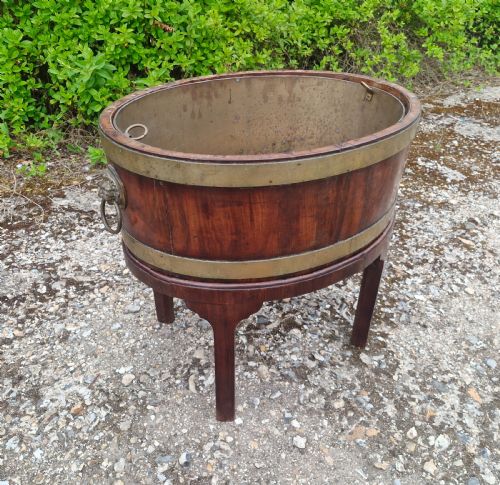
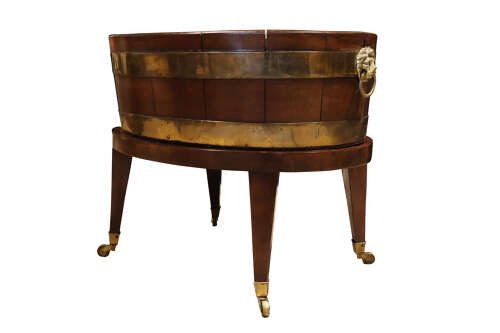


Regency Planter Stand
These pieces for a regency planter stand bring sculptural greenery indoors, uniting period cabinet-making with functional display.
Regency Planter Stand
A regency planter stand draws on the forms of the early nineteenth century, encompassing plant stands, jardiniere tables, wine coolers and cachepots. Buyers encountering this phrase will find pieces spanning the Georgian, Regency, and William IV eras, alongside later revivals.
Most examples take the form of freestanding tables, buckets on stands, or urns on pedestals. They serve to elevate plants and floral arrangements within domestic rooms, echoing the classical tastes of the period.
How they were made
Cabinet-makers relied primarily on richly figured timbers such as mahogany, walnut, and rosewood, often shaped with coopered construction or turned supports. Metal elements played a crucial structural and decorative role, utilising brass banding, zinc linings, or ormolu mounts to protect the wood from moisture.
Surface treatments ranged from polished timber grains to ebonised finishes and giltwood embellishments. Wirework and marble inserts also appear in specific examples, reflecting the diverse material preferences of the nineteenth century.
Regency Planter Stand Retail Price Guide 2026
Typical asking prices for regency planter stand among the pieces listed under this phrase on Sellingantiques today, from the lower quarter to the upper quarter. They describe what is for sale here now, not the wider market.
Listings feature mahogany, walnut, and rosewood alongside brass, zinc, and ormolu across the Regency and William IV periods.
What varies in quality
The standard of a regency planter stand rests on the crispness of its turned woodwork and the integrity of its internal metal linings. Superior examples exhibit precise joinery, thoughtful timber selection, and original hardware rather than later replacements.
Proportion and decorative restraint dictate the visual balance of the piece. Masterful execution shows in harmonious classical details and solid construction designed to withstand the practical demands of holding soil and water.
Enoch Wood And Sons
The Regency Planter Stand Glossary
- Jardiniere
- An ornamental pot or stand for holding plants or flowers. These receptacles sit upon dedicated tables or floor pedestals.
- Coopered
- Constructed from curved staves of wood joined together side by side, much like a barrel. This technique allowed makers to form round containers for water and plants.
- Ormolu
- Gilded bronze used for decorative mounts on furniture. It adds bright metallic contrast to dark woods like mahogany.
- Cachepot
- An ornamental container used to conceal an ordinary flower pot. They often come fitted with matching stands.
- Torchere
- A tall decorative stand originally designed to hold a candle or light. Later examples frequently serve as plant or urn supports.
Regency Planter Stand: Frequently Asked Questions
What is a regency planter stand?
It is an antique stand or table designed to display indoor plants, drawing on design motifs from the early nineteenth century.
Such pieces often double as wine coolers or cachepots, reflecting the versatile furnishing habits of the period.
How were they used historically?
Wealthy households placed them in drawing rooms and reception spaces to bring living greenery and exotic plants indoors.
Their metal linings protected the surrounding timber furniture from moisture and soil during watering.
Can they still hold real plants?
Many retain functional metal or zinc liners suitable for holding potted plants, provided proper care is taken.
Using a hidden inner saucer prevents dampness from damaging antique wooden bases or coopered staves.
How do I spot a later revival piece?
Later copies often utilise machine-cut timber and standardised fixings that differ from early nineteenth-century hand-craftsmanship.
Examine the patination on the wood and the wear patterns around the feet to understand the true age of the stand.