


Gilt Bronze Bust
A gilt bronze bust brings classical presence and fine metalwork into a room, capturing historical figures and mythological subjects with enduring metallic lustre.
Gilt Bronze Bust
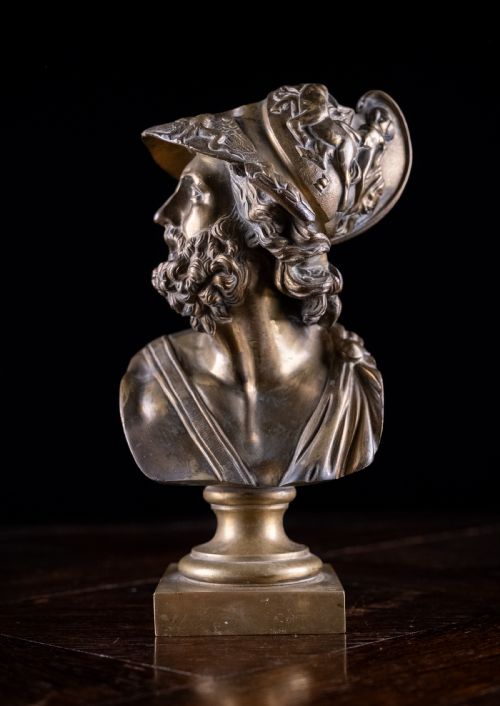
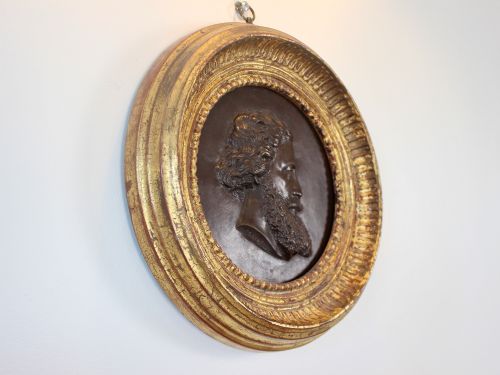
A gilt bronze bust represents a portrait sculpture focused on the head, shoulders and chest, rendered in cast metal with a golden finish. These works draw heavily from classical antiquity and historical portraiture, depicting subjects such as literary figures, rulers, mythological deities and classical youths.
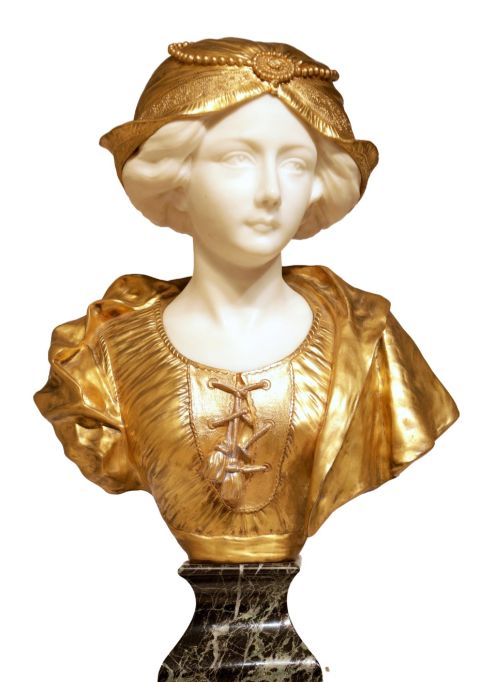
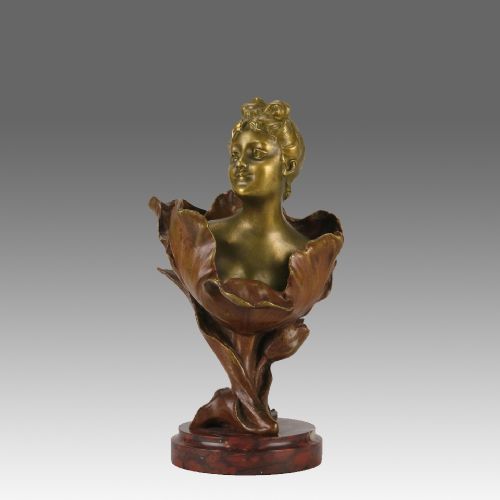
The versions most commonly encountered on this page date from the nineteenth century and the Edwardian era, often bearing French origins. Makers combined the metal portrait with contrasting elements such as marble, onyx, alabaster or specialised plinths to create balanced decorative objects.
Materials and construction
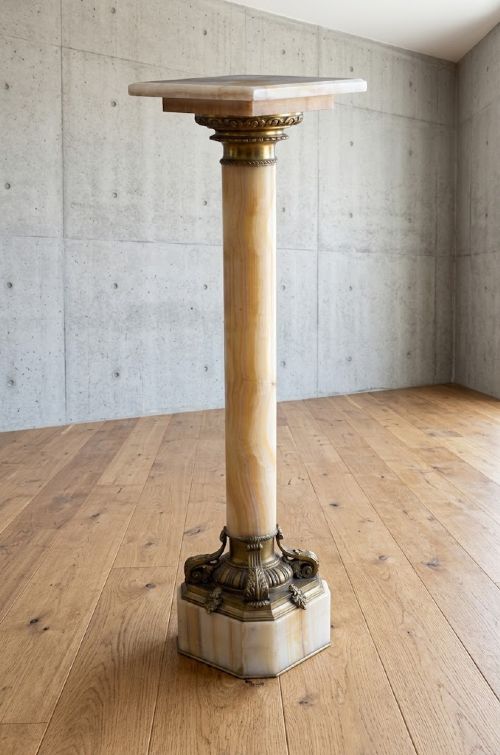
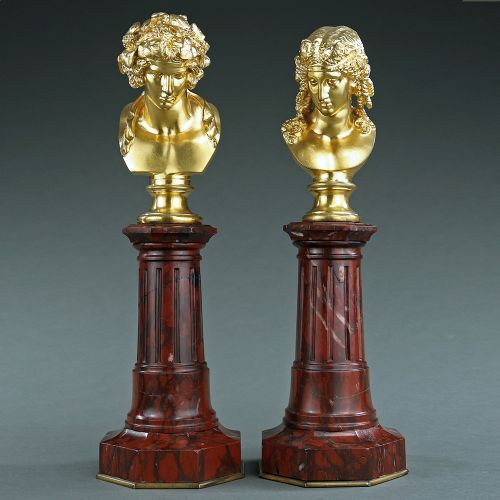
Sculptors mounted the completed metal portraits upon heavy stone bases, incorporating red marble, portoro marble, onyx or bluejohn. Coloured stone columns and pedestals provided stable foundations that elevated the metalwork.
Listings feature nineteenth century and Edwardian works in gilt bronze, ormolu, marble, onyx and alabaster.
Assessing quality and execution
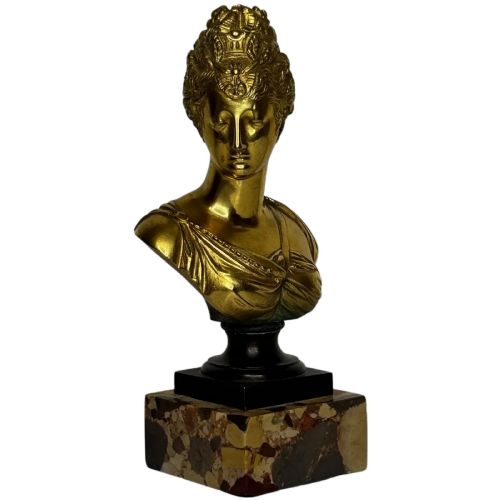
Superior examples display sharp chasing and chiselling across the metal surface, rendering hair, expression and clothing with distinct clarity after casting. Inferior pieces lose fine detail in softer contours and show flat or muddy gilding.
The integration between the metal bust and its stone base marks the distinction of the piece. High-grade works utilise substantial marbles or onyx mounts with well-fitted ormolu collars, whereas lesser examples use simpler connections.
Affortunato Gory·Henri Godet·Ernest Rancoulet·Jean Antoine Houdon·Paul Francois Berthoud
The Gilt Bronze Bust Glossary
- Ormolu
- Finely ground high-carat gold amalgam applied to a bronze base through mercury gilding. This technique produces a warm, durable metallic finish typical of French decorative objects.
- Patination
- The surface coloration achieved naturally over time or through chemical treatment on metal. It highlights sculptural details by darkening recessed areas against brighter highlights.
- Grand Tour
- A cultural journey undertaken by wealthy Europeans to study classical art and architecture abroad. It generated a strong demand for miniature sculptures and portrait busts.
Gilt Bronze Bust: Frequently Asked Questions
How should I clean a gilt bronze bust?
Dust the metal and stone surfaces gently with a soft, dry brush to prevent accumulation. Avoid abrasive cloths, water or chemical cleaners that might strip the delicate gilding.
Keep the piece away from direct sunlight and excessive moisture to preserve the original metal finish and the polished stone base.
Where were these portrait busts made?
Many examples originate from French foundries working within neoclassical, Rococo Revival and Art Nouveau idioms during the nineteenth century. Other pieces reflect Italian marble carving workshops and British portrait traditions.
Foundries in Paris produced a large proportion of the gilt metalwork combined with marble and onyx columns.
How do I identify the subject of a bust?
Examine the base or the reverse of the metal casting for engraved inscriptions, signatures or titles that name historical or mythological figures. Subjects often include classical deities, literary figures like Sir Walter Scott, or historical rulers.
Stylistic attributes such as laurel wreaths, theatrical dress or specific hairstyles offer further clues to the identity of the portrayed individual.
Are these pieces signed by the artist?
Some sculptures carry cast signatures, foundry marks or incised names along the edge of the bronze shoulder or the stone plinth. Signatures indicate the sculptor responsible for the original model or the studio that executed the cast.
Unsigned pieces remain common, reflecting commercial foundry production rather than individual studio attribution.