



Art Nouveau Bust
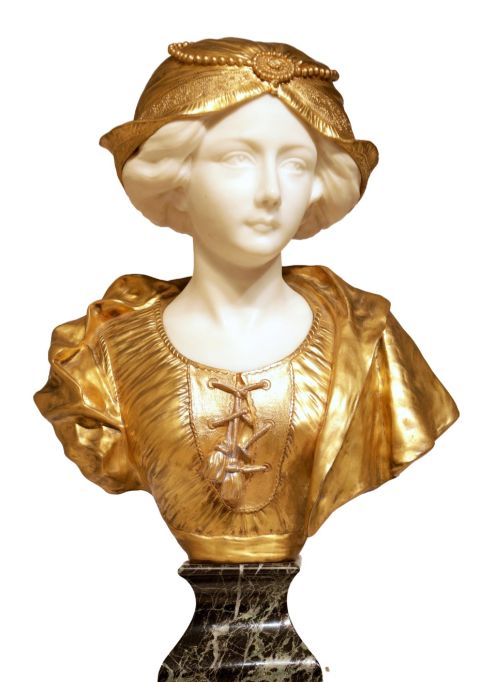
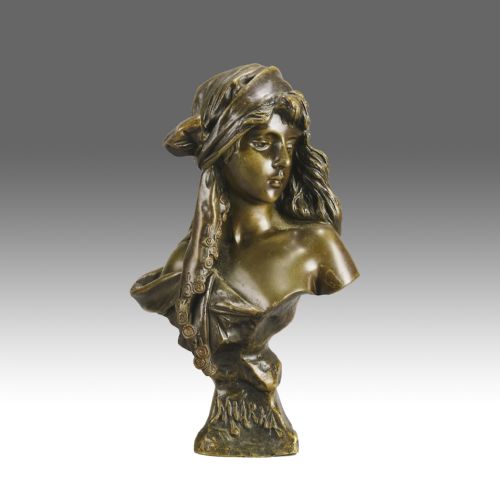
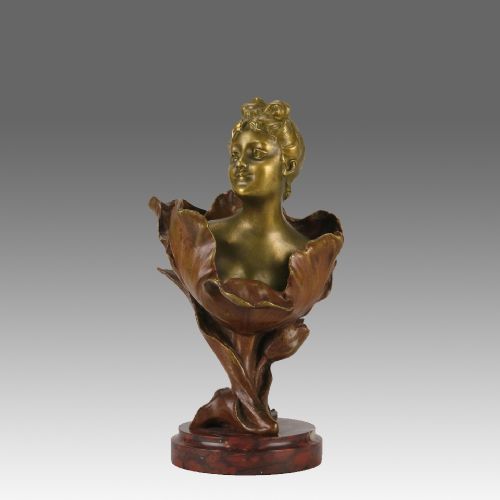
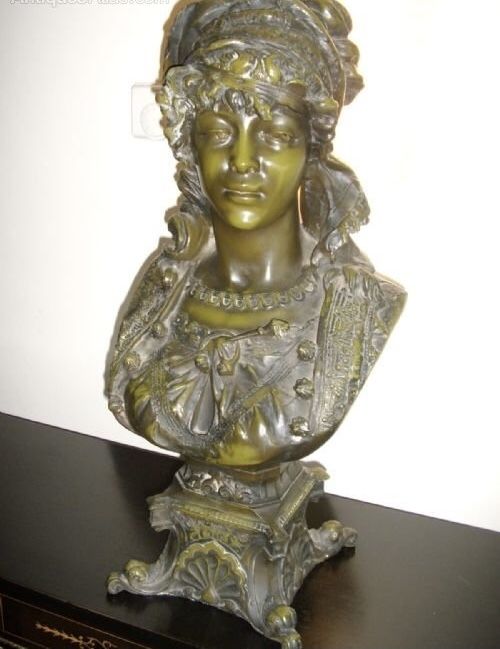
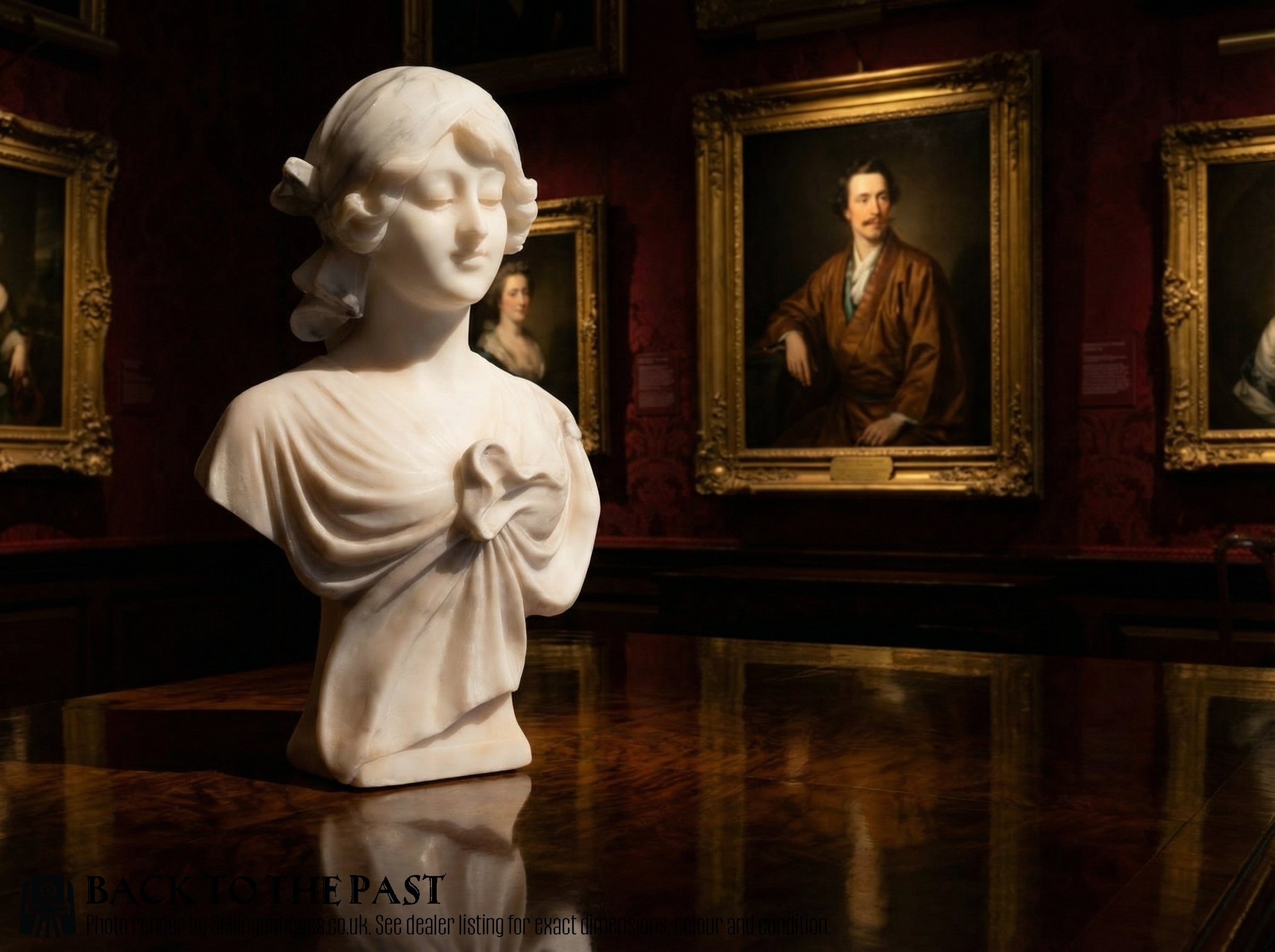
An art nouveau bust captures the characteristic flowing lines and natural motifs of the turn of the century in three-dimensional form.
The Art Nouveau Bust
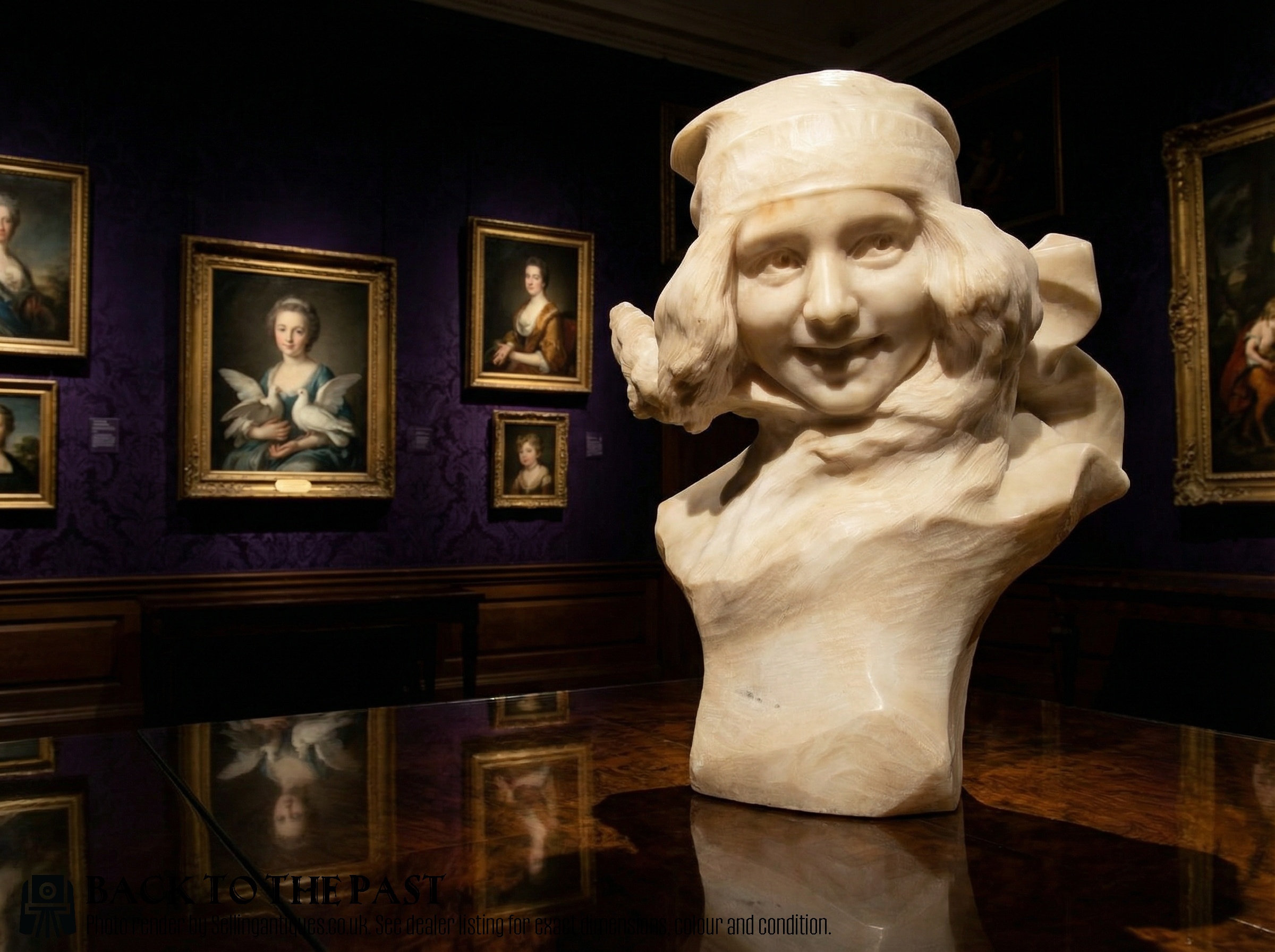
An art nouveau bust typically depicts young women, maidens, or literary and mythological figures like Cinderella, Sappho, and Undine. These sculptures focus on expressive faces, elaborate hairstyles, and organic drapery that define the aesthetic of the period.
The pieces on this page span from the late nineteenth century through the early twentieth century, encompassing both Edwardian interpretations and continental European works. They appear in materials ranging from carved stone to cast metal.
Makers and sculptors of the era frequently signed their work, providing clear attribution to artists who exhibited across France, Italy, and Belgium. These sculptures range from intimate tabletop studies to larger portrait pieces.
Materials and Manufacture
Sculptors utilised traditional media including alabaster, Carrara marble, and terracotta, shaping them through detailed hand carving. Metal pieces were cast in bronze, ormolu, gilt bronze, and spelter, occasionally featuring cold painted surfaces or multi-colour patination.
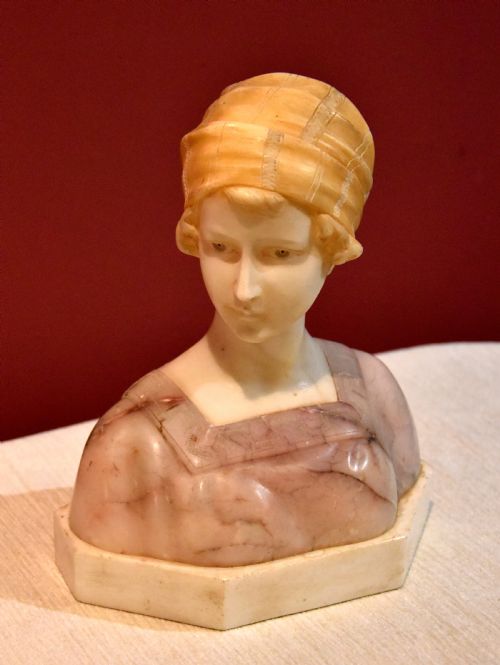
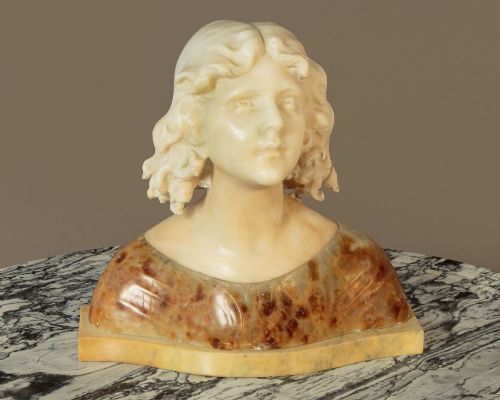
Makers combined different materials within single pieces, mounting alabaster or marble busts onto contrasting stone plinths or incorporating gilt bronze and ormolu details. This mixed-media approach allowed artisans to contrast the soft translucency of stone with the metallic sheen of cast elements.
Retail Price Guide 2026
Typical UK retail prices for art nouveau bust, calculated from the Sellingantiques database of over a million retail prices indexed since 2003. This retail price guide relies exclusively on Sellingantiques data; no external sources or auction records are used, so the figures do not describe the wider market.
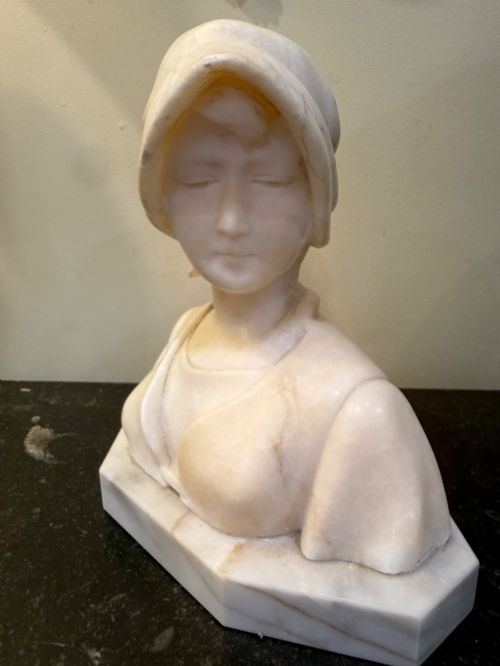
Several ladies wear remarkably elaborate hats carved entirely from stone.
Assessing Quality
Quality rests upon the crispness of the carving in stone pieces and the definition of the chasing in cast metal works. Finer examples display delicate facial expressions, intricate rendering of hair, and subtle transitions in the surface patina.
The choice and integration of materials also distinguish superior pieces, particularly where sculptors combine multiple patinas or pair carved alabaster with carefully fitted marble and metal mounts.
Affortunato Gory·Emmanuel Villanis·Goldscheider·Auguste Moreau·George Van Der Straeten·Richard Aurili
The Art Nouveau Bust Glossary
- Alabaster
- A fine-grained, translucent stone that carvers utilise for smooth, pale sculptural surfaces. It takes a soft polish that diffuses light.
- Ormolu
- Gilded bronze produced by applying a mixture of gold and mercury to a cast bronze base. This technique creates a rich, lasting metallic finish.
- Spelter
- A zinc alloy used as a less expensive alternative to bronze for casting figures. Makers patinated the surface to simulate the appearance of true bronze.
- Cold Painted
- A technique where paint is applied to metal sculptures after casting without the use of heat. This method permits intricate polychrome decoration on bronze and spelter.
Frequently Asked Questions
What materials are art nouveau busts made from?
These sculptures are fashioned from a variety of media including carved alabaster, Carrara marble, and terracotta. Metal versions utilise cast bronze, ormolu, gilt bronze, and spelter.
Artists frequently combined these materials, mounting stone figures on marble plinths or adding metallic patination and cold painted details to cast metal.
How do I identify an authentic period piece?
Authentication relies on examining the casting quality, the nature of the patination, and the presence of artist signatures or foundry marks. Period pieces reflect the specific stylistic vocabulary of the turn of the century.
Materials and construction methods match the manufacturing techniques prevalent between eighteen ninety and nineteen twenty.
Who were the notable sculptors of these busts?
Prominent European artists working in this style include Emmanuel Villanis, Auguste Moreau, and Georges van der Straeten. Workshops such as Goldscheider also produced notable figural pieces.
Many of these sculptors signed their work directly into the stone or metal during the casting and carving process.
How should I care for a marble or alabaster bust?
Stone sculptures require gentle dusting with a soft, dry cloth to prevent the accumulation of dirt on carved surfaces. Water and chemical cleaners should be avoided, particularly on softer stones like alabaster.
Keeping the piece away from direct sunlight and dramatic temperature fluctuations helps preserve the finish of both the stone and any applied patination.