


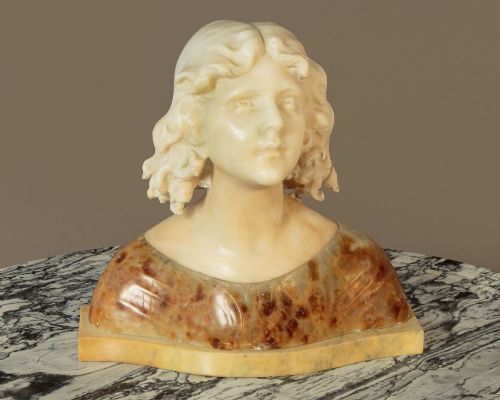

Female Portrait Statue
A female portrait statue captures the likeness and character of women across centuries in stone, metal and clay.
Female Portrait Statue
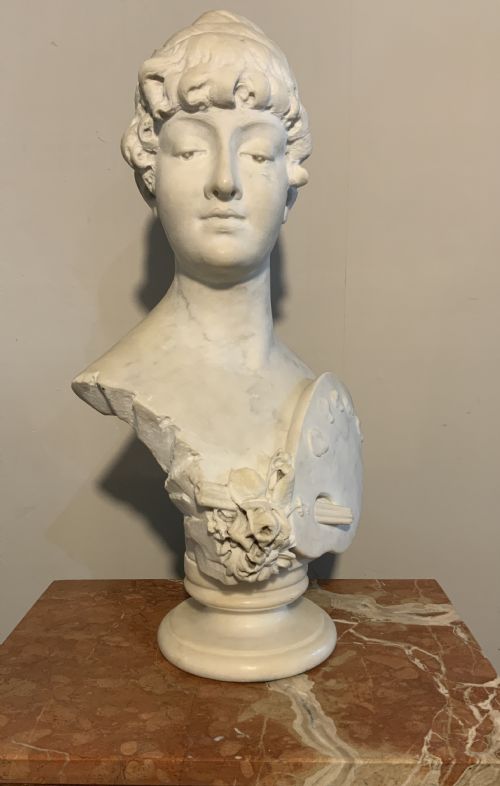
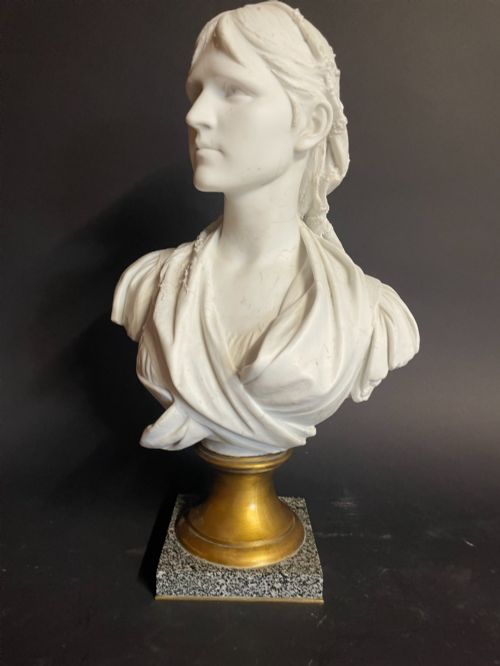
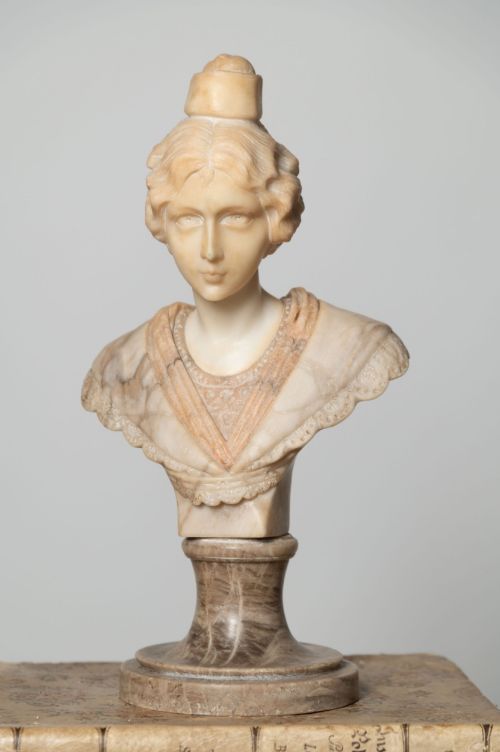
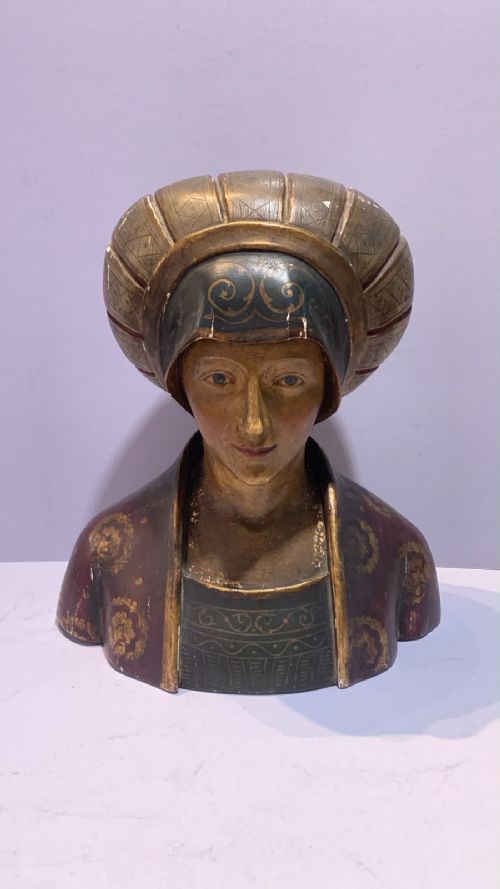
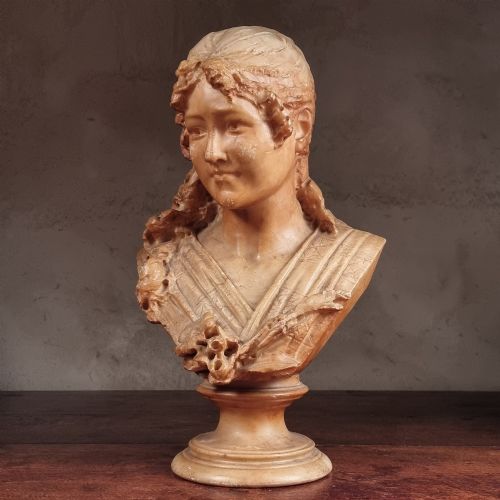
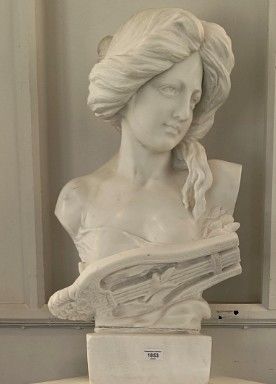
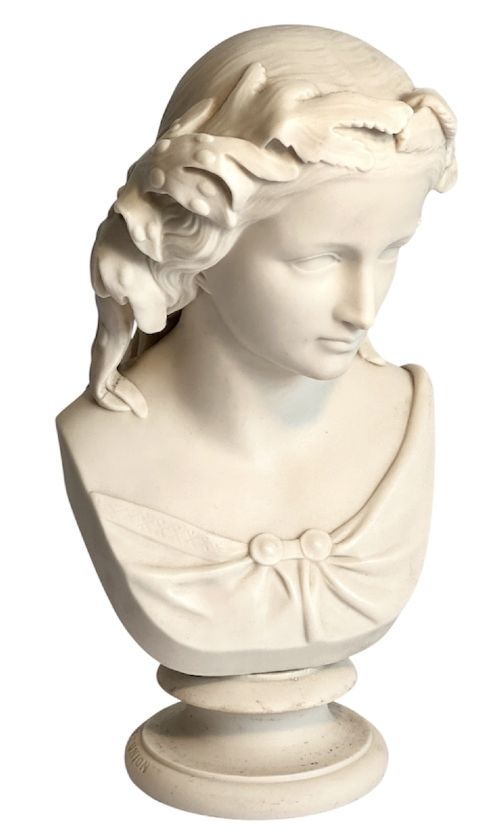
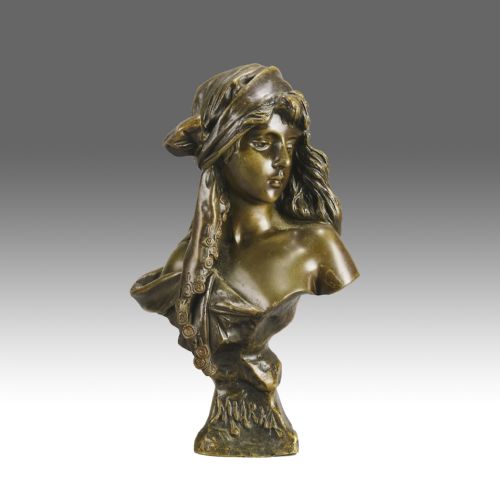
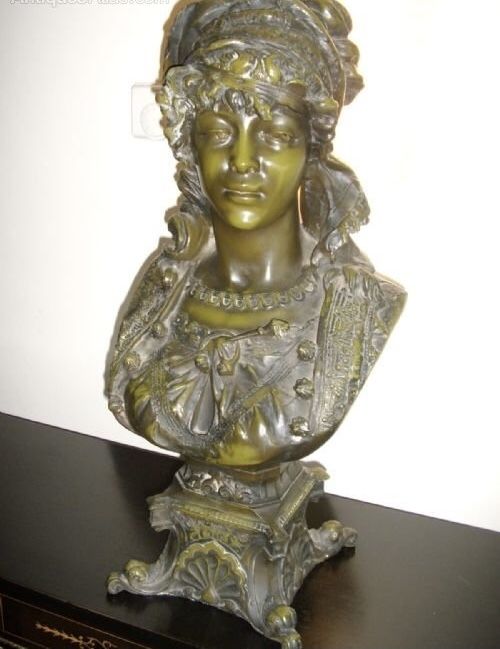
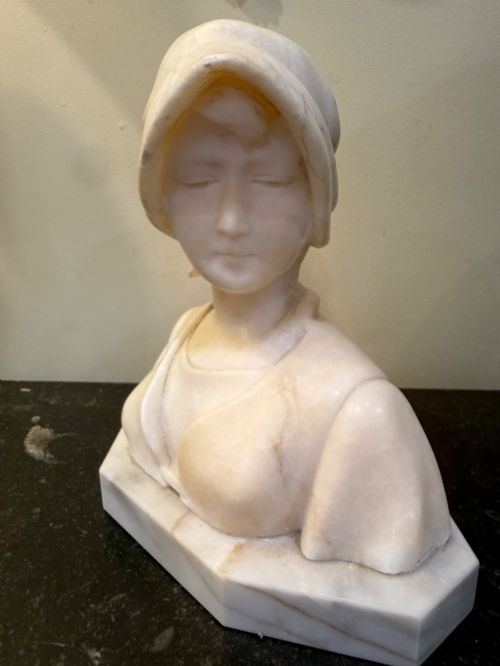
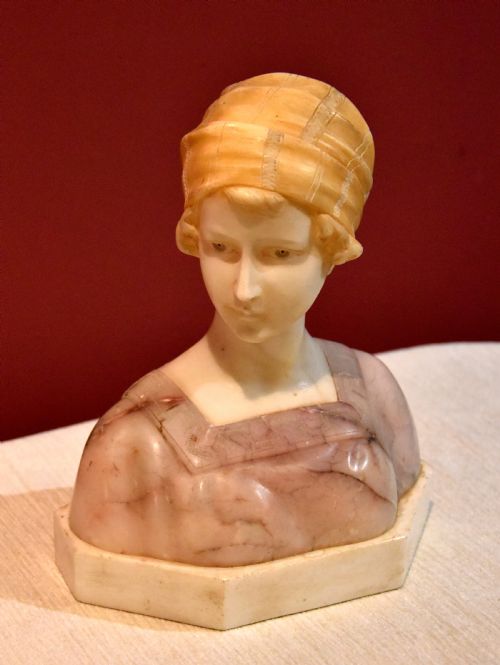
A female portrait statue typically takes the form of a sculptural bust or full figure representing women from mythology, history and everyday life. When searching for a female portrait statue, buyers encounter carved marble and alabaster likenesses alongside cast bronze and terracotta interpretations. The selection spans the seventeenth century through to the Edwardian period, with nineteenth-century French and Italian works appearing frequently.
Makers drew inspiration from classical antiquity, the Renaissance and later artistic movements including Art Nouveau and Art Deco. Subjects range from named historical and mythological figures such as Marie Antoinette and Erato to anonymous young women and noble ladies. These pieces function as decorative focal points, reflecting the aesthetic preferences of Victorian, Edwardian and continental European drawing rooms.
How they were made
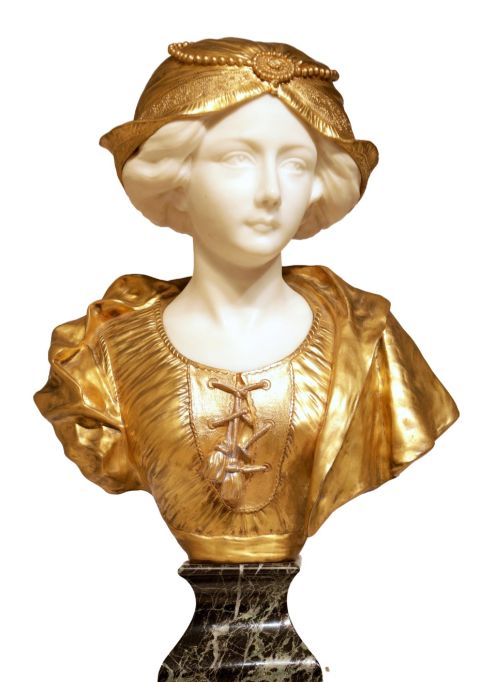
Sculptors carved Carrara marble, alabaster and wood using chisels and rasps to achieve detailed facial expressions and draped garments. Foundational stones often incorporate contrasting bases, such as Vert de Mer marble, to support the main composition.
Metal workers utilised the lost-wax method to cast bronze, brass and spelter sculptures, frequently applying patination, gilt finishes or painted surfaces to enhance depth. Terracotta and ceramic pieces underwent kiln firing before receiving surface treatments, while porcelain production involved specialised moulding and glazing techniques.
Several ladies gaze across the centuries wearing impossibly elaborate carved bonnets and veils.
What varies in quality
The precision of hand-carved detail in marble and alabaster distinguishes superior portrait sculptures from simpler production pieces. Fine execution appears in the soft rendering of hair, the delicate fall of fabric folds and the lifelike expression of the subject's gaze.
Foundry work dictates the standard in cast metal pieces, where clean chasing and subtle patination separate skilled artistic output from mass-produced items. The choice of materials also signals intent, with multi-media combinations and high-grade stones indicating works created by accomplished sculptors and established European foundries.
Affortunato Gory·Emmanuel Villanis·Henry Wissen Senior·Auguste Henri Carli·Emile Jespers·Georges-Charles Coudray·Hans Müller·George Van Der Straeten·Ernst Whaliss
The Female Portrait Statue Glossary
- Carrara Marble
- A type of white or blue-grey marble quarried in the city of Carrara in Tuscany, widely utilised by European sculptors for portrait busts. Its fine grain permits subtle carving of skin texture and facial nuance.
- Alabaster
- A soft mineral stone, typically white or translucent, used for carving detailed sculptural works. The material allows light to penetrate the surface slightly, giving a warm glow to portrait pieces.
- Terracotta
- Baked red clay moulded or sculpted into three-dimensional forms and left unglazed or painted. This medium captures immediate modelling marks made by the artist's hands before firing.
- Patinated Bronze
- A bronze sculpture treated with chemical solutions to produce a coloured surface finish ranging from deep brown to greenish tones. The patina protects the metal and defines the contours of the figure.
- Grand Tour
- A cultural journey of Europe undertaken by wealthy young men in the eighteenth and nineteenth centuries. Travellers frequently purchased small sculptures and classical portrait busts to bring home as mementoes.
Female Portrait Statue: Frequently Asked Questions
What materials were used?
Sculptors utilised carved stones including Carrara marble, alabaster and mixed marbles. Cast metals such as bronze, gilt bronze and spelter also appear regularly alongside terracotta, ceramics and wood.
Makers selected these materials based on the desired finish, ranging from the smooth translucency of alabaster to the dark richness of patinated bronze.
How do I identify periods?
Stylistic indicators and signatures help determine the era of a piece. Works displaying sinuous plant forms and flowing hair typically point towards the Art Nouveau movement of the late nineteenth century.
Neoclassical pieces feature restrained symmetry and classical dress, whereas seventeenth-century and eighteenth-century examples display distinct period costume and carving techniques.
Where were they made?
Continental Europe served as the primary production centre for these sculptures. France and Italy produced the majority of the marble busts and bronze figures.
English and Russian workshops also contributed carved wood and marble portraits, often reflecting local artistic traditions and court tastes.
How should I display them?
These sculptures require stable surfaces capable of supporting their substantial weight, such as heavy sideboards, pedestals or dedicated console tables. Marble and bronze pieces benefit from placement away from direct heat sources.
Adequate lighting helps reveal the subtle carvings and patinations applied by the original artist.