
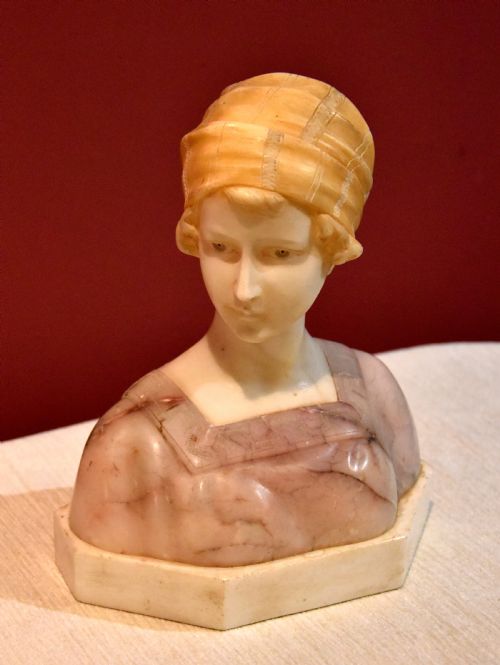
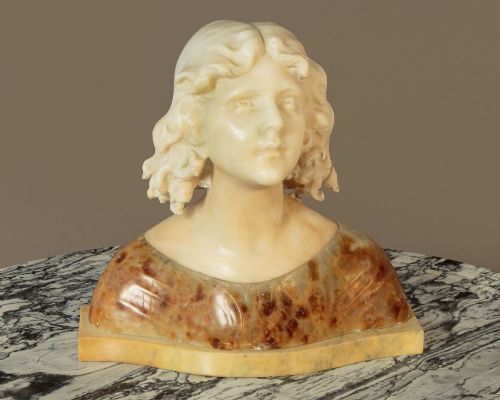


Cream Alabaster Statue
A cream alabaster statue brings soft, translucent stone and classical form into a room, capturing the human figure with remarkable delicacy.

Cream Alabaster Statue
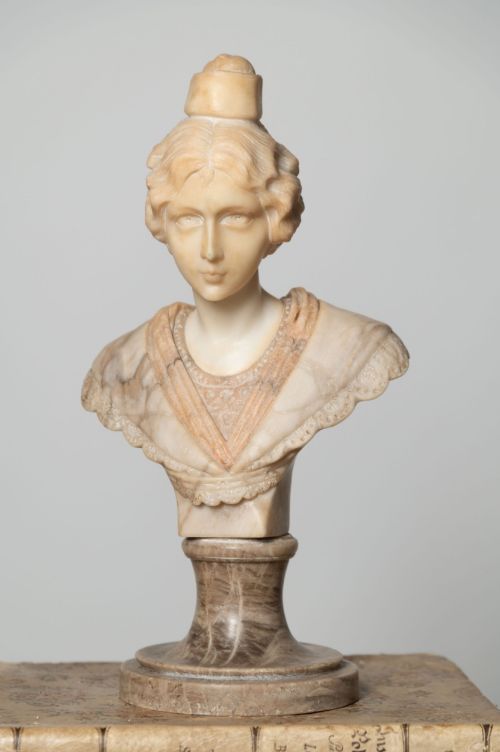
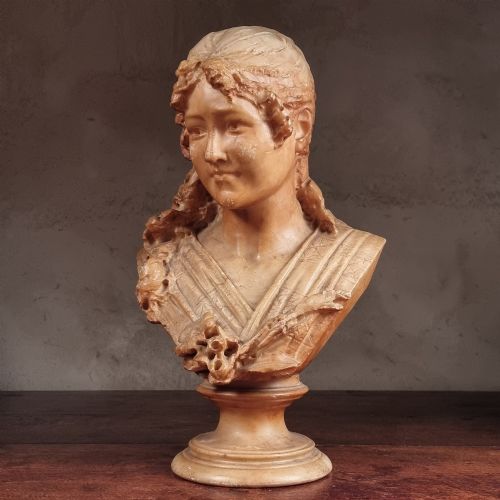
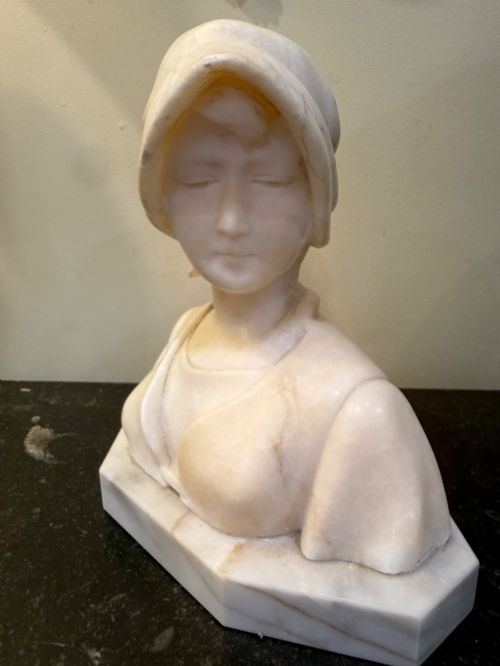
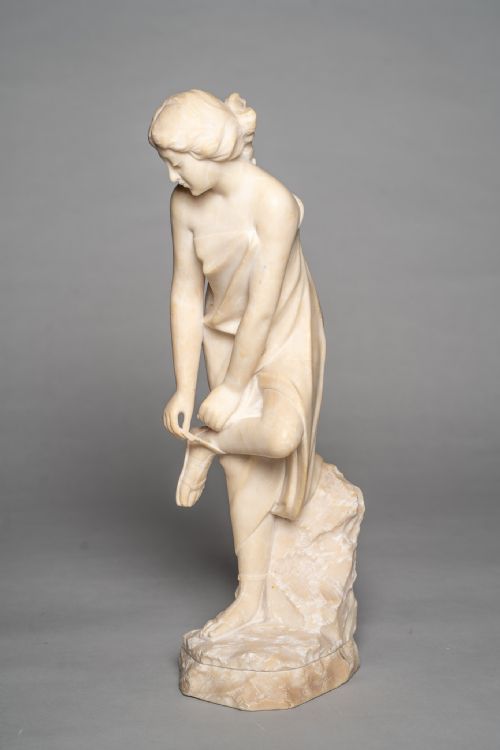
A cream alabaster statue typically takes the form of a portrait bust or full figure, often depicting women, mythological figures like Hestia, or young lovers. These pieces emerge from the nineteenth and early twentieth centuries, spanning periods such as Victorian, Edwardian, Art Nouveau, and Neoclassical.
The most common versions met on this page are carved female busts and standing figures from around 1900, originating largely from Italian, French, and British workshops. They utilise the pale warmth of the stone to render drapery, hair, and expression with striking lifelike subtlety.
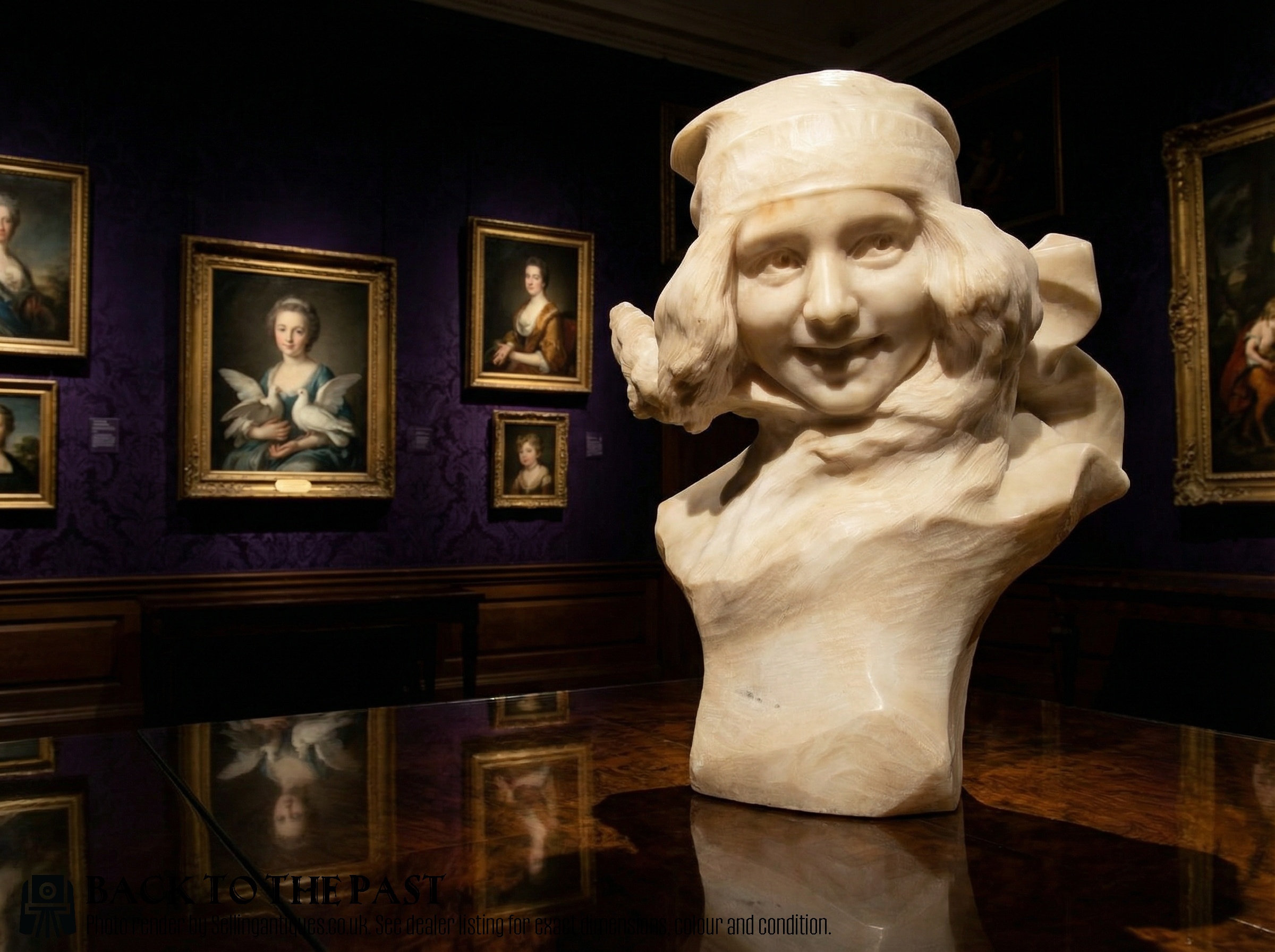
How they were made
Sculptors carved these pieces from natural alabaster and marble, sometimes combining stone with metal, brass, or wood bases to support the weight. The stone is relatively soft, allowing artisans to achieve fine details in hair and fabric that harder marbles resist.
Many works combine different tones of alabaster or incorporate marble elements to create contrast between clothing, skin, and hair. Signature carving and incised details identify the hand of named makers who worked in specialised European studios.
Cream Alabaster Statue Retail Price Guide 2026
Typical asking prices for cream alabaster statue among the pieces listed under this phrase on Sellingantiques today, from the lower quarter to the upper quarter. They describe what is for sale here now, not the wider market.
Several young women are caught mid-bath or dancing in pools, proving that nineteenth-century stone carvers thoroughly enjoyed a splash.
What varies in quality
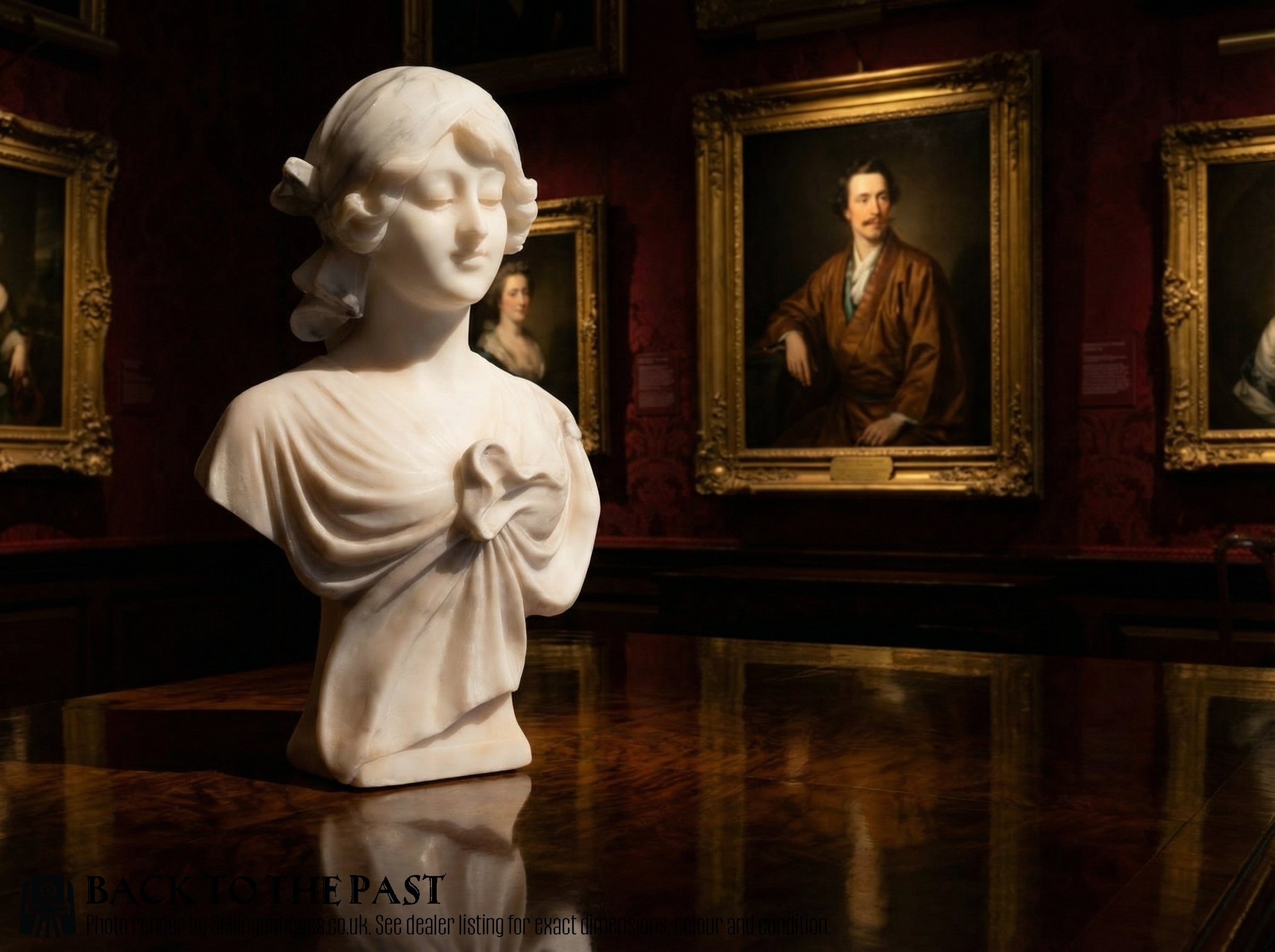
Quality rests in the sensitivity of the carving and the purity of the stone, where superior examples show translucent depth in the face and hands rather than a flat, chalky opacity. The precision in undercut drapery and the natural fall of hair distinguish master carvers from commercial workshop output.
The integration of mixed materials, such as contrasting marble bases or subtle metal additions, elevates a piece when handled with restraint. Signed works by recognised sculptors carry distinct artistic ambition that lifts them above unsigned decorative figures.
A.Gamay·Auguste Henri Carli·Fritz Kochendorfer·Mieczyslaw Leon Zawiejski·Pugi·Cipriani·Gugielmo Pugi·GREUZE
The Cream Alabaster Statue Glossary
- Alabaster
- A fine-grained, translucent stone prized for sculpture because it mimics the softness of human skin. It polishes to a smooth finish and absorbs light in a way that creates a warm glow.
- Portrait Bust
- A sculptural representation of a person from the chest up, capturing likeness and character. These focus attention on facial expression, hairstyle, and the drape of garments.
- Neoclassical
- A style inspired by the art of classical antiquity, focusing on harmony, proportion, and mythological subjects. It shapes the dignified poses found in many nineteenth-century figures.
- Art Nouveau
- An international style characterised by organic, flowing lines and natural motifs, prevalent around 1900. It influences the sinuous hair and graceful postures of young women in these sculptures.
Cream Alabaster Statue: Frequently Asked Questions
Where were most of these sculptures made?
The majority originate from workshops in Italy and France, where skilled artisans carved alabaster during the nineteenth and early twentieth centuries.
Italian and French studios produced both classical figures and contemporary Art Nouveau pieces for international collectors.
What is the difference between alabaster and marble?
Alabaster is a softer, more translucent stone that allows light to penetrate slightly beneath the surface, creating a warm, skin-like glow.
Marble is harder, less translucent, and generally more resistant to scratching, making it better suited for exterior architectural use.
How do I tell an original period piece from a later reproduction?
Examine the underside and the base for natural ageing of the stone, tool marks, and the method of securing the bust to its plinth.
Period pieces from the nineteenth and early twentieth centuries show genuine wear consistent with age, alongside period-appropriate signatures and materials.