
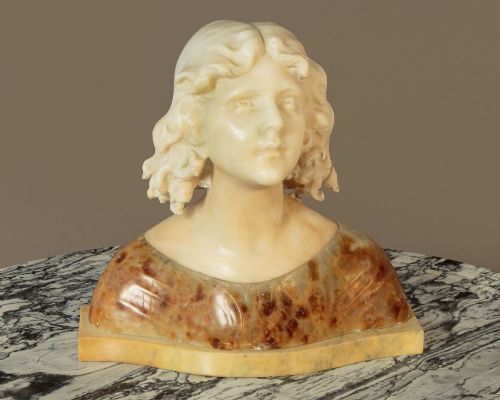


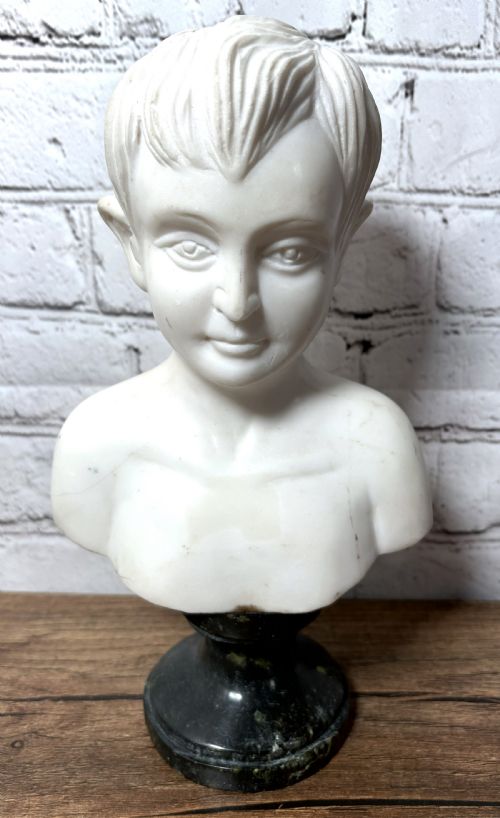


Carved Alabaster Head
A carved alabaster head is a sculptural portrait capturing delicate human features in translucent stone, prized for its soft, luminous glow.
Carved Alabaster Head
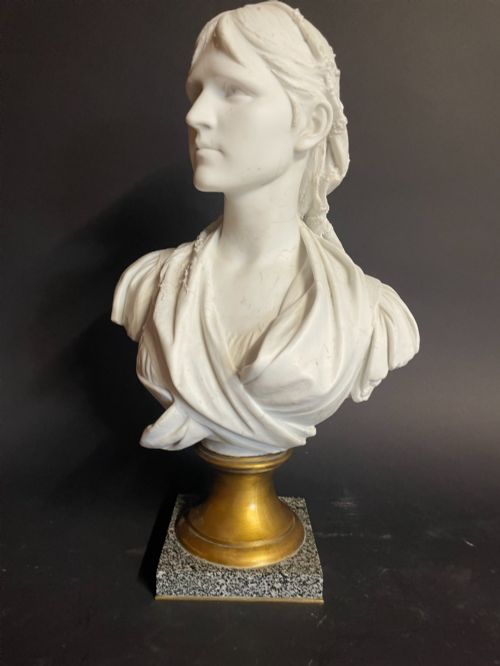
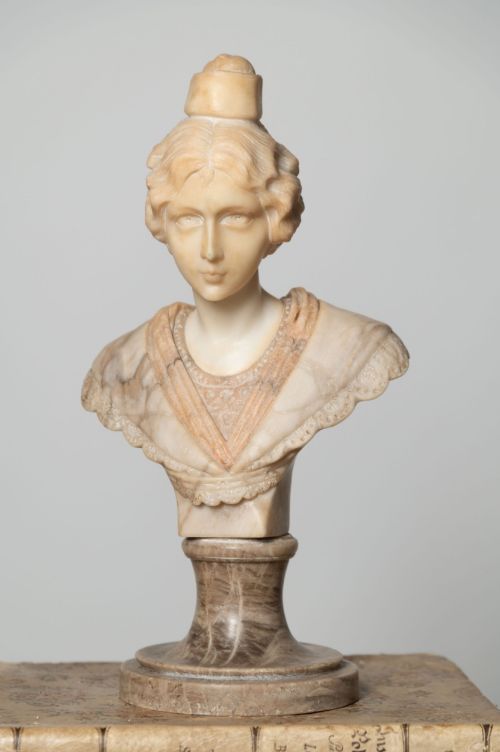
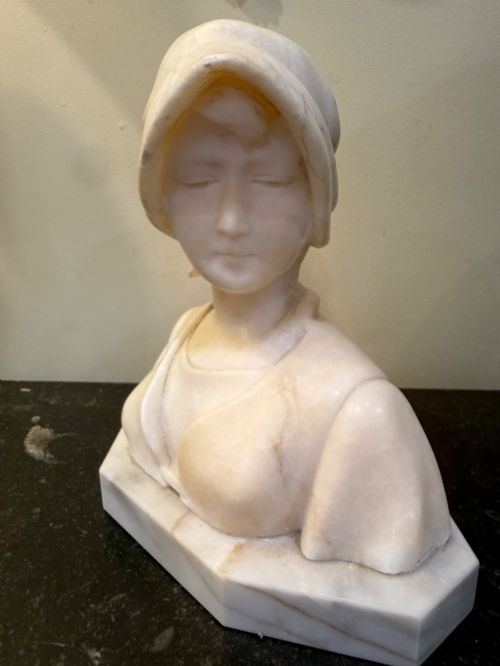
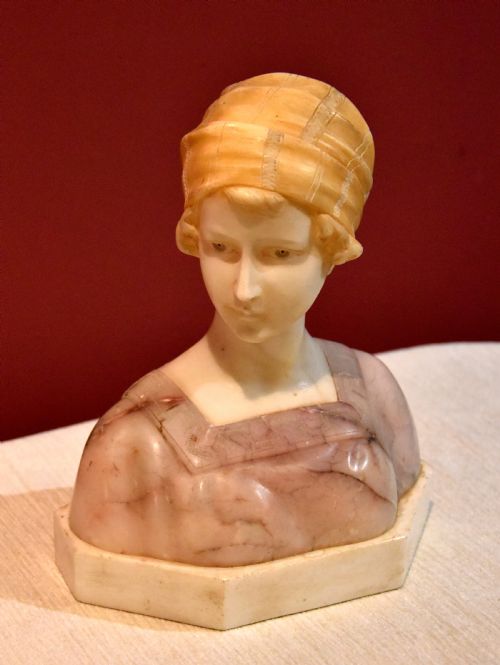
A carved alabaster head typically presents a portrait bust of a woman, young lady, or gentleman, originating from nineteenth-century and early twentieth-century European workshops. These pieces capture subtle facial expressions and period hairstyles, ranging from classical depictions to Victorian and Art Nouveau interpretations.
The versions most frequently met on this page combine soft alabaster with contrasting marble plinths, brass accents, or ormolu mounts. They focus primarily on individual portraiture, though related sculptural studies of figures and animals occasionally appear.
Materials and technique
Carvers shaped these sculptures from soft mineral stone using chisels, rasps, and abrasive powders to achieve smooth, rounded contours. Alabaster requires careful hand-working due to its delicate structure and susceptibility to scratching.
Many works combine white alabaster with coloured marble or brass elements to create tonal contrast in hair, drapery, and bases. Signed pieces often reflect advanced foundry or studio techniques, integrating cast metal mounts directly with carved stone.
Even a stern nineteenth-century gentleman looks remarkably polite when sculpted entirely from translucent stone.
What separates the fine examples
The distinction in quality lies in the subtlety of the carving and the natural translucency of the stone. Superior pieces capture lifelike softness in skin texture and hair, whereas lesser examples appear rigid and opaque.
Proportion and the handling of expression dictate the success of the portrait. Master carvers achieved balanced facial symmetry and convincing drapery folds that elevate a standard bust into a refined work of art.
Auguste Henri Carli·Mieczyslaw Leon Zawiejski·G.V. Vaerenbergh
The Carved Alabaster Head Glossary
- Alabaster
- A fine-grained, translucent stone that ranges from pure white to soft amber. It allows light to penetrate slightly beneath the surface, giving carved portraits a warm glow.
- Ormolu
- Gilt bronze mounted onto furniture or sculpture as a decorative accent. It provides a metallic contrast to white stone.
- Specimen marble
- A decorative technique utilising various types of coloured marble fitted together. It often forms the base or background of sculptural studies.
Carved Alabaster Head: Frequently Asked Questions
Where should I display a bust?
Place the sculpture on a stable mantelpiece, sturdy console table, or dedicated column where it receives indirect natural light.
Avoid positioning the stone in direct sunlight or near sudden heat sources that could cause drying or fading.
How can I tell alabaster from marble?
Alabaster feels noticeably softer to the touch and allows light to pass a short distance beneath its surface. Marble is harder, heavier, and generally more opaque under normal lighting conditions.
Inspect the surface texture and weight to determine which mineral was used by the carver.
Why do some busts have signatures?
Signatures indicate that a professional sculptor or established studio completed and approved the finished piece. These carved or engraved marks help identify the artist and period.
Look along the base or shoulder edge for the signature or foundry stamp.