


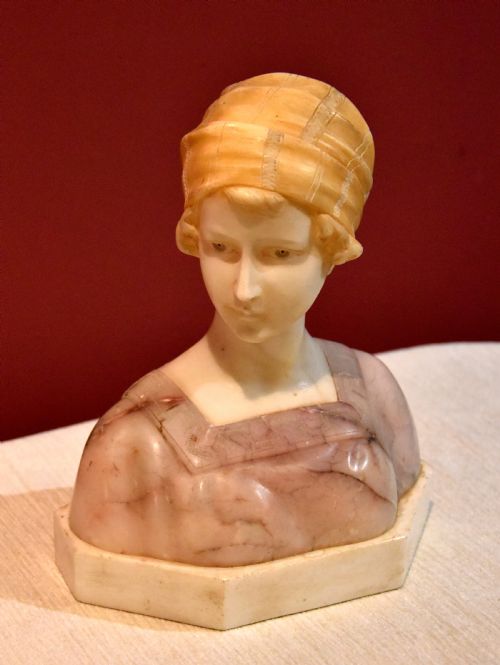
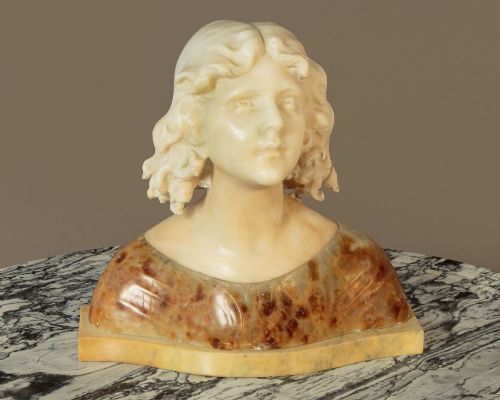


Art Nouveau Female Bust
These art nouveau female bust sculptures capture the sinuous grace of the turn of the century, bringing sculptural elegance and organic forms into any room.
What an art nouveau female bust is
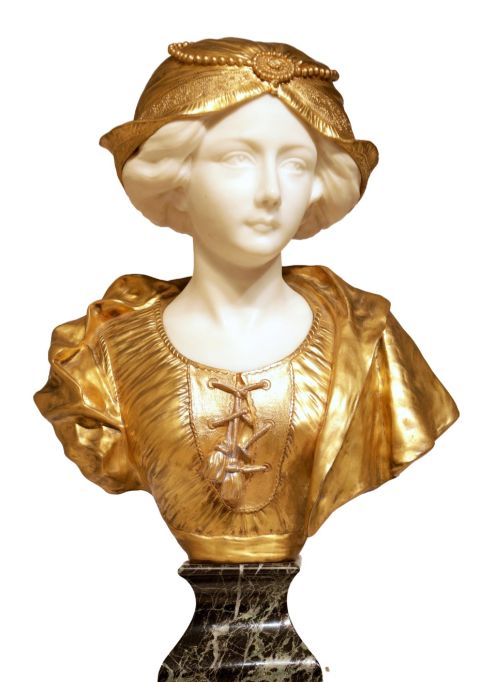
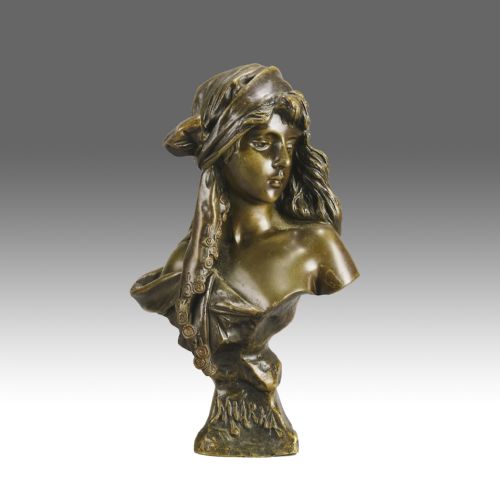
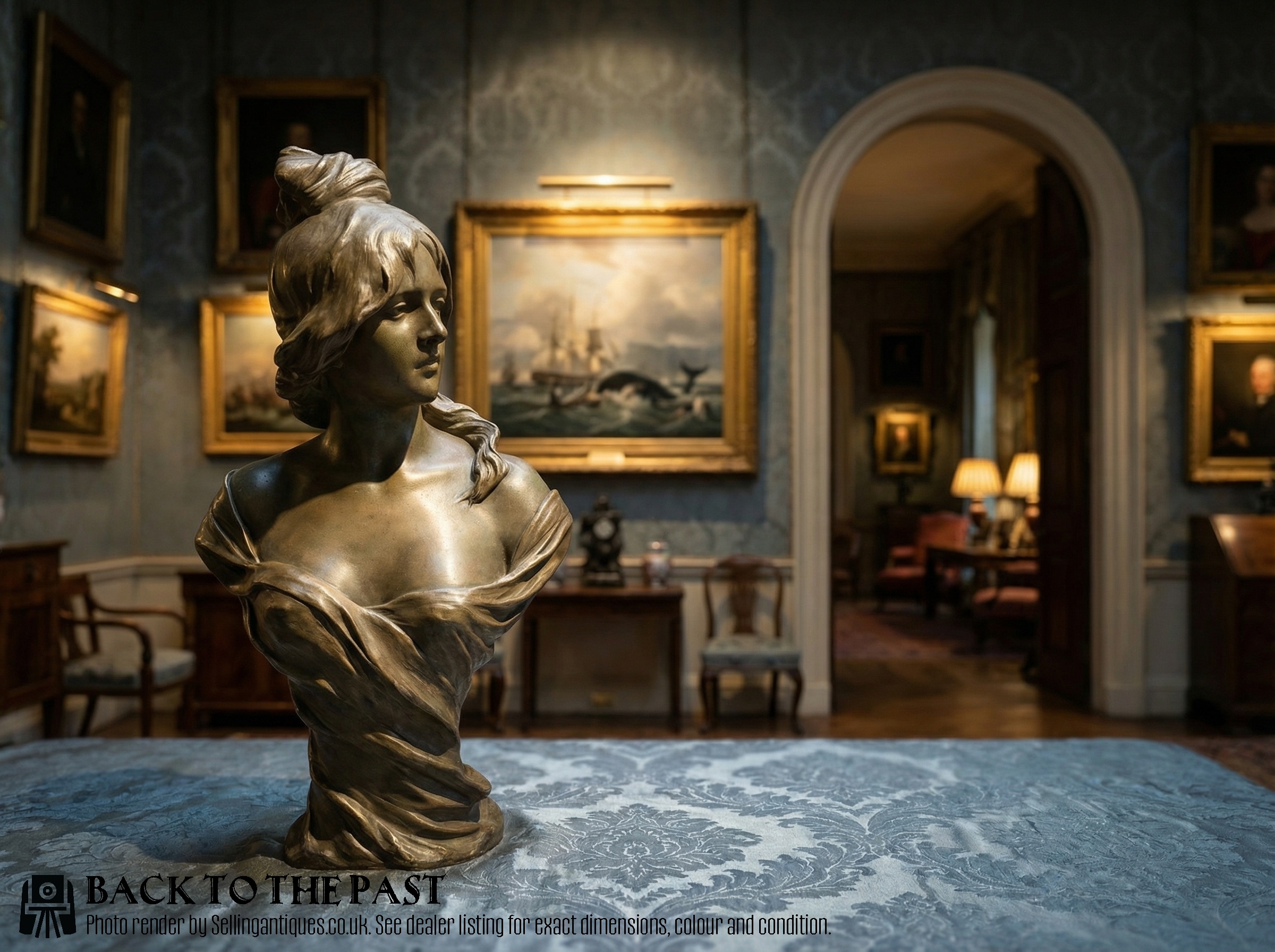
An art nouveau female bust represents a sculpted portrait of a woman, usually focusing on the head, neck, and shoulders. These pieces date from the late nineteenth and early twentieth centuries, capturing the distinct flowing lines of the period.
The versions met most frequently on this page combine traditional sculptural forms with French aesthetic sensibilities. They often depict named subjects or allegorical figures set on integrated or separate plinths.
Makers utilised diverse materials to render these feminine subjects, ranging from lustrous metals to earthy ceramics. Each sculpture reflects the prevailing decorative taste for organic curves and naturalistic detail.
How they were made
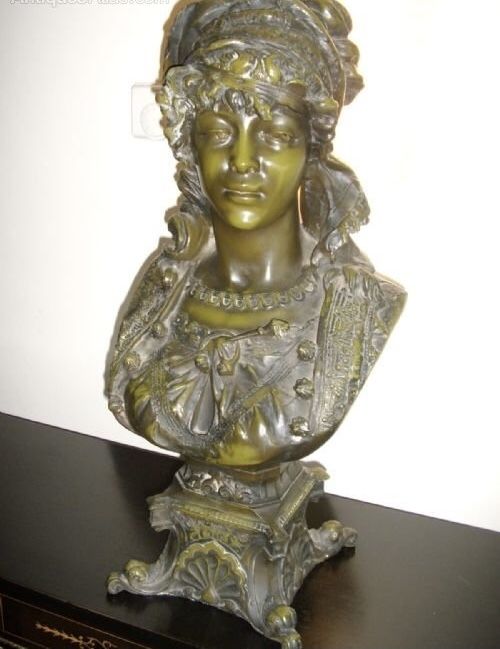
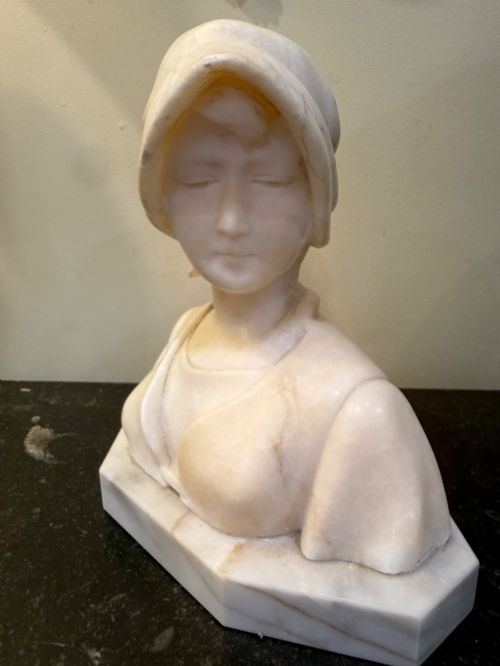
Foundries and studios cast metals such as bronze and spelter, often finishing the surfaces with patination or gilding to enhance the tonal depth. Alabaster and marble were hand-carved to create smooth contrasts with textured hair or drapery.
Terracotta pieces were moulded from clay and fired, sometimes receiving a bronze finish to emulate metalwork. Multi-material combinations, such as alabaster paired with marble, required precise stonemasonry to join disparate mineral blocks.
Retail Price Guide 2026
Typical UK retail prices for art nouveau female bust, calculated from the Sellingantiques database of over a million retail prices indexed since 2003. This retail price guide relies exclusively on Sellingantiques data; no external sources or auction records are used, so the figures do not describe the wider market.
What varies in quality
Quality rests in the crispness of the casting and the sensitivity of the hand-chasing in metal works. Superior sculptures display fine detail in the facial expression, hair strands, and textile folds.
In stone and ceramic pieces, quality is judged by the purity of the medium and the subtlety of the modelling. Finer works integrate the plinth and subject into a unified artistic vision rather than relying on standard mounts.
Henri Godet·Auguste Henri Carli·E.Villanis·Goldscheider
The Art Nouveau Female Bust Glossary
- Spelter
- A zinc alloy commonly used as a less expensive alternative to bronze during the nineteenth and early twentieth centuries. It accepts patination well to mimic heavier metals.
- Patinated bronze
- Bronze that has been treated with chemical solutions to produce a coloured surface film. This technique highlights the contours and depth of the sculpted portrait.
- Terracotta
- Fired unglazed clay possessing an earthy reddish-brown hue. It allows sculptors to capture spontaneous modelling marks directly from their hands.
- Plinth
- The solid base or block upon which the bust is mounted. It elevates the sculpture and provides structural stability.
Frequently Asked Questions
What metals were used for these busts?
Makers cast these sculptures in bronze, gilt bronze, and spelter. Each metal received distinct surface treatments, such as patination or gilding, to enhance the visual appeal.
Heavier bronze allowed for sharper sculptural detail, while spelter offered an accessible alternative for domestic interiors of the era.
How do I care for marble and alabaster?
Dust these stone surfaces gently with a soft, dry cloth to prevent scratching the polished finish. Avoid using water or chemical cleaners, which can penetrate and stain porous minerals.
Keep the sculptures away from direct sunlight and heat sources to preserve the integrity of the material over time.
How are periods told apart?
Pieces dating from the eighteen-eighties tend to favour traditional academic modelling with early decorative flourishes. By nineteen hundred, the fully realised art nouveau style emerged with whiplash curves and organic motifs.
Later examples from nineteen-ten often show transitional elements moving toward subsequent twentieth-century movements.
Where should I display a bust?
Place the sculpture on a sturdy console table, mantelpiece, or dedicated pedestal where the profile and facial details can be appreciated from multiple angles. Ensure the supporting surface is level and stable.
Positioning the piece near a light source helps emphasise the contours of the material and the subtleties of the patination.