



Art Nouveau Bronze Bust
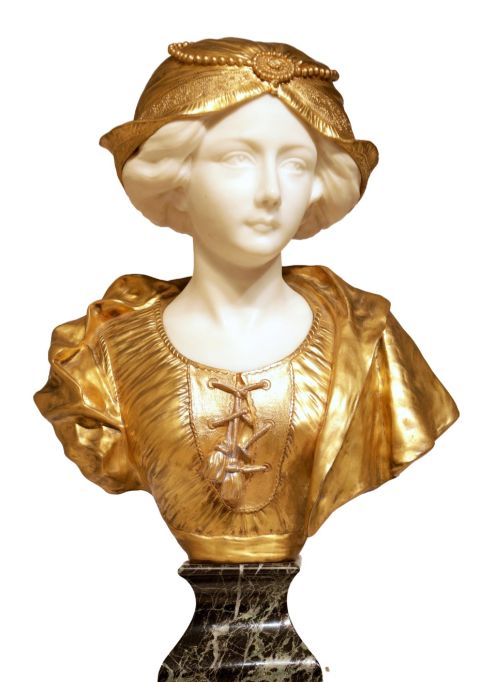
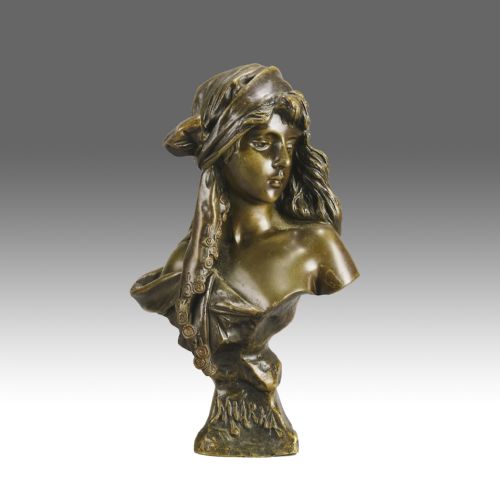
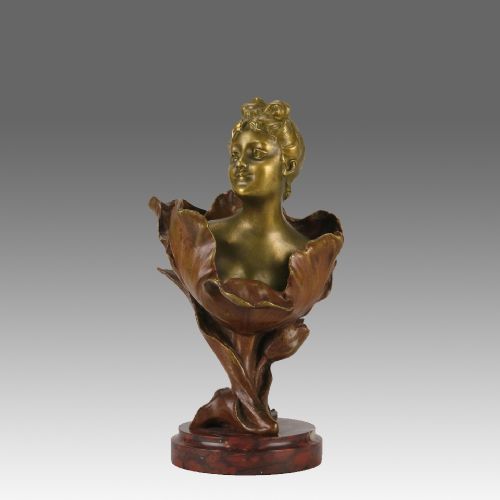
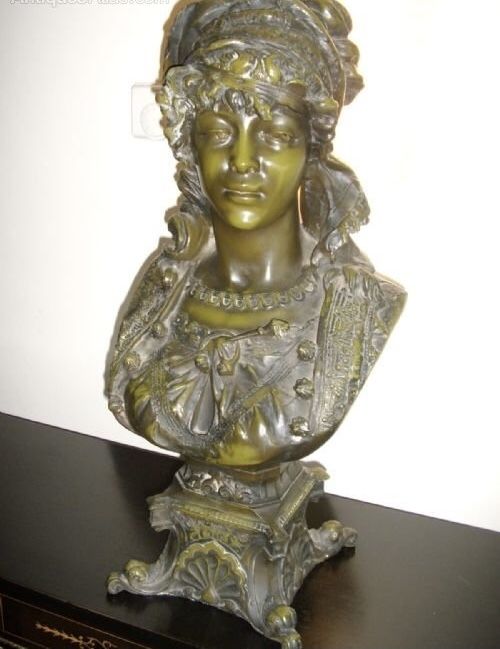
An art nouveau bronze bust captures the sinuous line and poetic melancholy of the turn of the twentieth century in three dimensions.
Forms and Origins
An art nouveau bronze bust depicts female subjects, allegorical figures such as Summer, and literary or historical characters like Cinderella, Lucrece, and Salammbô. These sculptures typically sit upon integrated bases or are mounted on marble or alabaster plinths.
The pieces on this page span the late nineteenth century through to the early decades of the twentieth century. French and Belgian founders and sculptors dominate the selection, bringing continental foundry work to the domestic interior.
Subjects range from idealised maidens and bohemian girls to specific portraits like Sarah Bernhardt or Jesus Christ. The aesthetic relies on flowing hair, organic drapery, and expressive facial characteristics that embody the Symbolist and Art Nouveau movements.
Materials and Casting
Foundries utilised the lost-wax method or sand casting to produce these metal sculptures from bronze. The resulting casts received varied surface treatments, including cold painting, gilt highlights, and rich dark patination to emphasise the tactile quality of hair and fabric.
Many examples incorporate mixed media by mounting the cast metal directly onto carved marble, alabaster, or multi-coloured stone plinths. This combination of materials provides structural contrast and elevates the visual weight of the sculpture.
Retail Price Guide 2026
Typical UK retail prices for art nouveau bronze bust, calculated from the Sellingantiques database of over a million retail prices indexed since 2003. This retail price guide relies exclusively on Sellingantiques data; no external sources or auction records are used, so the figures do not describe the wider market.
The listings combine plain bronze with patinated, gilt, and cold-painted finishes, frequently mounted on marble or alabaster plinths.
Casting and Finish
The distinction between tiers of work rests on the crispness of the foundry chase and the subtlety of the patina. Finer casts retain delicate details in the facial expression and hair without softening during the finishing process.
The choice and execution of the base material also mark the tier of production. Pieces featuring integrated multi-colour bronze effects or carefully fitted marble plinths demonstrate greater ambition than plain or standard mounts.
Henry Wissen Senior·E.Villanis·George Minne·Hans Müller·Hans Stoltenberg Lerche·George Van Der Straeten·Julien Caussé·N. Telriv·Paul Francois Berthoud
The Art Nouveau Bronze Bust Glossary
- Patina
- The chemical or natural surface coloration applied to bronze. It protects the metal and defines the tonal depth of the sculpture.
- Cold painted
- A technique where oil or tempera paint is applied to a cold metal surface after casting. This finish requires careful preservation to prevent flaking.
- Lost-wax casting
- A process where a wax model is melted from a mould and replaced with molten metal. It allows for intricate undercuts and fine detail.
- Plinth
- The solid block of stone, marble, or metal that supports the bust. It serves both structural and aesthetic balance.
- Symbolism
- An artistic movement focused on ideas, dreams, and inner experiences rather than direct naturalism. It heavily influences the mood of these sculptures.
Frequently Asked Questions
How should I clean my bronze bust?
Dust the surface gently with a soft, dry brush to remove particulate matter without disturbing the patina.
Avoid using water, chemical solvents, or metal polishes, as these treatments strip the historic surface finish.
Where should I display a bronze bust?
Place the sculpture on a sturdy console table, mantelpiece, or dedicated pedestal where it receives stable indirect light.
Keep the piece away from direct heat sources and damp environments to protect both the metal and any attached stone plinth.
How do I identify the subject?
Look for engraved titles, artist signatures, or foundry stamps inscribed directly into the bronze casting or onto the plinth.
Compare the iconography, such as hats, floral wreaths, or specific dress, with literary and theatrical figures popular during the period.
What is cold painting?
Cold painting involves applying unheated paint directly onto the finished bronze surface to add colour to hair, eyes, or garments.
Because the paint is not fired into the metal, these delicate highlights require gentle handling to maintain their condition.