

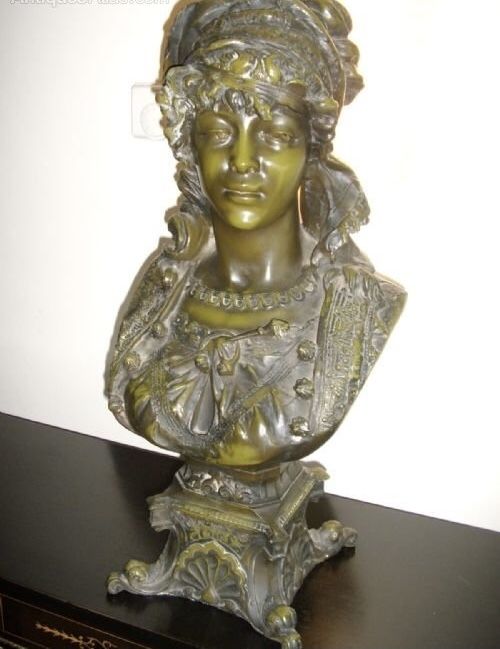


Bronze Maiden Bust
A bronze maiden bust captures the flowing lines and idealised forms of nineteenth and early twentieth-century sculpture for any interior.
Bronze Maiden Bust
A bronze maiden bust depicts a female figure, often drawing on classical themes, Art Nouveau aesthetics, or allegorical subjects such as seasons and literary characters. These sculptures range in scale from cabinet pieces to large decorative works set upon marble or onyx plinths.
The versions most commonly met on this page date from the late nineteenth century through to the early twentieth century, spanning Victorian, Art Nouveau, and Art Deco styles. French foundries and named sculptors dominate the selection, alongside contemporary studio iterations in terracotta and spelter.
Makers produced these portrait busts to serve as refined ornaments for domestic mantelpieces, libraries, and drawing rooms. The depictions vary from specific allegories like summer and titled figures such as Miarka and Silvia to anonymous classical maidens.
Materials and construction methods
Foundries cast these pieces using traditional methods, utilising bronze, patinated bronze, and gilt bronze for the primary sculptural elements. Many works combine metal with painted surfaces or pair metal figures with bases made of Verdi green marble and onyx.
Alternative materials include terracotta, which artists modelled and fired before applying paint or natural patination, alongside spelter used as a more accessible metallic medium. Signed works often incorporate cast foundry marks or incised signatures directly into the body of the material.
Several maidens wear titles like Miarka and Silvia, forever frozen in nineteenth-century daydreams of French literature.
Assessing quality in figurative sculpture
The distinction between standard works and finer pieces lies in the crispness of the casting and the sensitivity of the chisel work applied after casting. Superior examples retain sharp facial expressions, delicate hair texturing, and well-defined drapery folds.
The richness and depth of the patination significantly influence the visual impact of a bronze maiden bust. Material choices for the base, such as polished marble or multi-toned onyx, alongside the presence of legible artist signatures or foundry stamps, elevate the standing of the piece.
Emmanuel Villanis·Hans Müller·Henri Plé·Henry Wissen Senior·Goldscheider
The Bronze Maiden Bust Glossary
- Patinated bronze
- Bronze that has been treated with chemical solutions to produce a specific surface colour or aged finish. This process protects the metal while enhancing the sculptural contours.
- Spelter
- A zinc alloy frequently utilised as a cost-effective substitute for bronze in decorative figures. It is often painted or bronze-finished to simulate more expensive metals.
- Art Nouveau
- An international style of art and architecture prominent around nineteen hundred. It is characterised by intricate linear designs and flowing organic motifs inspired by natural forms.
- Terracotta
- Fired clay used unglazed or painted for sculptural works. It allows for highly expressive modelling directly from the hand of the artist.
- Allegory
- The representation of abstract ideas or qualities through human figures. In sculpture, subjects often personify seasons, arts, or virtues.
Bronze Maiden Bust: Frequently Asked Questions
How do I identify a bronze maiden bust?
Examine the weight, surface texture, and underside of the sculpture to distinguish solid bronze from spelter or terracotta.
Look for foundry marks, incised signatures, and material transitions where the bust meets its marble or onyx base.
Where were these sculptures made?
The majority of these pieces originate from French foundries and studios active during the nineteenth and early twentieth centuries.
Continental European makers produced a large volume of these decorative female busts for international export.
How should I clean a patinated bronze?
Dust the surface gently with a soft, dry brush to prevent the accumulation of dirt within the intricate crevices of the hair and drapery.
Avoid using water, chemical polishes, or abrasive cloths that can strip away the original historical patina.
What is the difference between bronze and spelter?
Bronze is a durable alloy of copper and tin that takes a rich, stable patina and holds fine chisel details.
Spelter is a softer, lighter zinc-based metal that feels cooler and lighter, often showing painted finishes rather than chemical patination.