
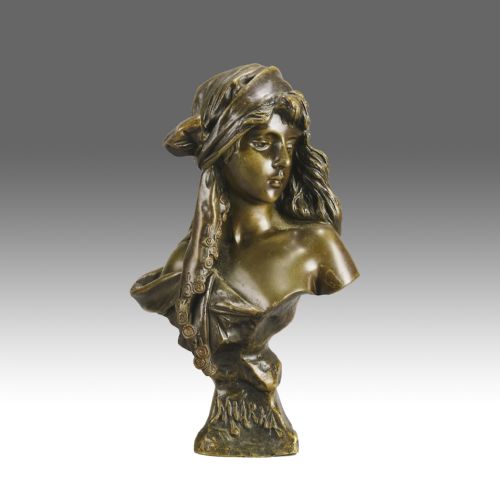
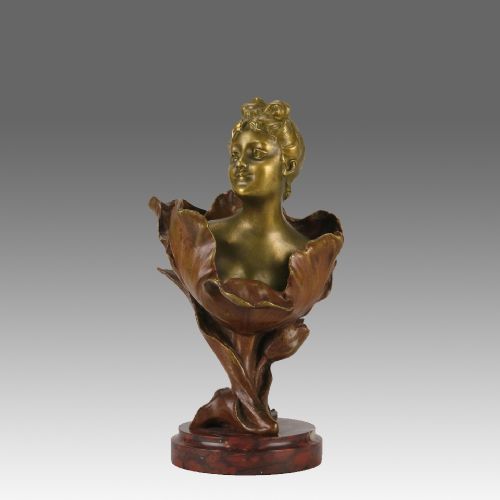





Brown Bronze Bust
A brown bronze bust brings character and sculptural weight to a room, cast in metal and finished with patination or gilt.
What these brown bronze busts are
A brown bronze bust captures the likeness of a person in cast metal, ranging from classical studies to character portraits. When you search for a brown bronze bust, you encounter works spanning the late nineteenth century through the early twentieth century.
The selections on this page include distinct cultural and artistic expressions, from a Bohemian young girl to a South American man and classical ladies. These sculptures frequently pair cast bronze with marble bases, anchoring the metalwork securely.
Originating across European studios and international subjects, these pieces demonstrate the widespread popularity of portrait sculpture in homes during the 19th Century, 1900, 1910, and 1920.
How they were made
Foundries produced these pieces using traditional metal-casting techniques, capturing intricate details in the hair, clothing, and facial expressions. The resulting metal forms received surface treatments including patinated finishes and areas of gilt bronze.
Many sculptures incorporate mixed media, mounting the heavy metal busts upon fitted marble plinths to provide stability and a contrasting textural element.
Retail Price Guide 2026
Typical UK retail prices for brown bronze bust, calculated from the Sellingantiques database of over a million retail prices indexed since 2003. This retail price guide relies exclusively on Sellingantiques data; no external sources or auction records are used, so the figures do not describe the wider market.
Current listings feature pieces in Bronze, Marble, Gilt Bronze, and Patinated Bronze, spanning the 19th Century to 1920.
What varies in quality
The distinction between standard commercial foundry output and works bearing the signature of a known sculptor lies in the individuality of the finish and the nuance of the expression.
Henri Godet·Giuseppe Moretti·Georges Van Der Straeten
The Brown Bronze Bust Glossary
- Patinated bronze
- Bronze that has been chemically treated to alter its surface colour, often producing rich brown tones. This layer protects the metal while enhancing visual depth.
- Gilt bronze
- Bronze coated with a thin layer of gold, providing contrasting bright metallic highlights against darker metal surfaces. This finish often accentuates decorative elements like clothing or hair ornaments.
- Academic realism
- An artistic style following the standards of European art academies, prioritising lifelike representation and anatomical accuracy. Busts in this style focus on convincing human portraits.
- Art Nouveau
- A decorative style prevalent in the late nineteenth and early twentieth centuries, characterised by flowing lines and nature-inspired motifs. Sculptures from this movement often incorporate organic curves in hair and garments.
- Art Deco
- A design style emerging in the early twentieth century, favouring stylised geometries and streamlined forms. Pieces from this era reflect modern aesthetic trends.
Frequently Asked Questions
What periods do these busts represent?
The pieces span from the late nineteenth century through the 1920s, encompassing styles like Art Nouveau, Art Deco, and Academic Realism.
These dates reflect the active years of casting and the prevailing aesthetic movements of European foundries.
How were these sculptures displayed?
Cast metal busts served as prominent tabletop or mantelpiece ornaments in period interiors, often elevated on fitted marble bases.
Their substantial weight and integrated plinths allowed them to stand securely on wooden furniture without additional mounting.
What materials make up these pieces?
The primary material is cast bronze, frequently enhanced with patinated surfaces or gilt bronze highlights.
Many examples incorporate stone elements, specifically marble bases that support the metal sculpture.