
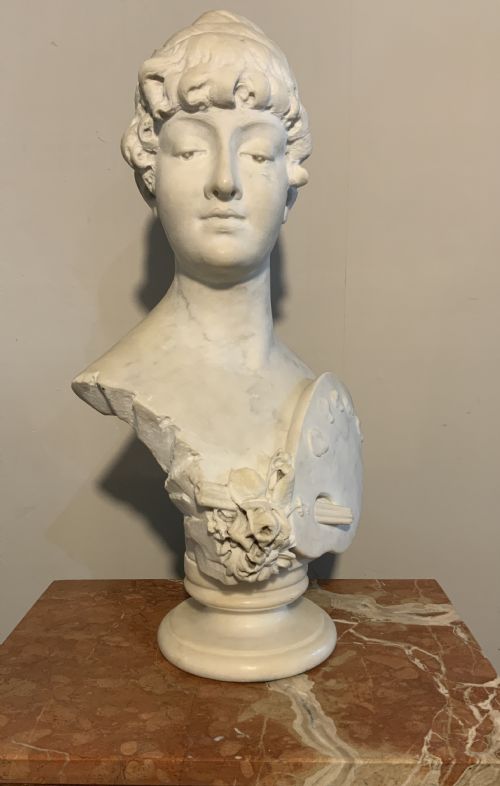
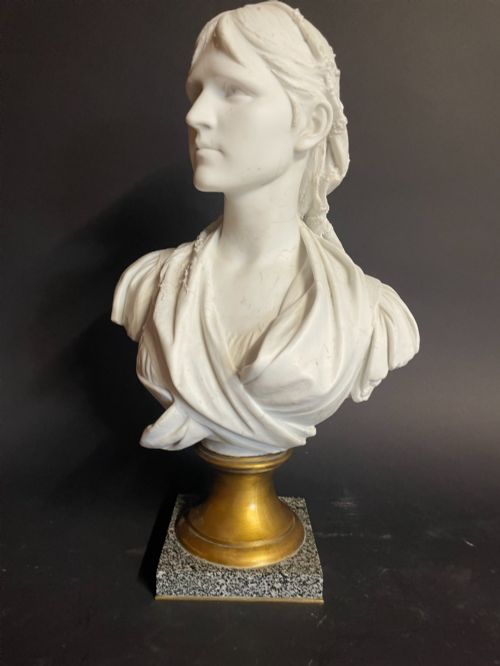
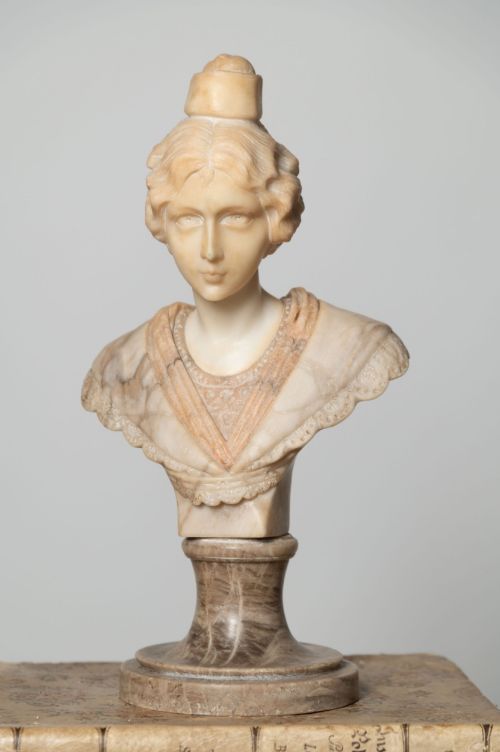

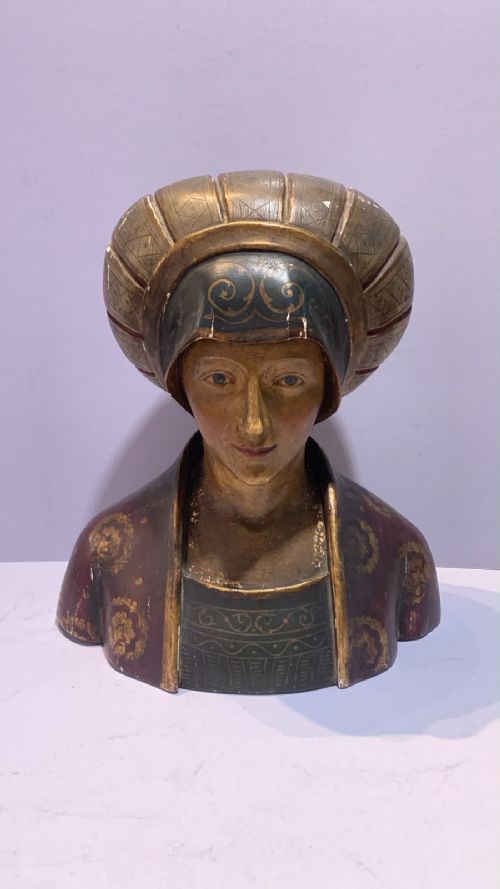
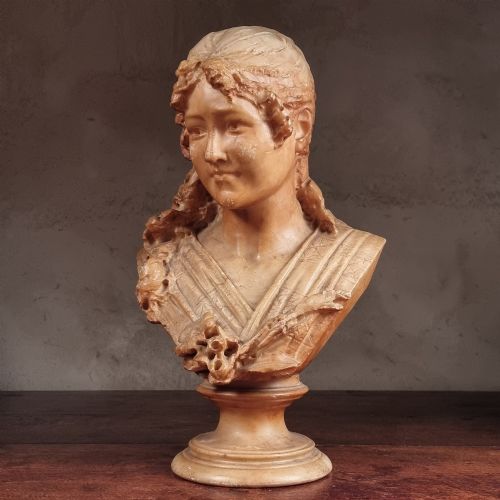

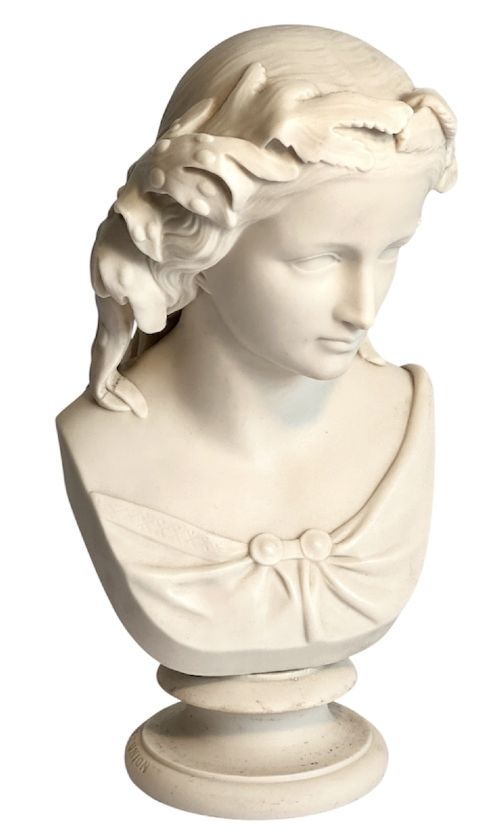
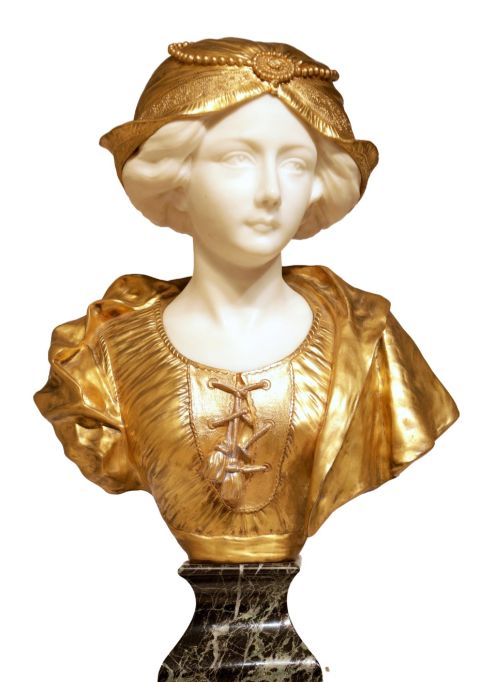

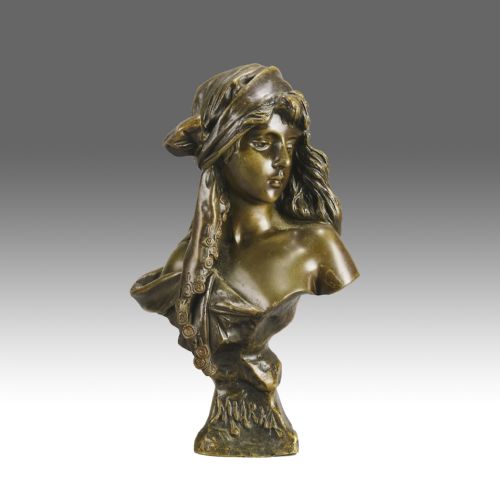


Antique Female Portrait Bust
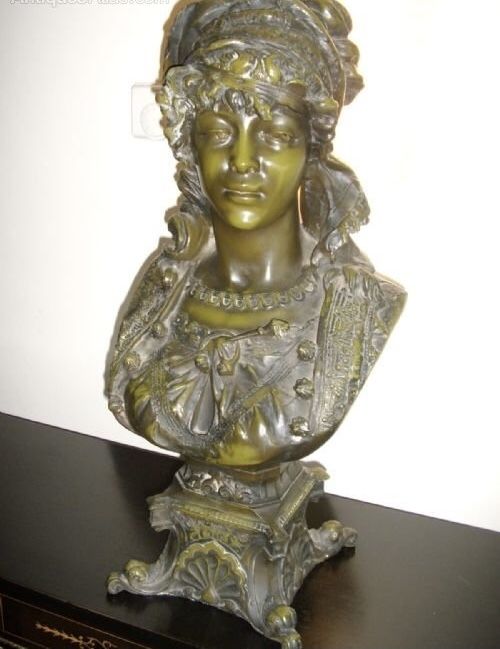
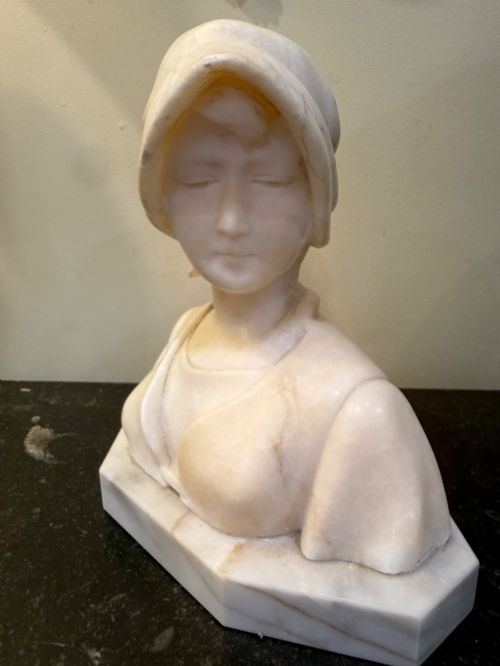
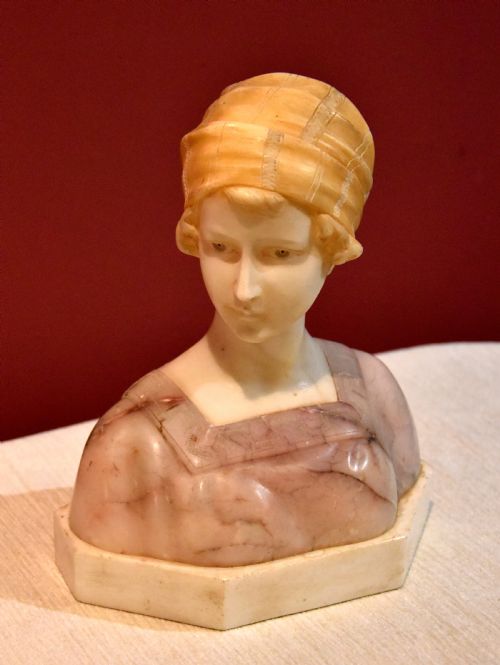
These antique female portrait busts capture likenesses in bronze, marble and alabaster, offering lasting character and presence for a room.
Understanding the pieces
An antique female portrait bust presents sculpted likenesses of women across various historical periods, bringing sculptural form into domestic interiors. Collectors seek these works for their striking portraiture and the distinct character each material brings.
The selection on this page ranges from seventeenth-century marble carvings to twentieth-century Art Deco interpretations. Buyers encounter diverse forms, including allegorical figures and specific portraits, executed in media such as bronze, marble, alabaster and spelter.
Art Nouveau examples feature prominently, capturing the flowing lines and natural motifs characteristic of the movement. Alongside these, Victorian and earlier classical treatments offer a different focus on drapery and facial expression.
Materials and technique
Metalworks involve bronze and spelter, often finished with patination or gilding to enhance the surface detail. Combinations of materials, such as alabaster paired with marble bases, appear frequently across the period pieces.
Wood elements occasionally feature, sometimes painted or giltwood, adding warmth and varied texture to the sculptural composition.
Retail Price Guide 2026
Typical UK retail prices for female portrait bust, calculated from the Sellingantiques database of over a million retail prices indexed since 2003. This retail price guide relies exclusively on Sellingantiques data; no external sources or auction records are used, so the figures do not describe the wider market.
Listings span multiple centuries, extending from the 17th Century through to the 1930s.
Assessing quality
Quality rests primarily in the sensitivity of the carving and the crispness of the casting. Finer pieces demonstrate a superior command of anatomy, expression and surface texture, whether in the softness of stone or the sharp detail of metal.
The choice and combination of materials also influence the standing of a piece, with high-grade marbles and refined patinated bronzes marking out the better examples. Signed works by recognised modellers carry distinct artistic weight compared to anonymous workshop output.
Emmanuel Villanis·Auguste Henri Carli·Hans Müller·Bohumil Rezl
The Antique Female Portrait Bust Glossary
- Bust
- A sculpted or cast representation of a person from the chest up. This format focuses attention on the facial expression and the treatment of the shoulders and neckline.
- Spelter
- A zinc alloy commonly utilised as a less costly alternative to bronze during the nineteenth century. It frequently received a bronze-like coating to imitate the heavier metal.
- Alabaster
- A fine-grained, translucent stone often used for delicate sculptural work. Its softness allows for subtle gradations of light beneath the surface.
- Patina
- The surface coloration and sheen developed through age or chemical treatment on metal and wood. A well-preserved patina enhances the depth of sculptural details.
Frequently Asked Questions
How should I clean my marble bust?
Marble surfaces benefit from gentle dusting with a soft, dry cloth to prevent dirt accumulation. Avoid using water, household cleaners or abrasive materials, which can damage the stone.
For stubborn marks, consult a professional restorer rather than attempting chemical cleaning at home. Preserving the natural surface ensures the longevity of the carving.
Where do these busts sit best?
These sculptures suit stable, level surfaces such as strong sideboards, pedestals or deep mantelpieces. Placing them away from direct sunlight and heat sources protects materials like painted wood and alabaster.
Ensure the support can bear the weight, particularly with dense stone or cast metal pieces. Adequate lighting from the side helps reveal the subtle contours of the face.
How do I identify Art Nouveau style?
Art Nouveau works typically display organic forms, flowing hair and dynamic, sinuous lines inspired by nature. Sculptures from this period often incorporate floral motifs or expressive drapery that frames the subject.
This aesthetic contrasts with the stricter classical symmetry of earlier periods and the geometric precision of later Art Deco designs.
What is the difference between bronze and spelter?
Bronze is a durable copper alloy valued for its weight, rich patination and capacity to hold fine cast details. Spelter is a lighter zinc-based metal that was widely utilised for decorative figures during the nineteenth century.
Inspection of the underside or base often reveals the lighter, softer nature of spelter compared to bronze.