


Gilded Slip Wall Mirror
A gilded slip wall mirror captures light and reflects the room with the curved depth of a traditional convex glass.
Gilded Slip Wall Mirror
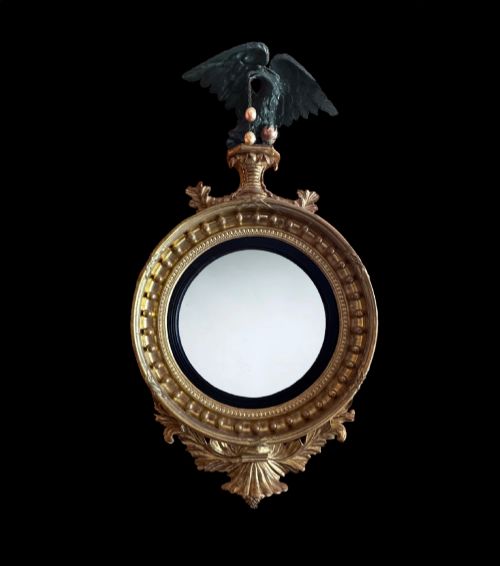
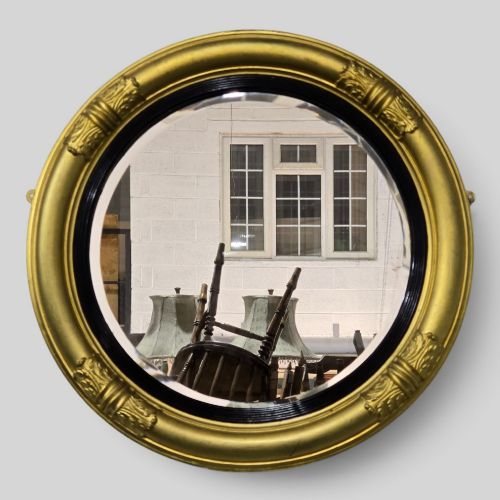
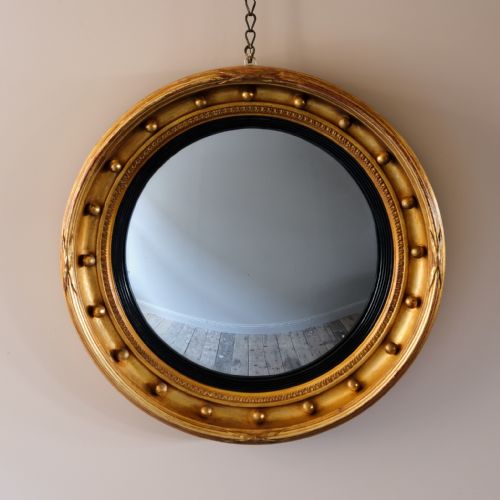
A gilded slip wall mirror is an optical piece designed to draw light into a room, most frequently encountered in the circular convex form typical of the Regency period. These mirrors draw the eye through a deep, curved glass plate framed by gilded wood, ebonised slips, and occasionally carved crests such as eagles.
The selection ranges across the nineteenth century into the early twentieth century, spanning Georgian, Regency, and Victorian revivals. Wall mirrors and overmantel mirrors dominate the forms, offering both intimate circular glasses and wide landscape formats suited for mantelpieces.
Buyers seek these pieces to anchor a wall with period character and reflective warmth. The prominent circular convex mirror with a black ebonised slip remains the definitive version met on this page.
How they were made
The construction relies heavily on seasoned timbers such as pine, mahogany, and walnut as structural bases for carved or moulded frames. Craftsmen applied gesso and gold leaf to the wooden substrates, creating the brilliant gilded surfaces that define the style.
Convex glass plates were blown and silvered to achieve the wide-angled reflection characteristic of butler's and convex mirrors. Ebonised wood slips were frequently inserted between the frame and the glass to provide a sharp contrasting border.
Butler's mirrors let servants keep a watchful eye on the dining room without turning around.
What varies in quality
Quality rests in the crispness of the original carving and the depth of the gilding applied over the gesso. Fine examples show intricate detail in decorative elements like eagle crests and moulded bezels rather than flat, simplified casting.
The integrity of the mirror glass itself distinguishes finer items, particularly where original convex plates survive with subtle distortions and silvering patination intact. The structural joinery of the heavy circular frames also determines durability and longevity.
The Gilded Slip Wall Mirror Glossary
- Slip
- A narrow border or inner moulding, often ebonised, separating the mirror plate from the outer frame. It provides visual depth and contrast to the surrounding gilding.
- Convex glass
- A curved glass plate that reflects a wide, hemispherical view of the interior. This type of glass creates the distinctive fisheye perspective found in butler's mirrors.
- Gesso
- A plaster-like mixture applied to wood frames to provide a smooth, absorbent base for gilding. Skilled application allows for sharp, durable relief moulding.
- Girandole
- A wall mirror featuring attached candle sconces that multiply the flickering light of candles. The reflective glass magnifies the illumination within the room.
- Overmantel mirror
- A wide horizontal mirror designed to sit above a fireplace mantel. These large frames often incorporate classical architectural motifs and multi-plate glass.
Gilded Slip Wall Mirror: Frequently Asked Questions
Where should I hang a convex mirror?
Convex mirrors excel in hallways, dining rooms, and living spaces where their wide-angle reflection can capture an entire room. Placing them opposite a window maximises the natural light they bring into darker corners.
Because of their optical distortion, they are best hung at or slightly above eye level. This positioning ensures they function effectively as decorative focal points without awkward viewing angles.
How do I clean an antique giltwood frame?
Dusting giltwood frames requires a very soft, dry brush or feather duster to remove surface particles gently. Moisture and chemical cleaning agents can strip historical gold leaf and damage the underlying gesso.
Avoid rubbing the gilded surfaces entirely, as the leaf is often extremely thin. Professional conservation is recommended for deep cleaning or repairing damaged plaster work.
Are these mirrors heavy to hang?
Many of these pieces possess substantial weight due to dense timber construction, thick gesso layers, and heavy glass plates. Securing them safely requires locating solid wall studs or using heavy-duty wall anchors rated for the load.
Checking the fixing loops and backboards before hanging is essential for structural security. Professional installation is often advisable for larger overmantel examples.