




Georgian Fret Cut Mirror
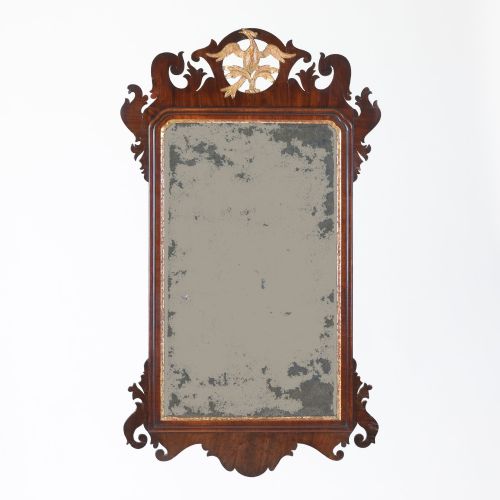
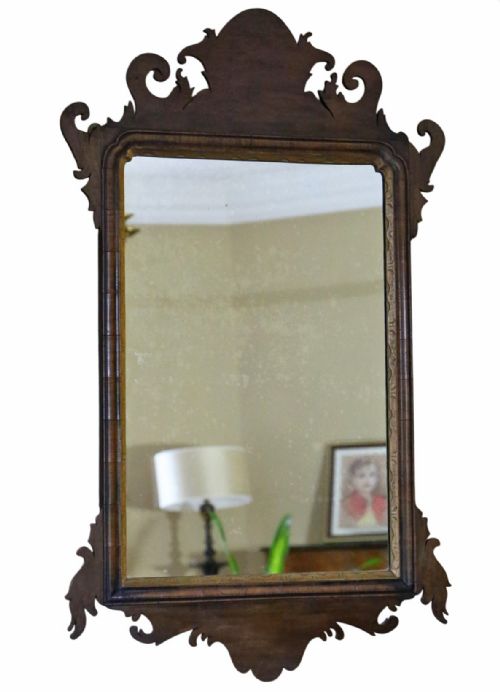
These georgian fret cut mirror examples bring sharp architectural lines and polished mahogany warmth to an interior wall.
Georgian Fret Cut Mirror
A georgian fret cut mirror combines pierced wooden silhouettes with upright wall glass, originating in the eighteenth century and returning in later revival periods. You will encounter genuine eighteenth-century pieces alongside later Georgian Revival examples from nineteen hundred and nineteen twenty.
The primary form is a wall-hung glass plate framed by flat wooden scrolls and pierced frets. Many pieces adopt mahogany, walnut, or giltwood as their primary medium.
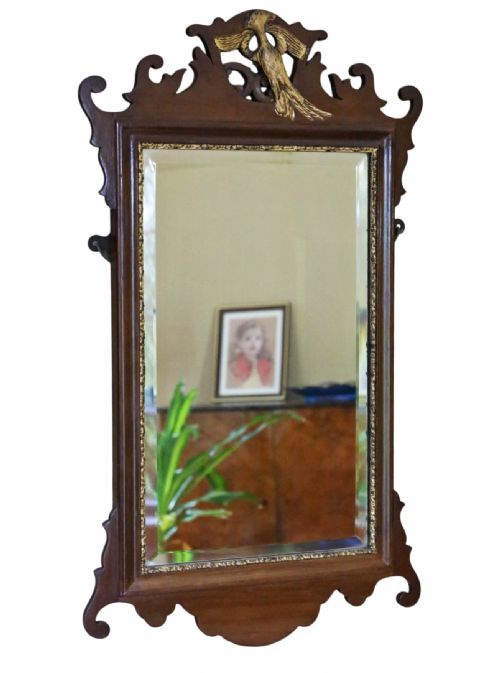
Makers drew on Chippendale influences, occasionally incorporating carved gilt birds or inlaid flame wood veneers. The scale spans from modest hanging chambers to larger overmantle formats.
How they were made
Cabinetmakers shaped the distinctive pierced outlines from solid planks of mahogany or walnut using hand saws. Many incorporate applied giltwood details or gilded edges to catch the light.
Surfaces feature polished mahogany, flame mahogany veneers, or burr walnut, finished with clear polishes that show the natural grain. Glass plates are sometimes set with bevelling or held by original backing boards.
Listings feature periods spanning from the eighteenth century through nineteen hundred to nineteen twenty.
What varies in quality
The precision of the piercing dictates the refinement of the silhouette, where sharper fret angles separate finer workshop output from simpler production. Wood selection also plays a part, distinguishing plain timber from figured flame mahogany or burr walnut.
The survival of original mirror glass and untouched surface patination elevates a piece above those with replaced plates or modern finishing. Cohesion between the carved gilding, such as the ho-ho bird crests, and the main frame determines stylistic integrity.
The Georgian Fret Cut Mirror Glossary
- Fret cut
- A technique of piercing thin timber with intricate geometric or scrolling patterns using a fine saw. This creates the signature pierced silhouette seen on the outer frames.
- Giltwood
- Timber coated with a thin layer of gold leaf or gold paint to provide metallic highlights. It often accents the inner moulding or carved crests of these frames.
- Flame mahogany
- A figured wood veneer showing a distinct feather-like flame pattern caused by the grain near the branch junctions. It adds dramatic visual movement to the flat surfaces.
- Overmantle mirror
- A larger wall mirror designed specifically to hang above a fireplace mantel. These pieces stretch wider to balance the proportions of the hearth below.
- Bevel-edged glass
- Mirror glass where the outer perimeter edges are ground and polished at an acute angle. This creates a framed optical border within the glass itself.
Georgian Fret Cut Mirror: Frequently Asked Questions
How do I date a fret cut mirror?
Dating relies on examining the timber construction, the type of mirror glass, and the specific characteristics of the fretwork. Eighteenth-century examples show hand-cut joinery and aged backing boards, whereas nineteen-hundred revivals display machine-cut consistency.
Secondary indicators include the choice of veneers, such as burr walnut or flame mahogany, which shifted in popularity across different revival eras and the original Georgian period.
Were these mirrors meant for specific rooms?
These wall mirrors typically hung in principal reception rooms, hallways, or parlours where reflected light could brighten darker corners. Their decorative fretwork made them focal points above side tables or fireplaces.
Smaller variants suited intimate chambers, while larger overmantle versions occupied the prominent wall space directly above the hearth.
What is a ho-ho bird crest?
A ho-ho bird is a stylized Chinese phoenix motif frequently carved into the top scrollwork of eighteenth-century frames. It represents good fortune and adds an exotic touch to the classical mahogany design.
These gilded or carved wooden birds perch at the apex of the fretwork, looking down over the mirror plate.
How should I hang a heavy wall mirror?
Secure hanging requires locating wall studs or utilising appropriate masonry fixings matched to the weight of the mahogany or giltwood frame. The original brass suspension rings or wire on the back must be checked for strength before mounting.
Ensure the mirror hangs level and flat against the wall surface to prevent undue stress on the ancient wooden joints.