




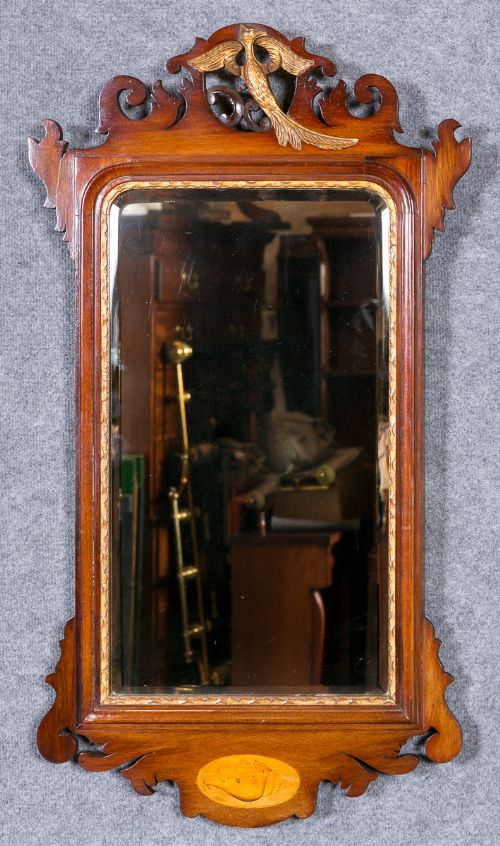
Antique Mahogany Looking Glass
These antique mahogany looking glass pieces bring warmth and depth to a room through rich timber frames and clear reflective glass.
Antique Mahogany Looking Glass
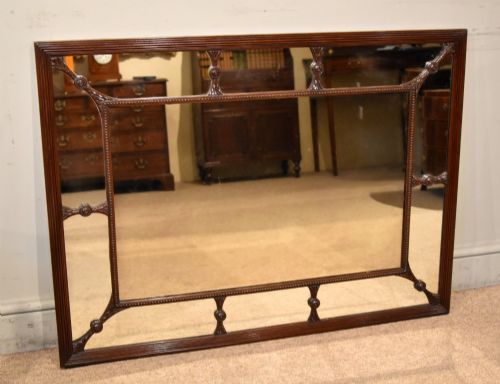
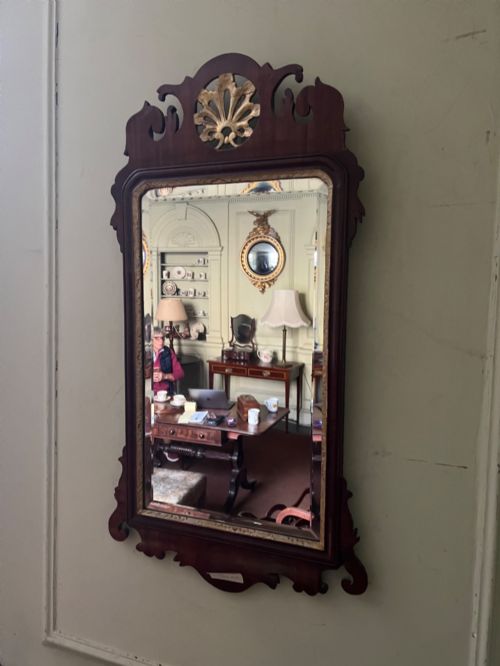
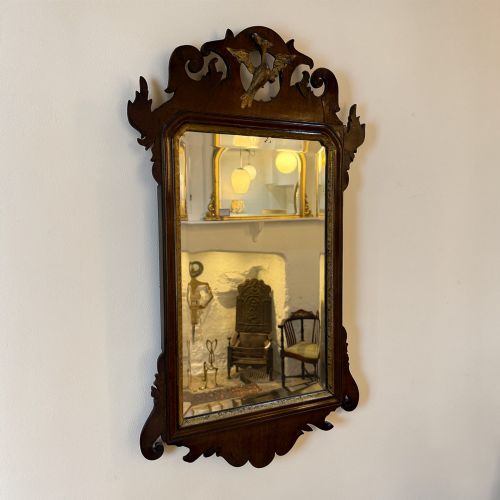
An antique mahogany looking glass is a wall-hanging mirror framed in rich timber, designed to reflect light and space in a room. When you search for an antique mahogany looking glass, you will encounter various formats spanning the eighteenth, nineteenth and early twentieth centuries. These encompass Georgian fretwork designs, Regency wall mirrors and Edwardian inlaid hanging styles.
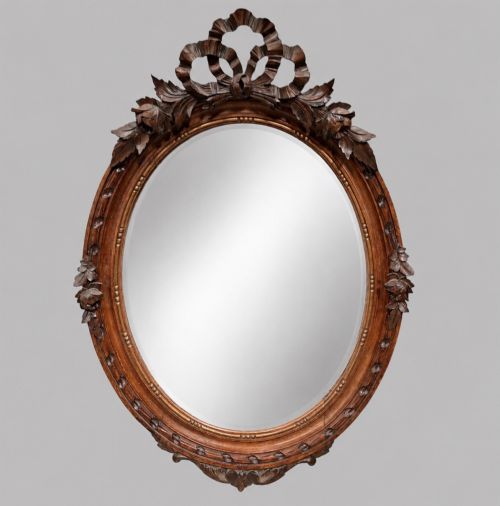
The selection on this page leans heavily toward traditional wall mirrors fashioned from solid mahogany or mahogany veneers. You will find rectangular shapes alongside oval formats and overmantle styles, representing periods from the Georgian era through to the Edwardian period.
How they were made
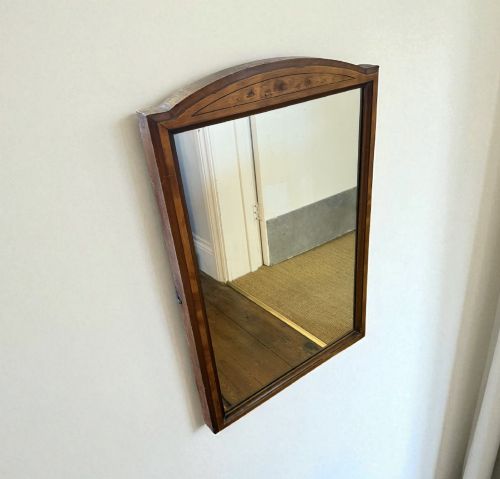
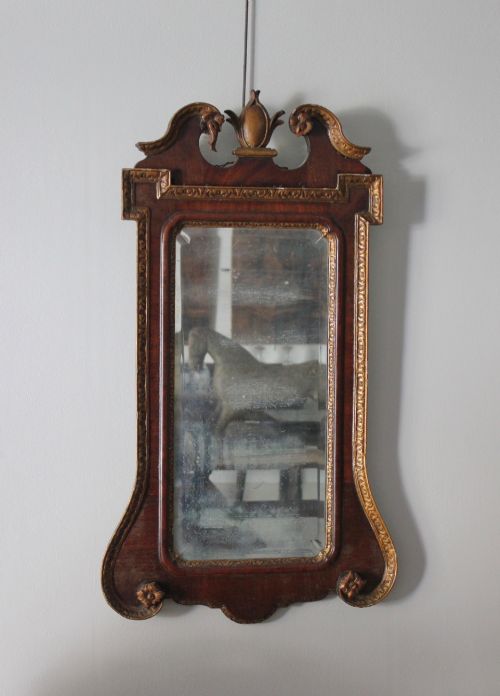
Makers constructed these frames predominantly from mahogany, utilising its durable grain for structural integrity and fine carving. Many pieces incorporate giltwood accents, gilded wood highlights or delicate satinwood inlay to provide contrast against the deep brown timber.
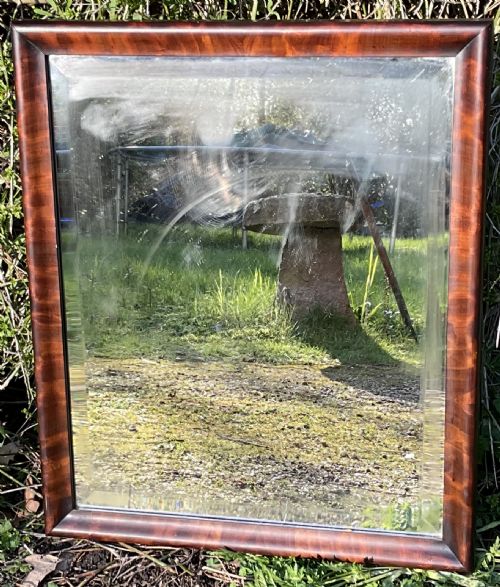
Techniques range from intricate fretwork sawing on eighteenth-century wall mirrors to smooth veneering on later nineteenth-century and Edwardian examples. Original mirror glass is set within the timber rebates, often secured by old backing boards.
Antique Mahogany Looking Glass Retail Price Guide 2026
Typical asking prices for mahogany looking glass among the pieces listed under this phrase on Sellingantiques today, from the lower quarter to the upper quarter. They describe what is for sale here now, not the wider market.
An Edwardian piece playfully named the Last Look Mirror ensures you catch one final glance before stepping out the door.
What varies in quality
Quality rests upon the crispness of the timber carving and the depth of the mahogany grain. Pieces featuring well-executed fretwork or harmonious giltwood enrichments stand apart from simpler utilitarian frames.
The integrity of the timber and the preservation of the original mirror plate heavily influence the standing of a piece. Finer examples display thoughtful proportions and careful matching of veneers across the frame.
The Antique Mahogany Looking Glass Glossary
- Fret mirror
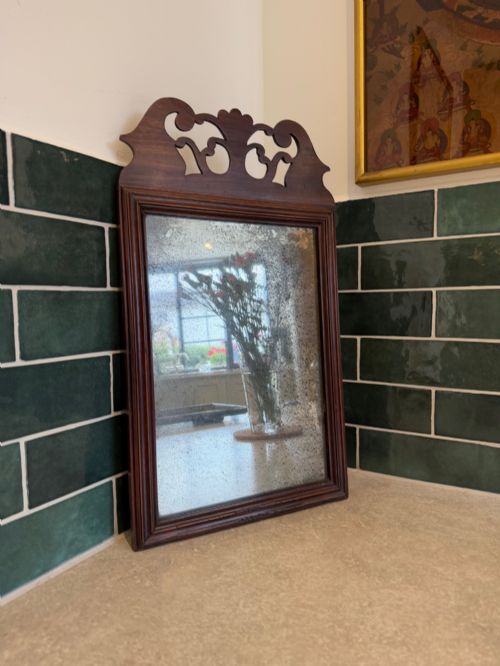
- A wall mirror featuring a flat wooden frame with pierced or fret-cut silhouetted borders, popular during the eighteenth century. This technique created lighter, decorative profiles.
- Overmantle
- A large mirror specifically designed to hang directly above a fireplace mantelpiece. These often span greater widths to balance the fireplace below.
- Giltwood
- Timber that has been coated with a thin layer of gold leaf or metallic paint. It frequently highlights the inner mouldings or carved details of mahogany frames.
- Pier mirror
- A tall mirror designed to hang on the wall space between two windows, known as a pier. They often incorporated gilded elements alongside mahogany construction.
- Satinwood inlay
- Contrasting light-coloured timber inserted into the darker mahogany surface in decorative patterns. This decorative technique became prominent during the Sheraton Revival and Edwardian periods.
Antique Mahogany Looking Glass: Frequently Asked Questions
Where should I hang an antique mahogany looking glass?
These mirrors suit placement above a fireplace, in a hallway, or opposite a window to maximise natural light in the room.
Ensure the wall fixings match the weight of the timber frame and mirror glass to support the piece securely.
How do I identify a Georgian looking glass?
Georgian pieces often display characteristic fret-cut mahogany outlines, hand-carved gilded details, and heavy old pine backing boards.
Examine the construction joints and timber patination to understand the age of the frame.
What is the difference between Georgian and Edwardian styles?
Georgian mirrors typically feature hand-carved fretwork and deep timber patination developed over centuries of age. Edwardian interpretations often incorporate delicate satinwood inlay and lighter veneer work.
Both styles utilise mahogany, but the craftsmanship reflects the distinct aesthetic preferences of each period.