
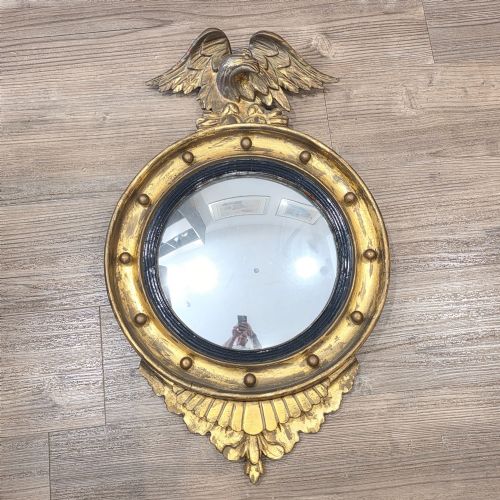
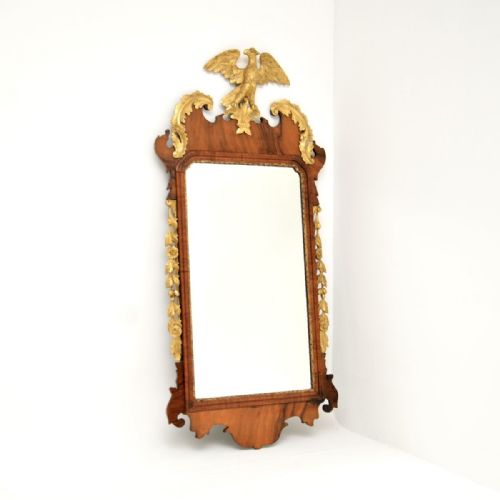
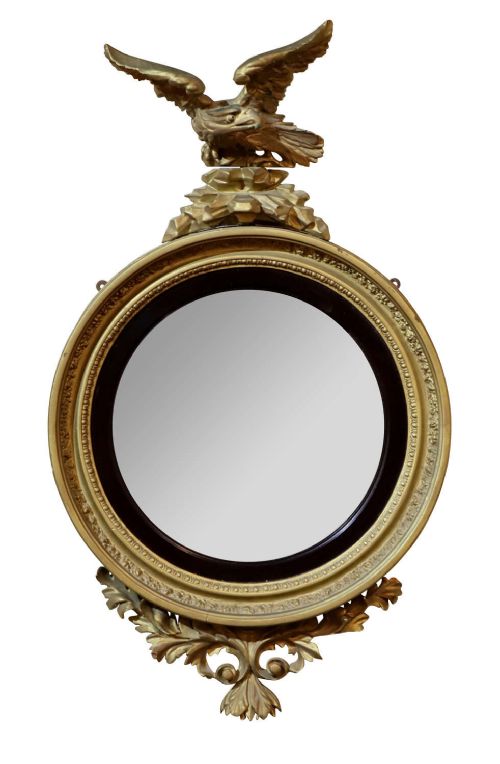
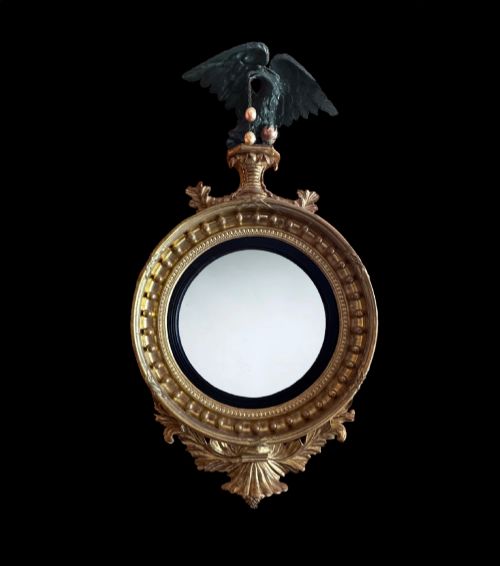

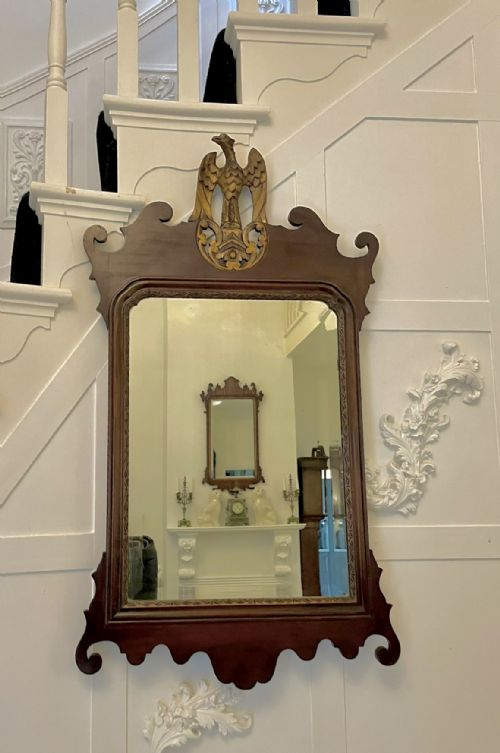
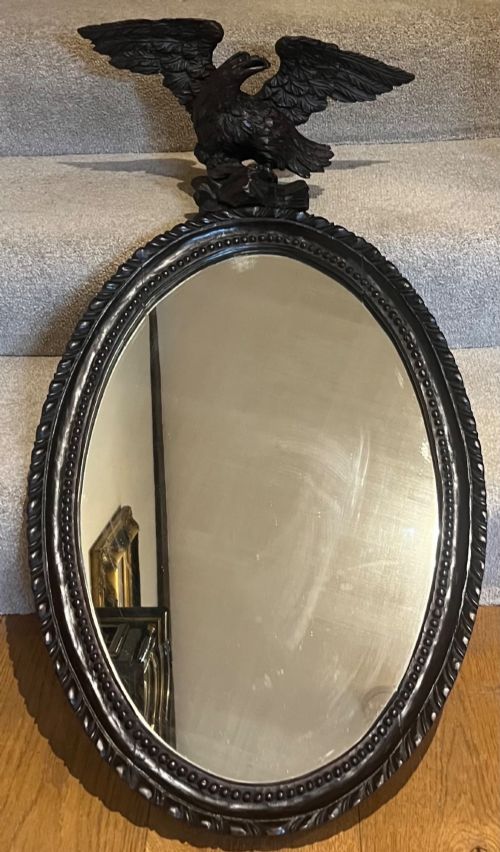


Eagle Crest Wall Mirror
An eagle crest wall mirror brings commanding presence and centuries of craftsmanship to a room.
What these pieces are
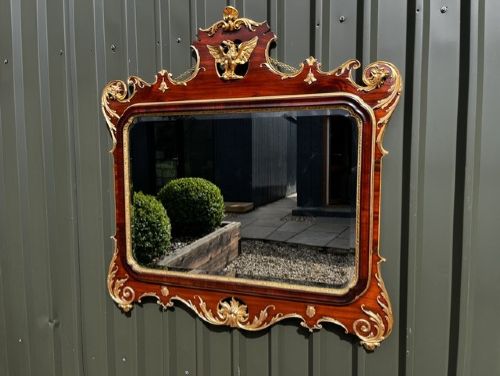
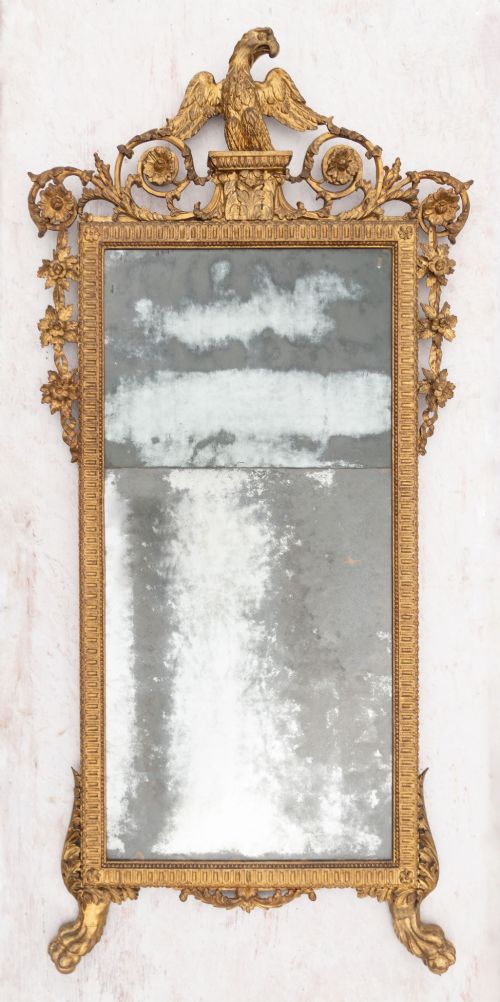
An eagle crest wall mirror anchors a room with classical authority, drawing the eye upwards to the carved bird that traditionally crowns the frame. These pieces span the Georgian, Regency, and Edwardian eras, encompassing both original period items and later revivals in the George II style.
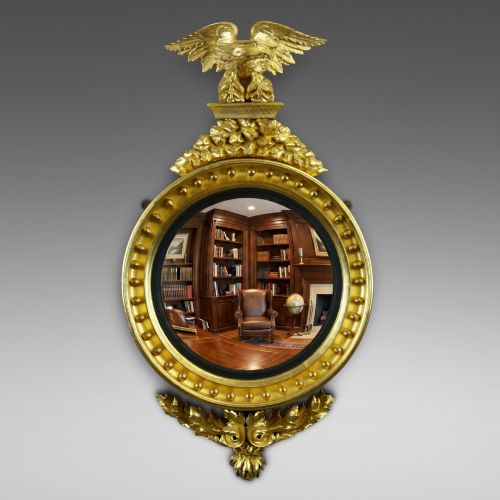
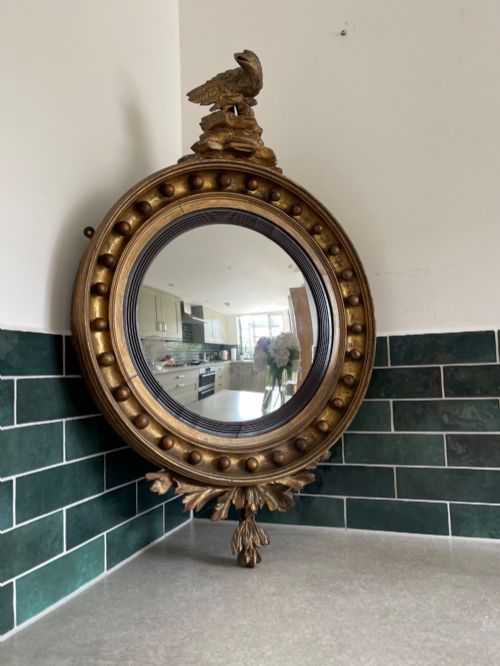
The forms on this page include large convex mirrors with eagle mounts, fretted fretwork designs, and girandoles fitted with candle sconces. Materials range from traditional giltwood and gilded wood to mahogany, brass, and lacquer.
How they were made
Cabinetmakers and carvers utilised timbers such as mahogany, applying delicate fretwork, parcel gilding, or rich scarlet and giltwood finishes to the wooden foundations. Gilded wood and giltwood surfaces were painstakingly prepared with gesso before the application of gold leaf.
Convex and flat glass plates were integrated into frames featuring carved crests, sometimes incorporating brass candle arms for girandole lighting.
Retail Price Guide 2026
Typical UK retail prices for eagle crest wall mirror, calculated from the Sellingantiques database of over a million retail prices indexed since 2003. This retail price guide relies exclusively on Sellingantiques data; no external sources or auction records are used, so the figures do not describe the wider market.
Listings feature items spanning the eighteenth to the early twentieth century, incorporating mahogany, brass, and giltwood.
What varies in quality
The distinction between ordinary and exceptional examples rests in the depth and sharpness of the carved eagle crest and the surrounding frame ornamentation. Crisp hand-carving in solid mahogany or deep relief on giltwood stands apart from simpler, flatter decorative treatments.
The integrity of the original gilding or lacquer finish also dictates standing, where undisturbed patination and careful burnishing elevate a piece far above heavily restored alternatives.
The Eagle Crest Wall Mirror Glossary
- Convex mirror
- A circular mirror with a curved glass plate that reflects a wide-angle, panoramic view of the interior. These are frequently surmounted by carved eagles.
- Girandole
- A decorative wall mirror fitted with one or more candle branches or sconces attached to the frame. The polished metal or glass elements amplify the candlelight.
- Fretwork
- An ornamental design carved or pierced out of a thin board of wood, commonly seen on the scrolled borders of eighteenth and early twentieth-century frames.
- Giltwood
- Timber that has been coated with a thin layer of gold leaf or gold paint. It forms the lustrous surface characteristic of many classical wall mirrors.
- Parcel gilt
- A decorative technique where only specific portions of a wooden object are highlighted with gilding, leaving the underlying mahogany or painted wood visible elsewhere.
Frequently Asked Questions
Where should I hang an eagle crest mirror?
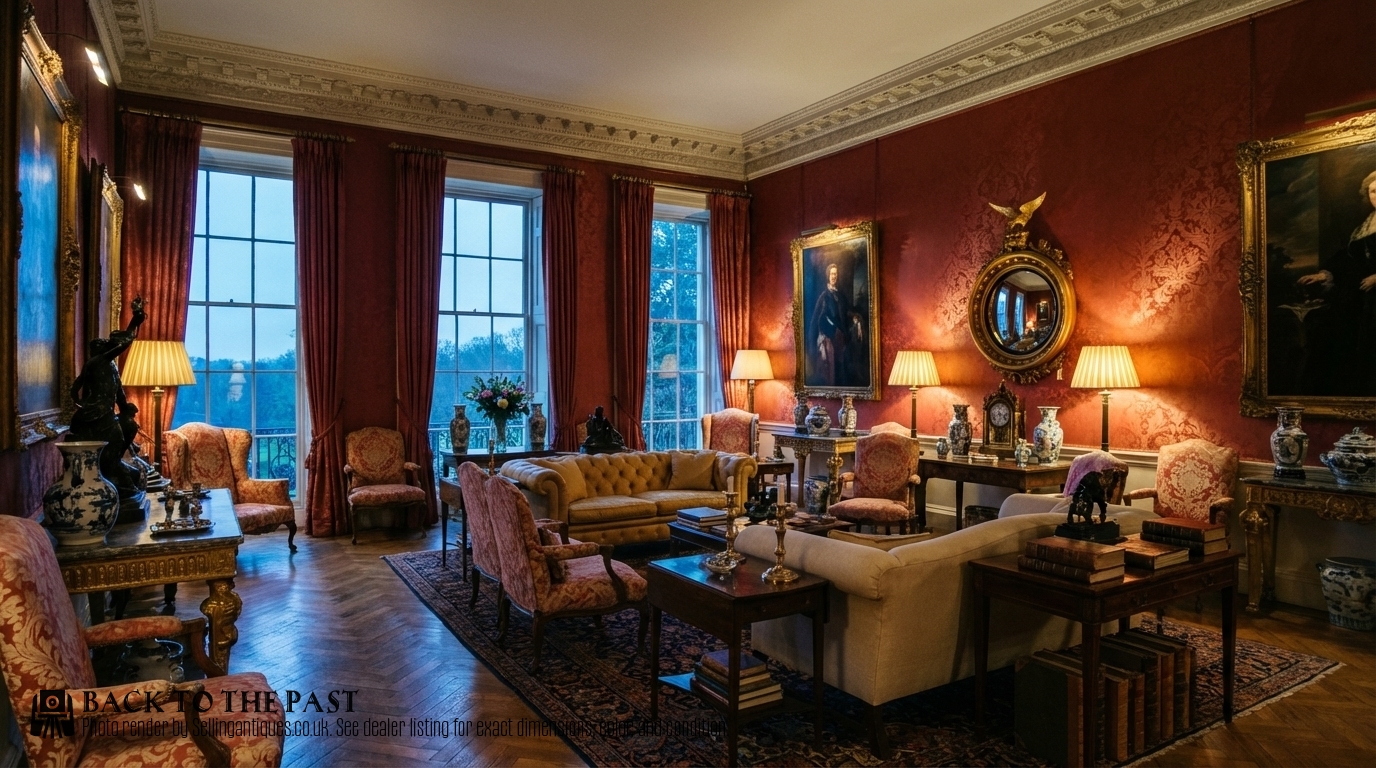
These mirrors suit principal reception rooms, hallways, or above a fireplace mantelpiece where their vertical proportions and crests can command the wall space.
Ensure the wall fixings are robust, as carved wooden and gilt frames carry considerable weight.
What is a convex mirror used for?
Historically, convex mirrors allowed servants to monitor a dining room or parlour from a single vantage point while remaining unobtrusive.
Today, they serve primarily as striking decorative focal points that bounce light around darker corners.
How do I date a wall mirror?
Dating relies on examining the timber construction, the method of gilding, and the style of the fretwork or crest. Earlier Georgian pieces display different joinery techniques compared to Edwardian revivals.
Checking the backboards and fixings often reveals clues about the period of manufacture.
What is the difference between girandole and standard mirrors?
A girandole incorporates integrated candle sconces that project from the frame to reflect artificial light across the room. Standard wall mirrors rely solely on reflected ambient daylight from windows and lamps.
Both styles frequently feature the iconic eagle crest.