
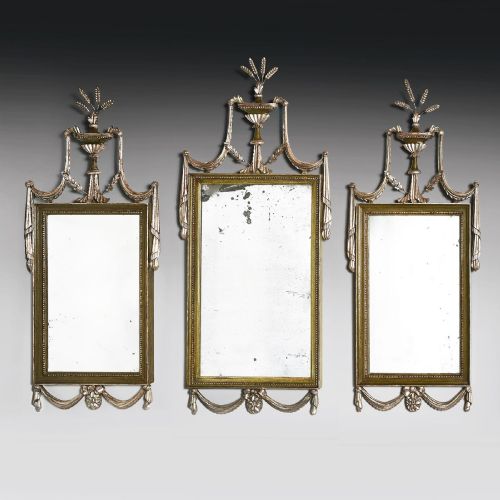
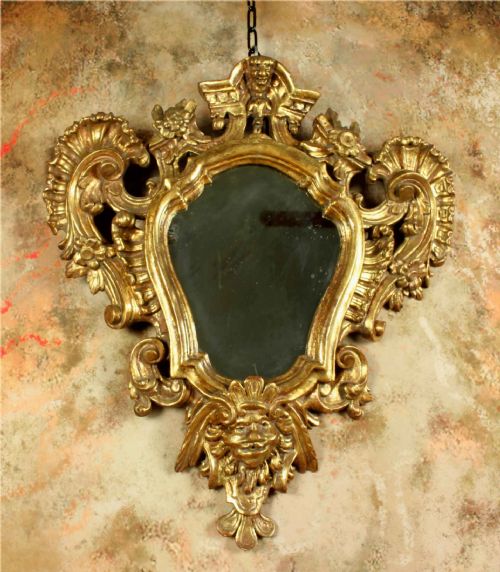
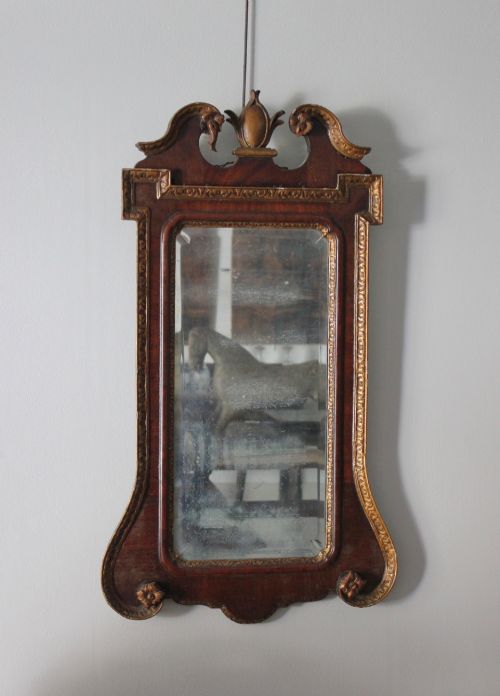
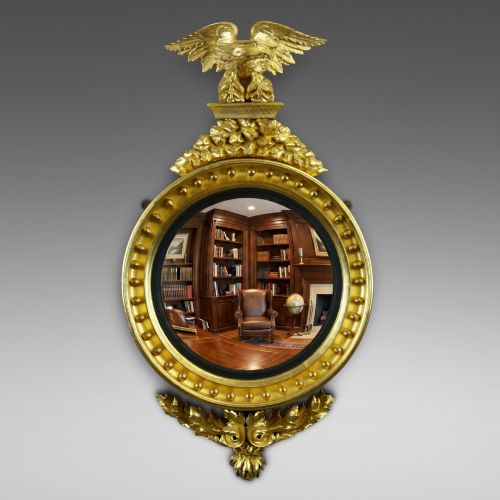

Georgian Carved Crest Mirror
These georgian carved crest mirror examples combine centuries of craftsmanship with striking focal points for any room.
Georgian Carved Crest Mirror
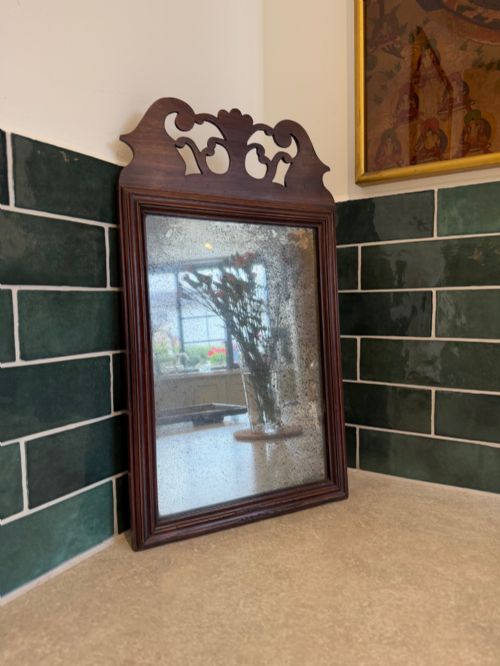
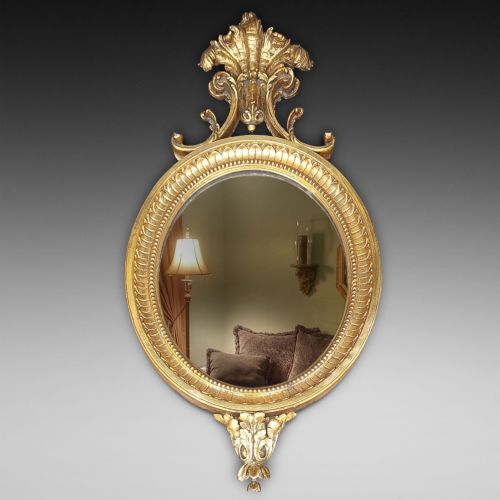
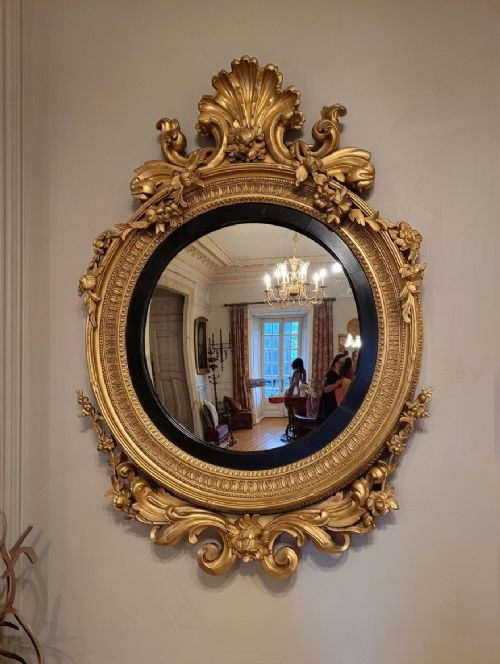
A georgian carved crest mirror is a wall-hanging looking glass defined by ornate wooden or gilded crestwork at its apex. These pieces range from compact wall-mounted designs to large overmantels intended to anchor a room.
The selections here span centuries of production, appearing in authentic 18th-century forms alongside later revival interpretations. Mahogany, walnut, and giltwood dominate the structural choices across these periods.
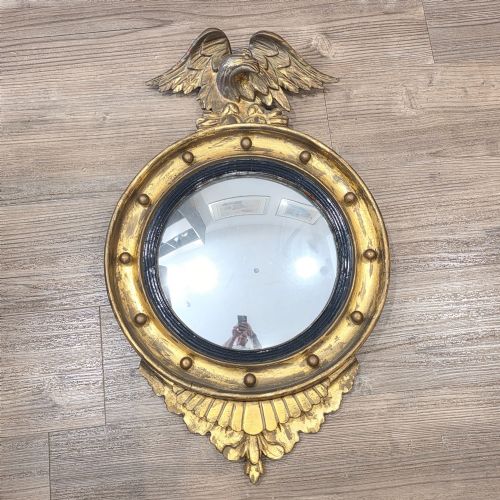
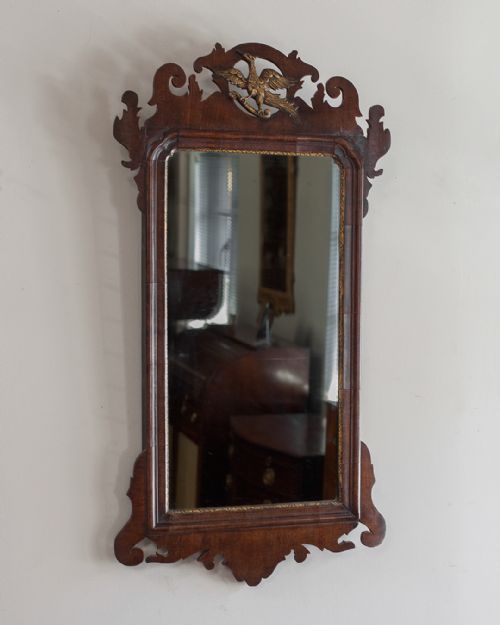
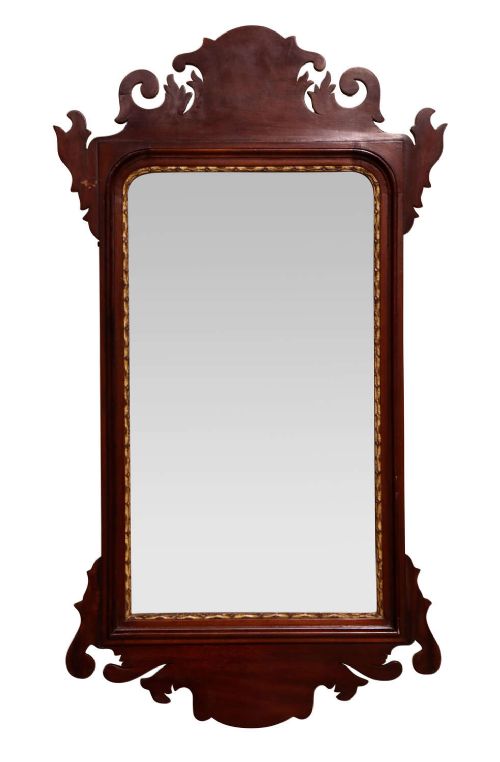
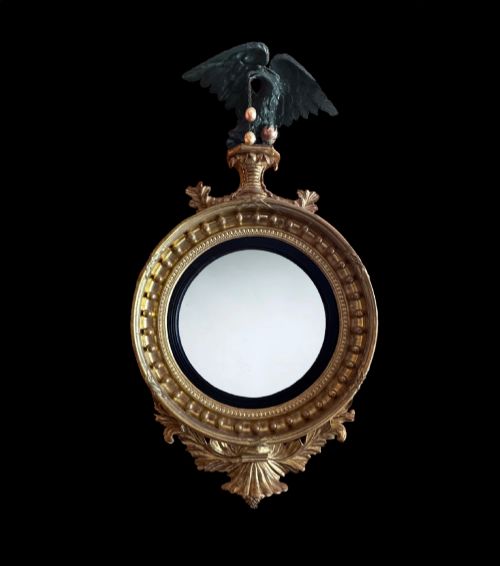
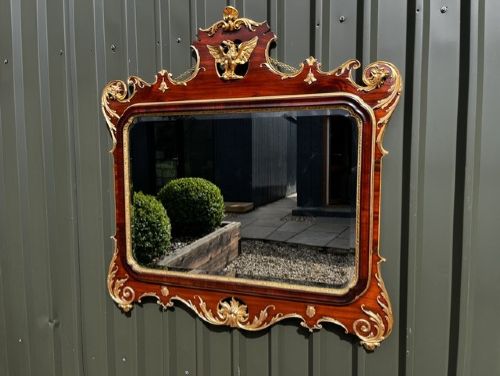
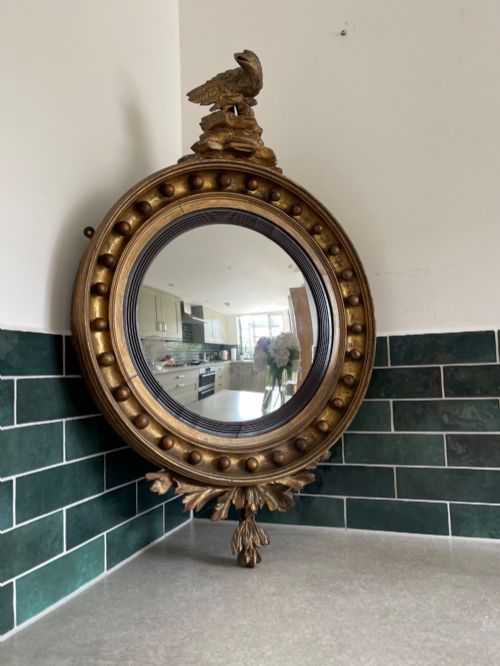
Wall mirrors and pier mirrors form the core of the selection, often incorporating fretted silhouettes or decorative crests. Buyers encounter everything from restrained George III mahogany frames to exuberant Regency convex glass designs.
Materials and construction methods
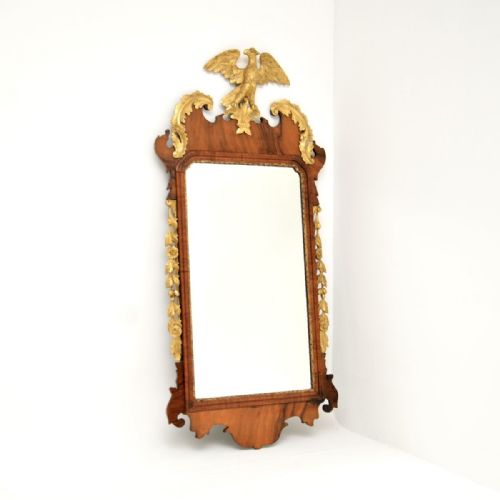
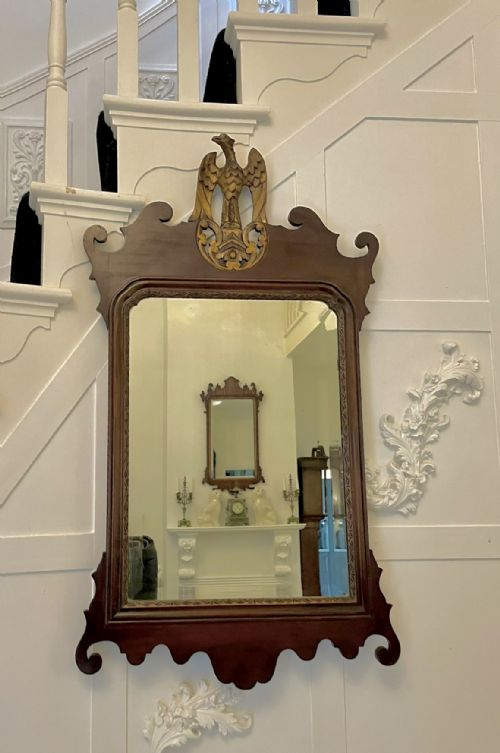
Frames rely principally on cabinet timbers like mahogany and walnut, frequently finished with carved gesso and applied leaf gilding. Artisans cut intricate fretwork silhouettes using specialised saws before applying decorative carved crests.
Giltwood surfaces combine carved wood or moulded gesso foundations covered in thin sheets of gold leaf. Convex mirror plates require specialised glass-blowing and silvering techniques to achieve curved optical reflections.
Listings feature woods such as mahogany, walnut, and ebonised timber alongside traditional giltwood and gesso finishes.
Defining excellence in execution
Quality rests in the crispness of the hand-carved details and the proportion of the crest relative to the frame. Superior examples display deep, sharp relief work rather than soft or muddy moulding.
The integrity of the original gilt layer or timber finish heavily influences the piece. Hand-cut fretwork with clean edges and well-preserved original mirror glass distinguishes finer workshops from standard production.
Gillows Of Lancaster·William Kent·John Belchier·Strahan of Dublin
The Georgian Carved Crest Mirror Glossary
- Giltwood
- Wood that has been coated with thin sheets of gold leaf over a prepared gesso base. This finish provides a bright reflective surface that catches interior candlelight or daylight.
- Fretwork
- Openwork ornamentation cut into thin boards of wood using a piercing saw. It creates geometric or organic patterns along the outer edges of the frame.
- Convex mirror
- A round looking glass with a spherical surface that reflects a wide-angle, panoramic view of the room. These are often surmounted by carved eagles or dragons.
- Pier mirror
- A tall, narrow looking glass designed to hang on the wall space between two windows. They frequently incorporate detailed crests and parcel-gilt highlights.
- Gesso
- A plaster-like mixture applied to wood frames to create a smooth surface for gilding. Skilled carvers incise fine details directly into this dried layer.
Georgian Carved Crest Mirror: Frequently Asked Questions
How do I hang a heavy carved crest mirror safely?
Due to the substantial weight of timber frames and glass, secure fixings directly into wall studs or use heavy-duty masonry anchors. Ensure the hanging wire or integrated brackets match the total mass of the piece.
Position the mirror at eye level to optimize both its reflection and the visual impact of the carved crest above.
What is the difference between an original and a revival mirror?
Original pieces date from the 18th and early 19th centuries, displaying period-specific construction methods and aged materials. Revival examples originate from later periods like the late 19th or early 20th century, copying earlier aesthetic movements.
Both categories hold distinct appeal, though authentic period pieces carry centuries of documented history within their frames.
Where were these mirrors placed in historic homes?
Pier mirrors traditionally occupied the wall space between windows to maximise natural light distribution around the room. Overmantel versions sat directly above fireplaces to anchor the central hearth.
Smaller fret-cut designs hung in hallways, drawing rooms, and private chambers as decorative focal points.