
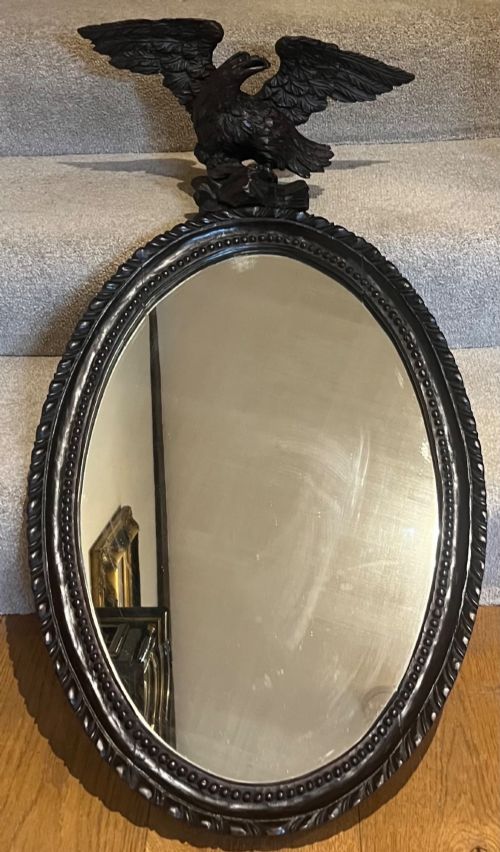


Vintage Eagle Crest Mirror
A vintage eagle crest mirror brings fierce neoclassical presence to a room, dominated by carved birds and gilded frames.
Vintage Eagle Crest Mirror
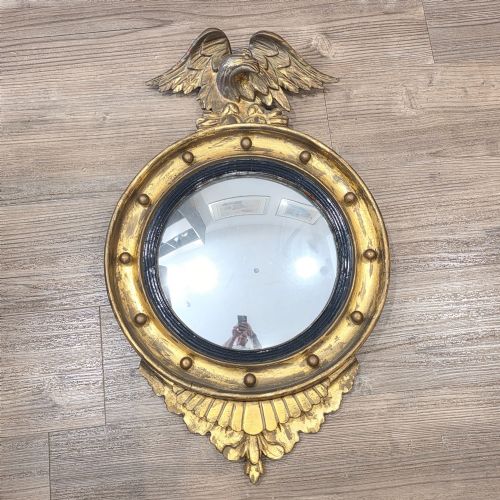
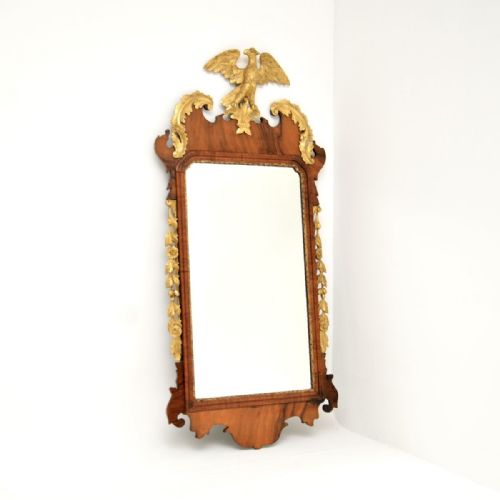
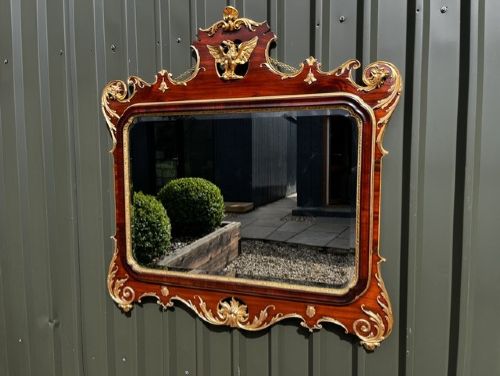
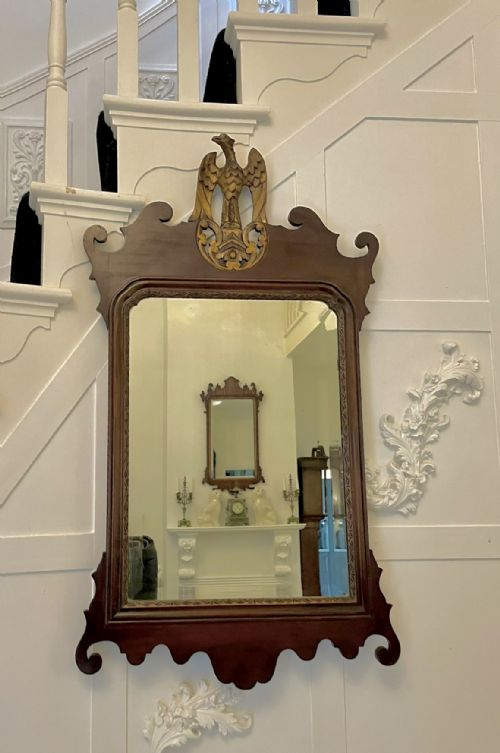
A vintage eagle crest mirror combines reflective glass with a commanding carved bird surmount, bringing traditional focal points to domestic interiors. These wall mirrors and overmantel mirrors emerge most often in nineteenth century periods, Regency styles, and Victorian formats.
The inventory on this page spans circular convex forms, rectangular wall mirrors, and fretwork designs in mahogany, walnut, and giltwood. Buyers encounter Georgian and Edwardian revivals alongside authentic nineteenth century specimens featuring gilt and gesso finishes.
How they were made
Craftsmen built the underlying structures using dense hardwoods such as mahogany and walnut, frequently applying veneer and intricate fretwork. Artisans shaped frames with carved details, sometimes incorporating ebonised wood or inlaid sections to add visual depth.
Giltwood and gesso surfaces received layers of gold leaf or metallic paint over prepared grounds to achieve their characteristic reflective brilliance. Glass was hand-set into the frames, with circular convex formats requiring specialised curvature to create wide-angle reflections.
Every single eagle appears permanently frozen in mid-spread, keeping watch over the parlour without ever flapping a wing.
What varies in quality
The depth and vigour of the carving on the eagle crest separate standard production from superior examples, with finer pieces displaying muscular wing feathers and expressive facial details. The crispness of the fretwork and the precision of the giltwood or gesso application further define the visual standard.
Choice of primary timber impacts the character of each piece, as dense figured mahogany and rich walnut hold crisp joinery better over time than softer woods. The integration between the bird surmount and the main frame reveals the skill of the original workshop.
The Vintage Eagle Crest Mirror Glossary
- Convex mirror
- A circular glass mirror with a bulging surface that reflects a wide, curved view of the room. These pieces often feature an eagle surmount perched at the top.
- Giltwood
- Timber that has been coated with gold leaf or a gold-coloured finish. This material defines the reflective frames common in Regency and Victorian designs.
- Gesso
- A plaster-like mixture applied to wood frames to create a smooth surface for gilding. It allows carvers to form crisp relief details before applying gold leaf.
- Fretwork
- Openwork ornamentation cut from thin wood panels using a fine saw. This technique creates the delicate pierced patterns seen on mahogany wall mirrors.
- Overmantel mirror
- A large horizontal mirror designed to hang directly above a fireplace mantel. These pieces anchor interior wall spaces in period rooms.
Vintage Eagle Crest Mirror: Frequently Asked Questions
Where should I hang a convex eagle mirror?
These circular convex mirrors work best on main reception walls where their wide-angle reflection can capture the entire room. Hang them at eye level to let the carved eagle surmount draw the eye naturally.
Avoid damp spaces or areas with direct intense sunlight that could damage delicate giltwood and gesso surfaces over time.
How do I identify a Regency style mirror?
Regency style pieces often feature circular convex glass framed in giltwood, frequently topped with an eagle or bird surmount. Look for classical motifs, ebonised details, and ball-accented bezels.
These mirrors reflect the Regency period preference for bold neoclassical decoration and dramatic focal points in domestic interiors.
What is the difference between mahogany and walnut frames?
Mahogany frames offer a dense, straight-grained structure that takes crisp fretwork and deep carving exceptionally well. Walnut frames display richer, more varied grain patterns with a softer warmth.
Both timbers provide robust support for gilt accents and intricate fretwork designs across nineteenth century examples.