




Chippendale Style Hanging Mirror
A chippendale style hanging mirror brings 18th-century carved elegance to a room, offering both practical reflection and intricate fretwork artistry.
Chippendale Style Hanging Mirror
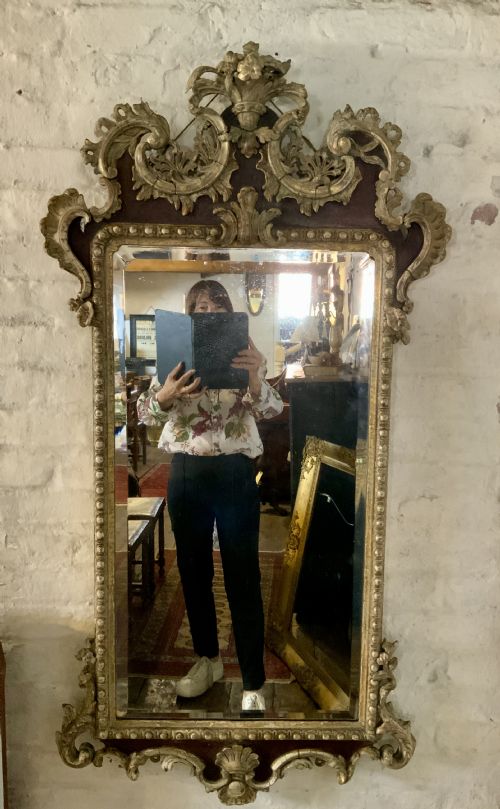
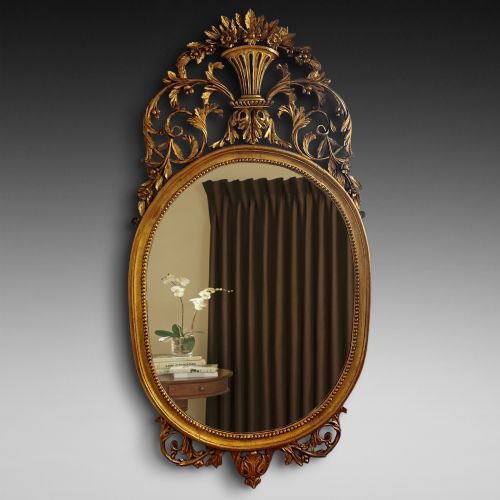
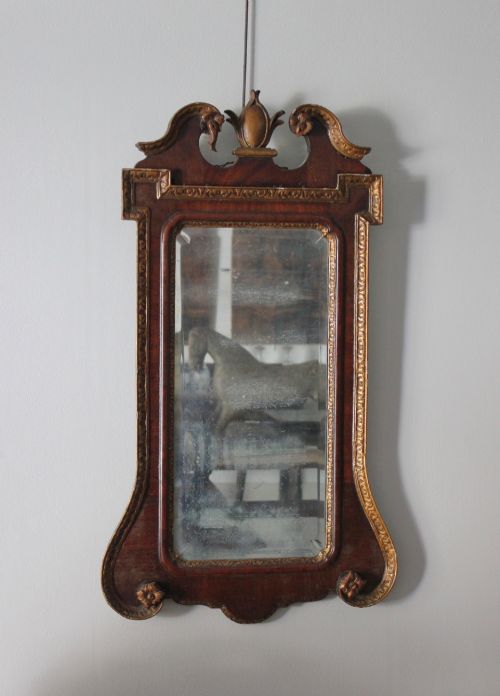
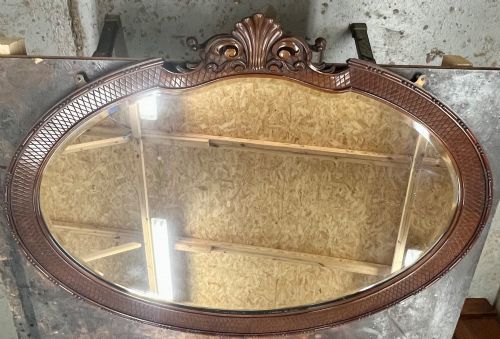
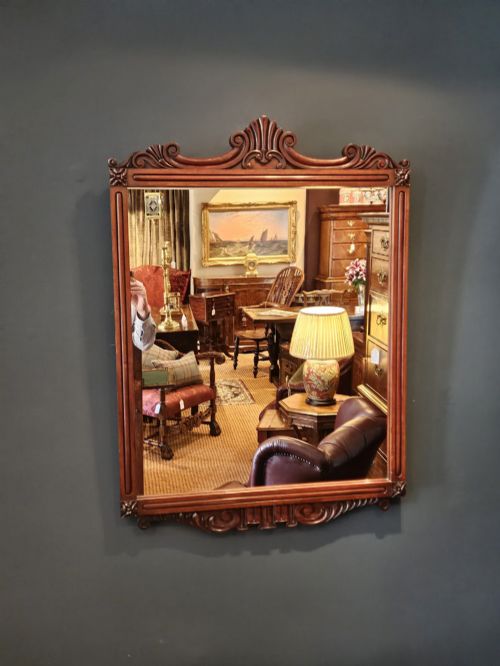
When searching for a chippendale style hanging mirror, you encounter pieces spanning from the mid-18th century originals up to later revivals from the Victorian, Edwardian, and early 20th-century periods. The selection encompasses wall mirrors, pier mirrors, and overmantel forms designed for domestic interiors.
How they were made
The construction relies heavily on native and imported timbers such as mahogany and walnut, shaped into intricate fretwork and scroll patterns using manual saws and carving chisels. Craftsmen applied veneers to stable foundational woods to achieve figured grain patterns on the flat surfaces.
Giltwood and parcel gilt finishes involve applying gold leaf or gold paint over a prepared gesso base on carved wooden elements. Original pieces often utilise early mirror glass, which exhibits subtle distortions and ageing characteristics inherent to period manufacturing techniques.
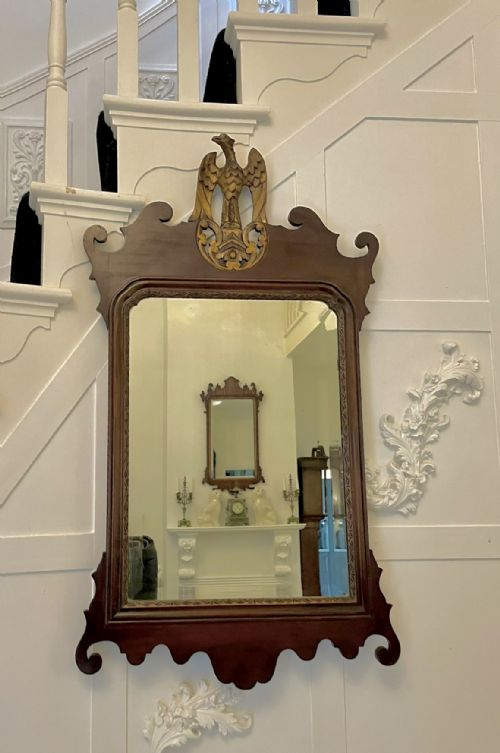
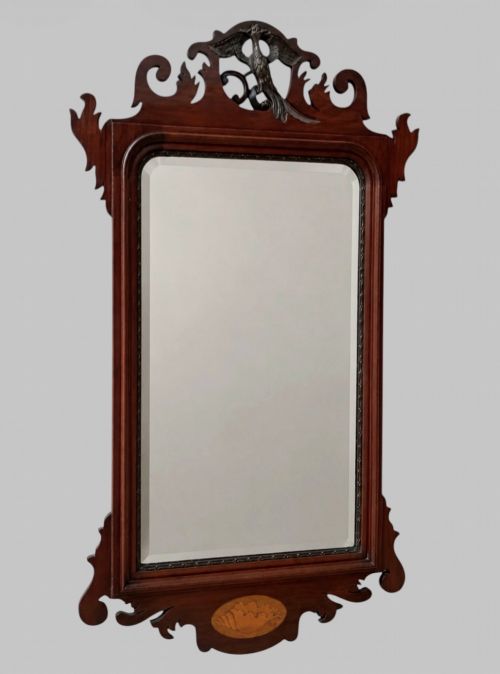
Keep an eye out for carved wooden birds perched atop the frames, watching over your reflections.
What varies in quality
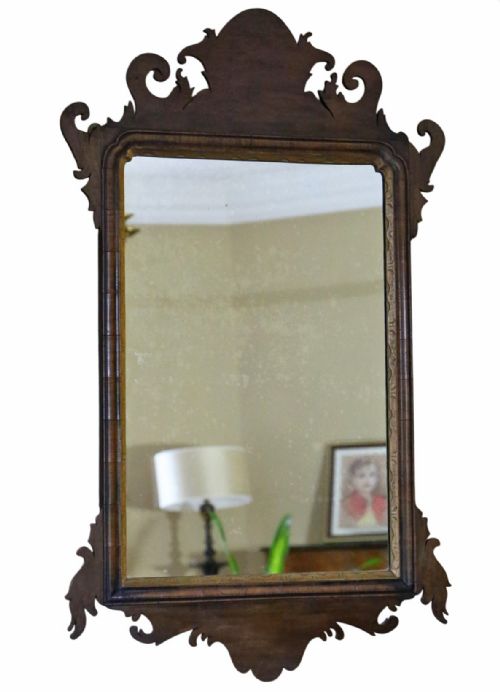
The crispness and depth of the hand-carved fretwork dictate the visual standard of the frame, where sharper, more deeply undercut foliage and scroll motifs distinguish finer examples. The precision of the fret-cut silhouette and the balance of the proportions reveal the maker's competence.
The preservation of original materials, including the mirror plate, backing boards, and the integrity of the gilding or wood finish, influences the standing of the piece. Subtle details such as parcel gilt highlights or specialised elements like a carved ho-ho bird elevate the sophistication of the design.
The Chippendale Style Hanging Mirror Glossary
- Fretwork
- An ornamental design openwork pattern cut into wood using a fine saw. This technique creates the characteristic pierced silhouette seen on many wall mirrors.
- Parcel Gilt
- A method where only specific portions of a wooden object are gilded with gold leaf, leaving the surrounding wood visible. It highlights designated carved details against a dark timber background.
- Gesso
- A plaster-like mixture applied to wood surfaces as a smooth base for gilding. It allows carvers to crisp up fine details before applying gold leaf.
- Pier Mirror
- A tall mirror specifically designed to hang on the wall space between windows. These pieces often coordinate with console tables placed below them.
- Vauxhall Mirror
- A term historically used for mirrors featuring bevelled plates produced at the Vauxhall glasshouse. The glass often displays a characteristic thickness and slight bevel edge.
Chippendale Style Hanging Mirror: Frequently Asked Questions
How do I date a chippendale style hanging mirror?
Dating relies on examining the construction timber, secondary woods, and the type of mirror glass used in the frame. Early 18th and 19th-century pieces display hand-cut joinery and period-specific patination that differ from later revival interpretations.
Hardware such as old screws, fixings, and backing boards also provide clues to the age of the item. Revival pieces from the Victorian and Edwardian eras often use machine-sawn components and more uniform glass plates.
Where should I hang a fretwork mirror?
These mirrors suit principal reception rooms, hallways, or above a mantelpiece where their decorative fretwork can be appreciated. Positioning them opposite a window helps maximise natural light distribution within the interior.
Ensure the wall fixings match the weight of the timber and glass structure. Solid wall anchors provide the necessary support for heavier mahogany or giltwood frames.
What is Chinese Chippendale style?
Chinese Chippendale style incorporates Asian-inspired motifs such as pagodas, lattice patterns, and natural elements like birds into traditional furniture designs. This aesthetic gained popularity during the mid-18th century and experienced revivals in the early 20th century.
Mirrors in this style often feature complex pierced fretwork frames with exotic bird carvings, such as the ho-ho bird. The execution combines European carving techniques with oriental visual themes.
Are original 18th-century mirrors fragile?
Period mirrors require careful handling due to the age of the timber, gesso, and the original glass plates. The delicate pierced fretwork points on the frame are particularly susceptible to impact.
Maintaining stable environmental conditions with minimal humidity fluctuations protects both the wood and the gilt surfaces. Professional hanging ensures the structural integrity of the frame remains uncompromised over time.