
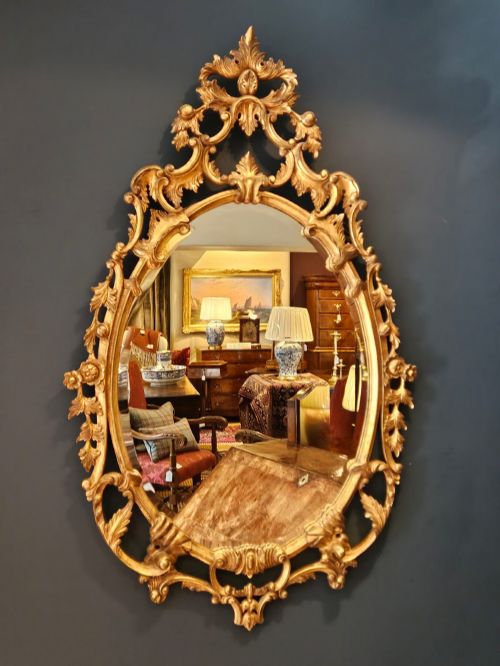
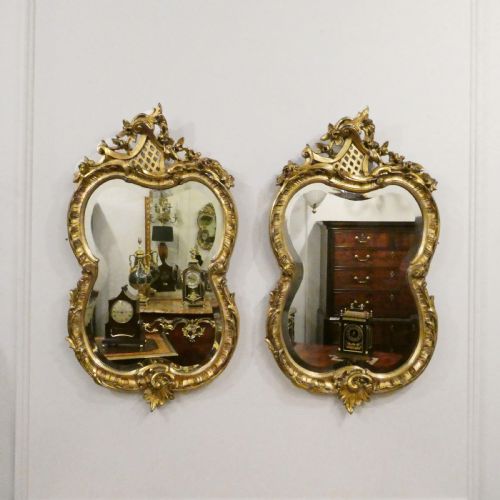
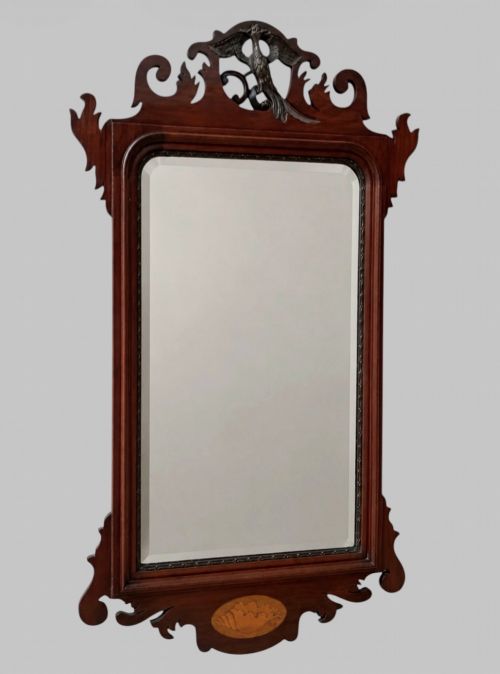


Carved Scrollwork Wall Mirror
A carved scrollwork wall mirror brings movement and depth to a room through intricate wooden framing.
Carved Scrollwork Wall Mirror
A carved scrollwork wall mirror combines reflective glass with ornate wooden frames shaped by curves and flourishes. These pieces range from compact hall mirrors to large overmantel designs intended for principal reception rooms.
The selections span several centuries and stylistic revivals, with nineteenth-century examples and eighteenth-century originals appearing frequently. Buyers encounter various regional interpretations, including Florentine, French Rococo, and Georgian styles.
Primary forms include oval, shield-shape, and rectangular wall mirrors framed in rich hardwoods or heavily ornamented gilt surfaces. Many items reflect distinct period revivals, utilising classical motifs translated through Victorian and Edwardian craftsmanship.
How they were made
Makers shaped solid timbers such as mahogany, walnut, and padauk using fret-cutting and manual carving techniques. Woods were often left with natural grain visible or prepared as a base for decorative finishes.
Gilded surfaces rely on layers of gesso applied over carved wood, subsequently covered in gold leaf. This traditional method created bright reflective frames capable of catching ambient light in period interiors.
Listings feature walnut, mahogany, padauk, and giltwood frames spanning the eighteenth, nineteenth, and early twentieth centuries.
What varies in quality
Depth and precision in the wooden carving separate standard decorative frames from exceptional artistic examples. Sharp undercut foliage and balanced symmetry indicate superior hand execution by skilled carvers.
The integrity of the gilt surface and the preservation of original mirror glass influence the character of each piece. Surviving mercury or early bevelled glass plates add historical weight to eighteenth and nineteenth-century frames.
The Carved Scrollwork Wall Mirror Glossary
- Giltwood
- Wood that has been coated with gold leaf over a prepared base layer. This finish provides a bright metallic sheen characteristic of formal period mirrors.
- Gesso
- A plaster mixture applied to carved wooden frames to create a smooth surface for gilding. It holds crisp decorative details before the application of gold leaf.
- Fret cut
- Wood pierced and shaped with a fine saw to produce openwork geometric or flowing patterns. This technique defines lighter eighteenth-century and revival wall frames.
- Overmantel mirror
- A large wall glass designed specifically to hang above a fireplace mantelpiece. These pieces often span significant horizontal proportions to anchor the room.
- Rococo revival
- A nineteenth-century design movement mimicking the asymmetrical C-scrolls and natural motifs of the eighteenth century. It produces highly animated frames filled with organic movement.
Carved Scrollwork Wall Mirror: Frequently Asked Questions
Where should I hang a carved scrollwork mirror?
These mirrors suit principal living areas, hallways, or above fireplace mantels where their reflective surfaces expand perceived space.
Consider the weight and proportions of the frame when selecting a wall, ensuring adequate fixings support heavy giltwood or hardwood structures.
How do I identify a Georgian mirror?
Georgian mirrors frequently employ figured walnut or mahogany with architectural or fret-cut outlines from the eighteenth century.
Examine the construction methods at the back of the frame, where period timbers and fixings provide clues to age.
Are these mirrors heavy?
Many period wall mirrors possess substantial weight due to dense hardwoods, deep plaster gesso layers, and thick glass plates.
Professional wall mounting is recommended to secure larger overmantel and giltwood pieces safely.