




Georgian Style Fretwork Mirror
A georgian style fretwork mirror brings pierced wooden frames and classical symmetry into a room, offering the refined proportions of the eighteenth century.
Georgian Style Fretwork Mirror
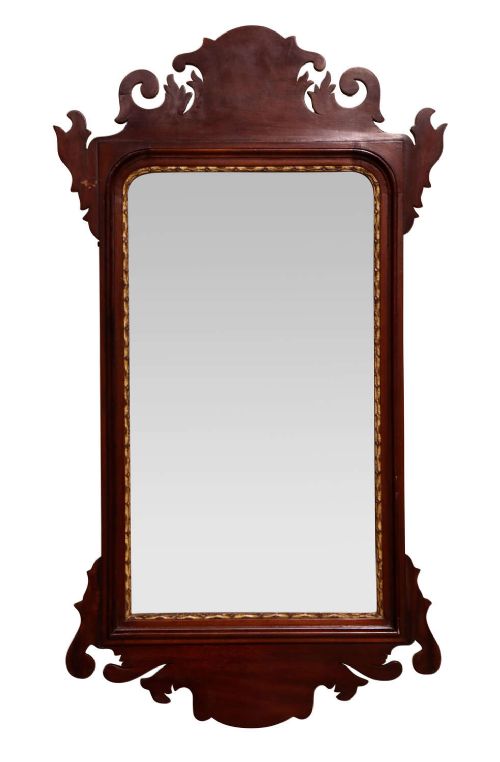
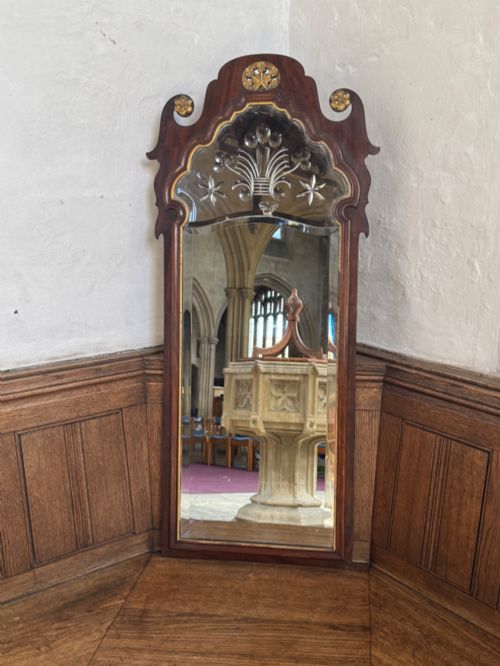
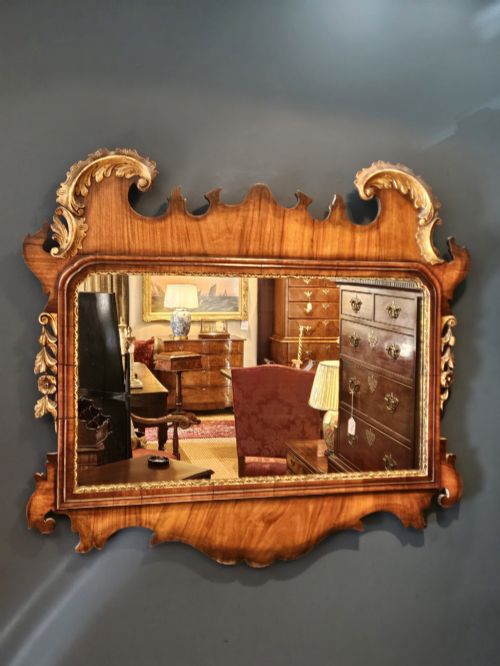
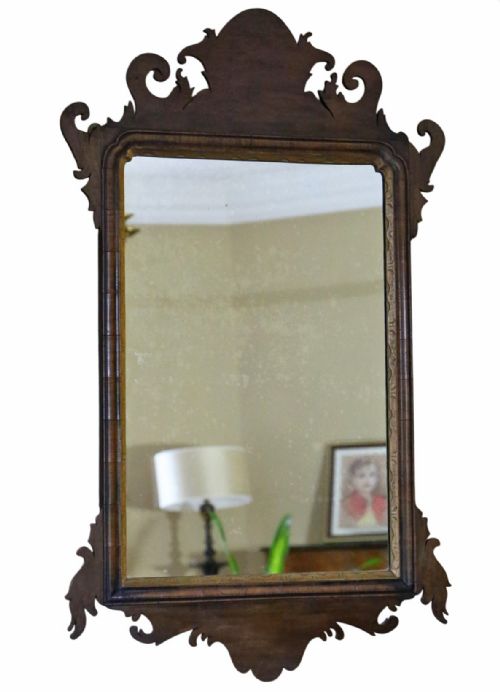
A georgian style fretwork mirror is a wall-hanging glass plate framed by intricately pierced timber scrolls and architectural outlines. When you search for this phrase, you encounter examples originating directly in the eighteenth century alongside revival pieces from the Victorian, Edwardian and later periods.
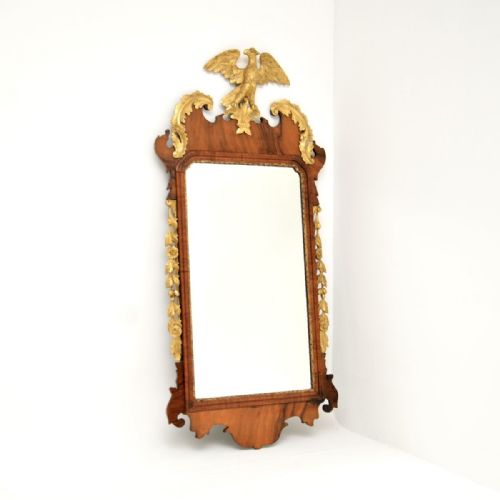
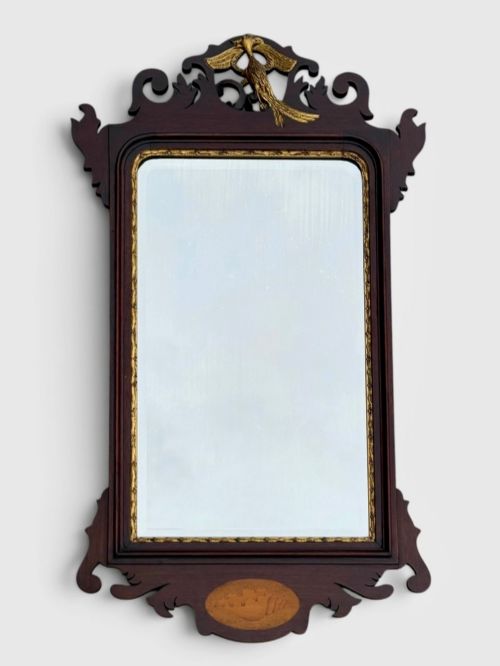
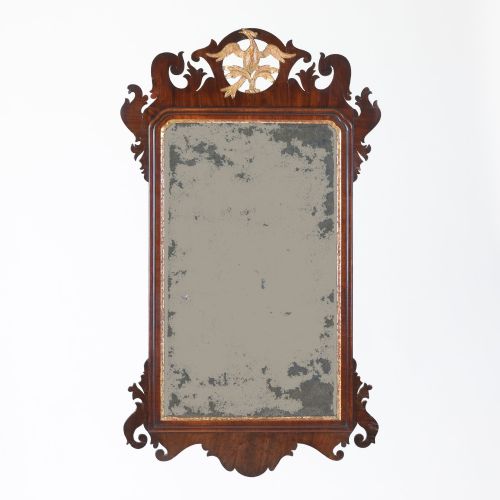
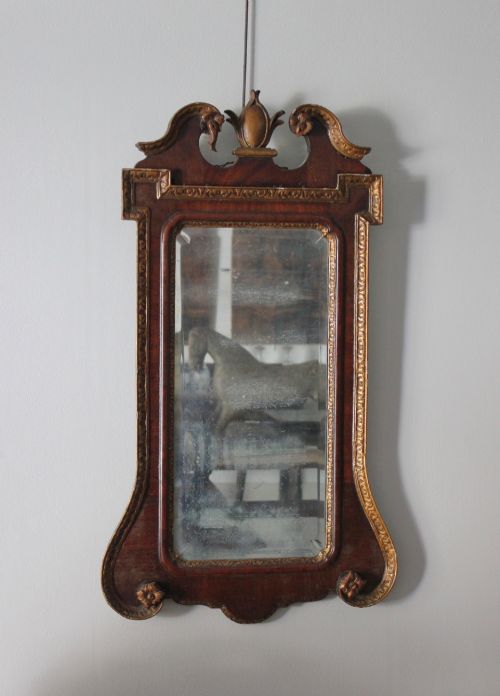
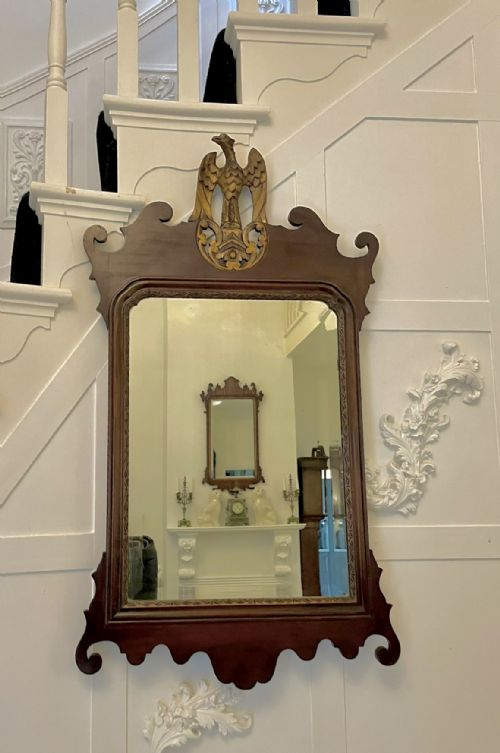
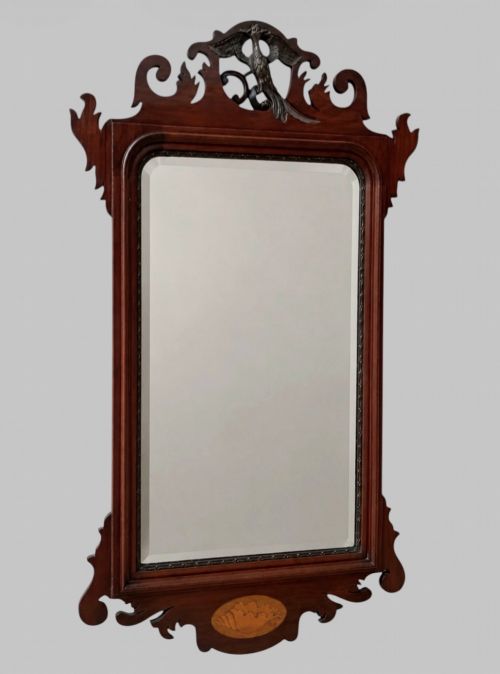
The form relies on symmetrical scrollwork, scrolled ears, and often a carved crest at the top, sometimes featuring a gilded bird motif. Mahogany and walnut provide the primary timber foundations across both original eighteenth-century items and later revivals.
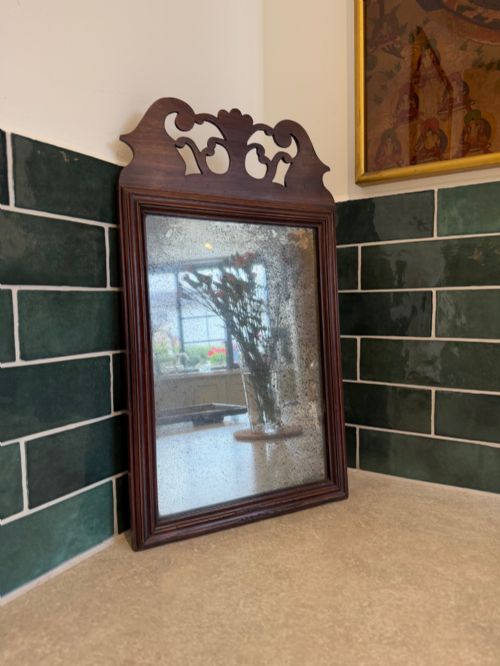
Most pieces function as wall mirrors or pier mirrors positioned above mantelpieces, side tables or entrance halls. The inventory ranges from compact bedroom vanity glasses to large landscape and overmantel formats.
How they were made
Carpenters constructed these frames using mahogany and walnut, frequently selecting veneers or solid timber shaped by hand with fretsaws. Pierced fretwork panels required delicate cutting along marked outlines to achieve the characteristic ribbon-like scrolls and symmetrical borders.
Gilding techniques applied gold leaf, gesso or parcel gilt highlights to carved details, emphasising motifs such as the iconic Ho Ho bird or gilded edge mouldings. Vauxhall plates and reverse-cut glass provided the reflective surfaces, often held within rebated timber frames behind the decorative fret cut outer layers.
A stately carved Ho Ho bird watches over the room from the top of the scrollwork.
What varies in quality
Quality rests in the crispness of the fret-cut scrolling and the depth of the carving on the crest and ears. Finer examples display sharp, well-defined piercing and harmonious proportions, whereas lesser work appears blunt and heavy-handed in the timber outlines.
The integration of parcel gilding, original glass plates, and the choice of figured mahogany or burr walnut elevate the visual presence of a piece. Survival of original surfaces and untouched construction details distinguish the premier specimens from later or heavily restored equivalents.
The Georgian Style Fretwork Mirror Glossary
- Fretwork
- Ornamental pattern open-cut from wood using a saw. This technique creates the delicate, pierced silhouette characteristic of these frames.
- Parcel Gilt
- Partially gilded with gold leaf or gilt wood accents. This treatment highlights specific carved details against the dark mahogany or walnut ground.
- Vauxhall Mirror
- A mirror featuring bevelled or cut plate glass associated with historic English glassmaking. These plates often show subtle age characteristics and variations in thickness.
- Pier Mirror
- A tall glass designed to hang on the wall between windows, often placed above a pier table. They serve to reflect light into darker interior spaces.
- Chippendale Style
- An aesthetic inspired by Thomas Chippendale's eighteenth-century designs, incorporating rococo, Chinese, and Gothic elements. It frequently defines the fret-cut and carved character of these frames.
Georgian Style Fretwork Mirror: Frequently Asked Questions
How do I tell an 18th century mirror from a revival piece?
Original eighteenth-century pieces exhibit period construction methods, timber oxidation, and hand-cut joinery specific to Georgian workshops. Revival pieces from the Victorian and Edwardian eras show nineteenth or twentieth-century secondary woods and manufacturing signs.
Examining the backboards, fixings, and glass plates helps clarify the exact period of manufacture. Secondary woods and machine tools point toward later reproduction work.
Where should I hang a fretwork mirror?
These mirrors suit principal reception rooms, hallways, and over mantelpieces where their proportions can anchor a wall arrangement. Positioning them opposite a window maximises the reflection of natural light.
Ensure wall fixings match the weight of the timber frame and glass plate safely. Secure hanging prevents movement against the plaster.
What is the Ho Ho bird motif?
The Ho Ho bird is a stylized phoenix figure often carved into the crest of Chippendale and Georgian style frames. It reflects the eighteenth-century taste for Chinese-inspired ornamentation.
This bird carving appears perched at the apex of the fretwork scroll, commanding attention above the glass plate. Its presence signals a distinct nod to oriental design trends of the period.
Are these mirrors fragile?
The delicate pierced fretwork requires careful handling during cleaning and relocation to prevent damage to the projecting scrolls. Timber expansion and contraction can also affect old veneer and gilt surfaces.
Keep them away from direct heat sources and fluctuating humidity to preserve the wood and gilding. Gentle dusting with a dry cloth maintains the finish.