



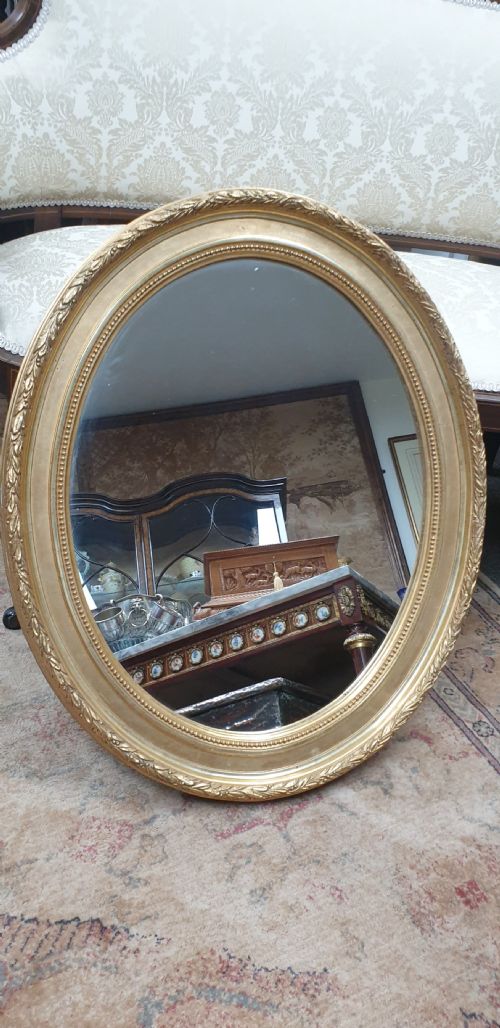

Giltwood Decorative Looking Glass
A giltwood decorative looking glass brings warmth and reflected light to a room, executed in carved timber, gesso and gold leaf.
Giltwood Decorative Looking Glass
A giltwood decorative looking glass is a wall mirror framed in wood that has been gilded with gold leaf or finished in gold paint over gesso and timber. These pieces range from compact oval wall mirrors to large overmantle fittings designed to dominate a room.
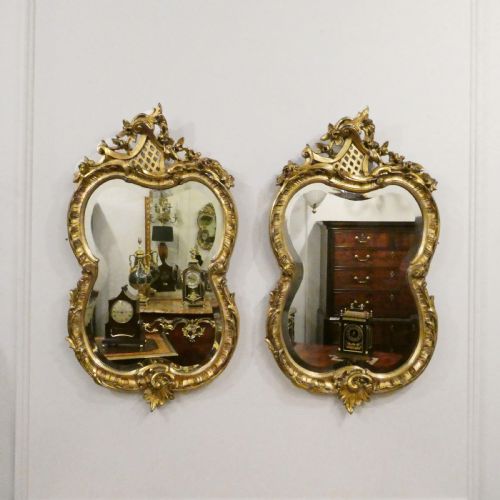
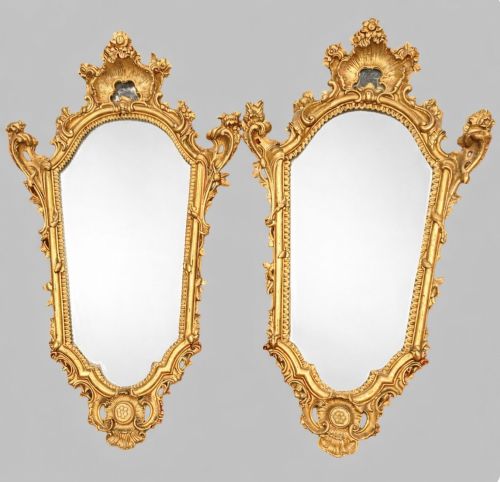
The versions most commonly met on this page span several distinct periods, including the eighteenth century, the Victorian era, the Regency period and the early twentieth century. Buyers encounter rectangular formats alongside carved oval mirrors and pairs of matching wall pieces.
Stylistic influences vary widely across the inventory, drawing on Georgian Rococo, French Louis XV, Louis XVI and Neoclassical designs. Makers from different eras employed traditional joinery and carved ornamentation to create ornate frames for domestic interiors.
How they were made
The construction of a giltwood decorative looking glass begins with a timber frame, frequently fashioned from walnut or softer woods, which provides the structural support for the glass plate. Artisans applied layers of gesso to the carved wooden surface to build up intricate details and smooth contours before gilding.
Guilders then applied thin sheets of gold leaf to the prepared gesso surface, pressing and burnishing the metal to achieve a brilliant reflective sheen. Older examples utilise traditional water gilding techniques, while later pieces often employ oil gilding or gold paint over the timber and gesso base.
Some oval mirrors come equipped with delicate carved ribbons and bows, proving that even timber can learn how to tie a knot.
What varies in quality
The refinement of the hand-carved detail separates standard production pieces from superior examples, particularly where floral motifs, ribbons, bows or rococo scrolls adorn the timber frame. Crisp undercutting in the carved gesso and wood indicates a higher level of craftsmanship during manufacture.
The depth and brilliance of the gold leaf application also determine the visual standard of the object, as genuine gold leaf retains a warmer tone over centuries compared to modern metallic paints. Additionally, the presence of original mirror glass with natural foxing adds to the authenticity and character of an antique piece.
The Giltwood Decorative Looking Glass Glossary
- Giltwood
- Wood that has been decorated with gold leaf or gold paint. This finish provides the characteristic metallic gleam seen on antique frames.
- Gesso
- A plaster-like mixture applied to wood frames to create a smooth surface for carving and gilding. It allows artisans to shape intricate relief ornamentation.
- Parcel gilt
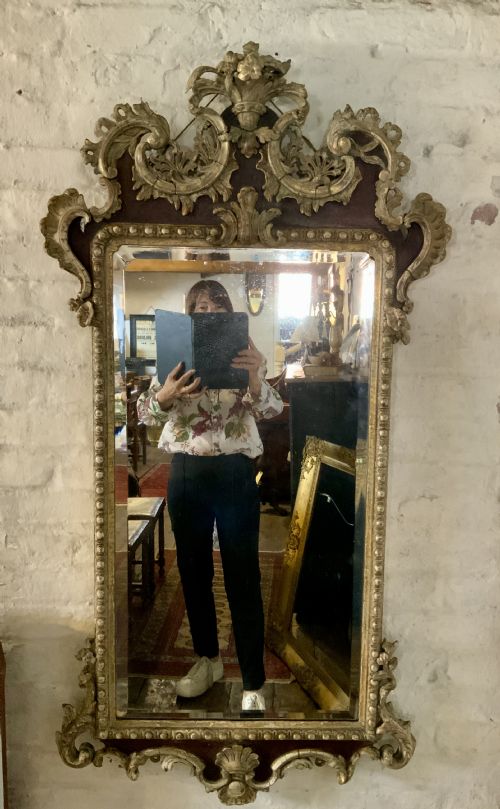
- Woodwork that is partially gilded while other areas show the natural grain of the timber, such as walnut. This technique creates a contrast between the exposed wood and the gold finish.
- Overmantle
- A large mirror designed to hang specifically above a fireplace mantelpiece. These substantial pieces frequently feature ornate frames suited to principal reception rooms.
- Foxing
- Age-related spots and discoloration appearing within the silver backing of antique mirror glass. Collectors often value this natural ageing as proof of period origin.
Giltwood Decorative Looking Glass: Frequently Asked Questions
How do I hang a heavy giltwood mirror?
Heavy wall mirrors require secure fixings attached directly into the structural wall studs or masonry rather than relying on standard plasterboard hooks. Professional mirror hangers use robust steel brackets that match the weight and dimensions of the timber frame.
It is essential to check the integrity of the original wooden frame and hanging loops on older pieces before installation. Ensuring the weight is evenly distributed prevents strain on the antique joints.
How should I clean a giltwood frame?
Dust the carved surface gently using a soft, dry artist brush or a clean feather duster to remove surface particles without disturbing the delicate gold leaf. Avoid using water, liquid cleaners or chemical polishes, which can strip the gesso and modern or historic gilding.
The mirror glass itself can be cleaned sparingly with a glass cloth and a minimal amount of neutral glass cleaner, taking care not to let any liquid seep behind the frame edges.
How do I identify an eighteenth-century mirror?
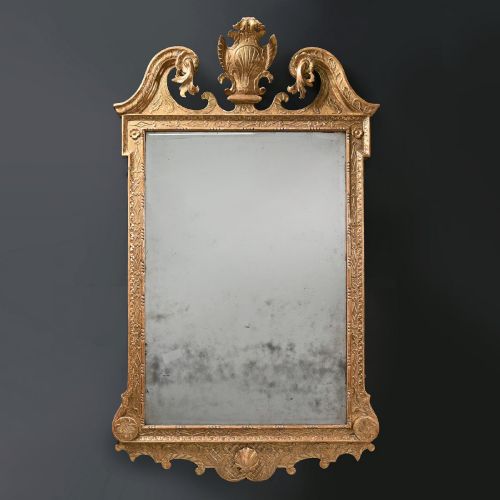
Eighteenth-century examples typically display hand-carved wooden frames beneath the gesso, featuring deep relief work characteristic of George II or Rococo styles. Closer inspection of the construction reveals traditional joinery methods and older timber varieties such as walnut.
The mirror plate often shows distinct signs of age, including bevelled edges cut by hand and natural foxing within the silvering. Secondary woods at the back of the frame also provide clues to the period of manufacture.
What is the difference between Rococo and Neoclassical styles?
Rococo mirrors, popular during the mid-eighteenth century and later revived in the Victorian era, feature asymmetrical scrolls, C-scrolls, foliage and shell motifs. The carved frames are dynamic, ornate and expressive.
Neoclassical pieces, emerging later in the eighteenth century, introduce symmetry, straight lines, classical urns, ribbons and architectural proportions. They offer a more restrained and balanced decorative appearance.