
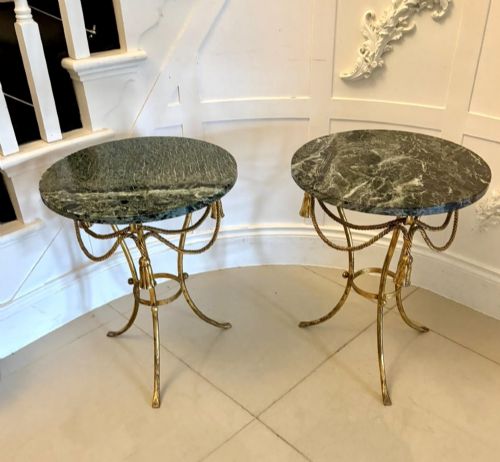
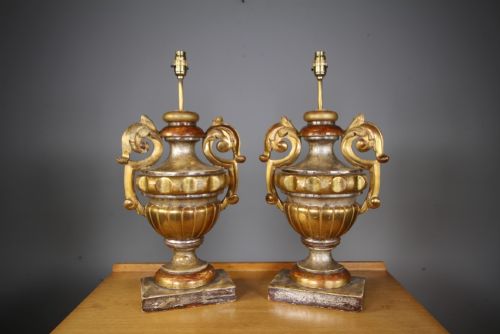
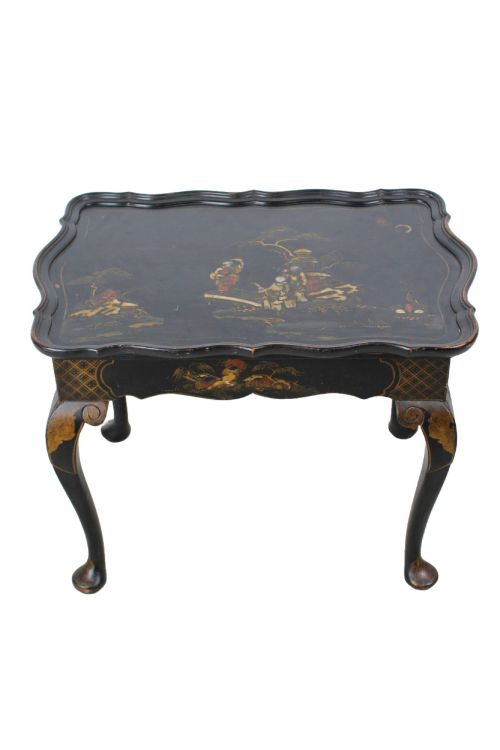
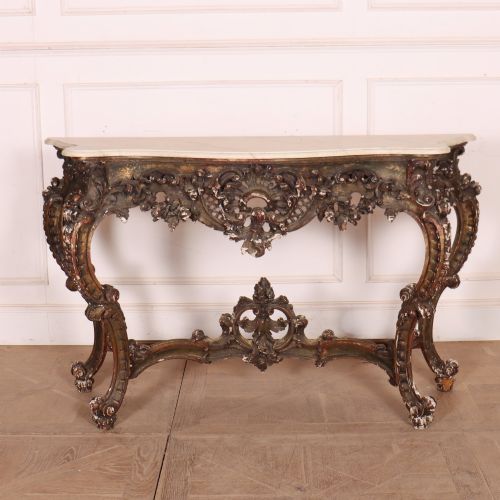

Gilded Side Table
A gilded side table brings reflective warmth and classical proportion to a room, ranging from grand Italian baroque consoles to restrained neoclassical forms.
Gilded Side Table
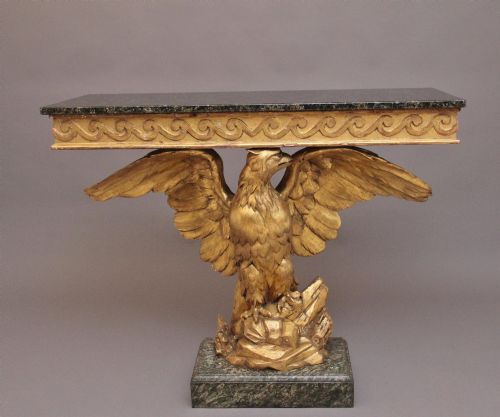
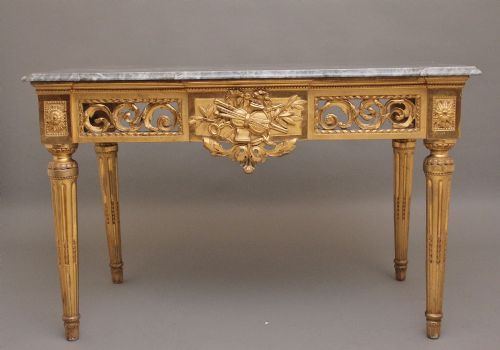
A gilded side table encompasses diverse forms designed for display and utility, frequently appearing as wall-anchored console tables, freestanding centre tables, or low occasional surfaces. The selection draws heavily from nineteenth-century production alongside eighteenth-century Italian prototypes and early twentieth-century revivals.
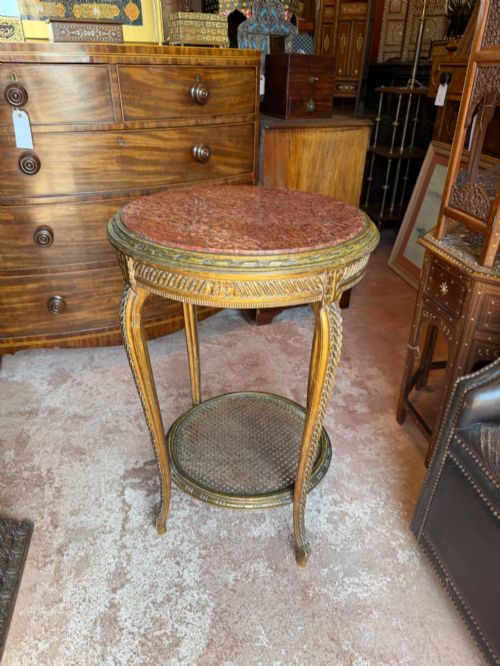
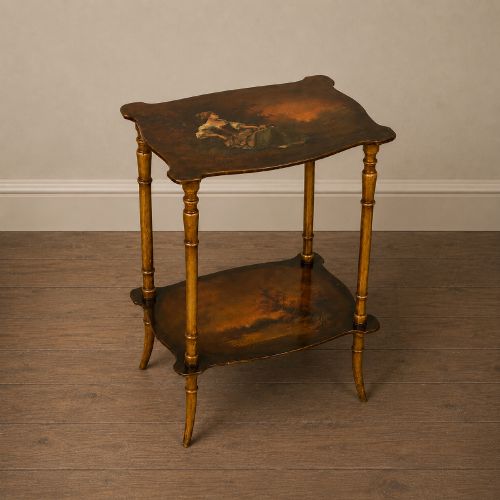
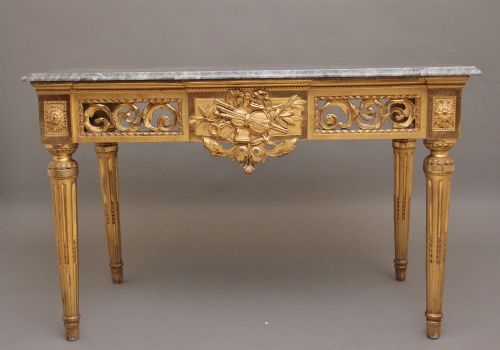
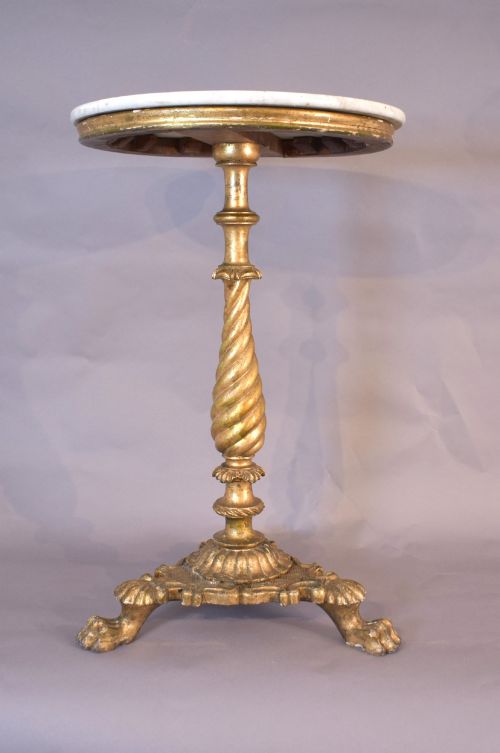
Buyers commonly encounter console tables fitted with figured marble slabs and carved wooden frames, as well as smaller occasional tables, tripod bases, and tiered étagères. These pieces frequently adopt French rococo, Louis XVI, or neoclassical design vocabularies expressed through surface ornamentation.
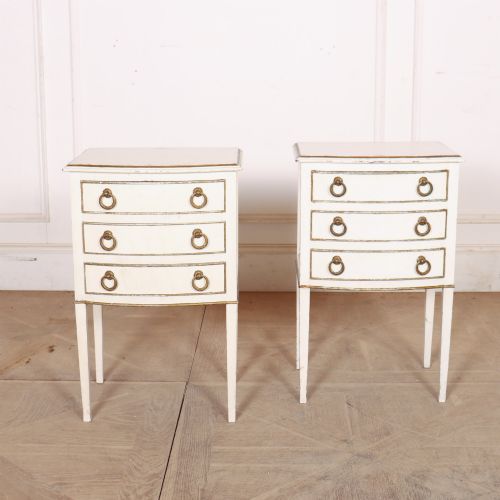
Origin and period heavily dictate the character of each piece, spanning English regency rosewood, Venetian carved giltwood, and continental painted finishes. The integration of brass mounts, ormolu, and lacquer further expands the formal variety present within this category.
Materials and construction methods
Carved pine and hardwood provide the structural foundation for traditional giltwood frames, upon which layers of gesso are applied to build intricate relief ornament. Artisans then lay gold leaf over the prepared surface, burnishing portions to achieve contrast against textured matte grounds.
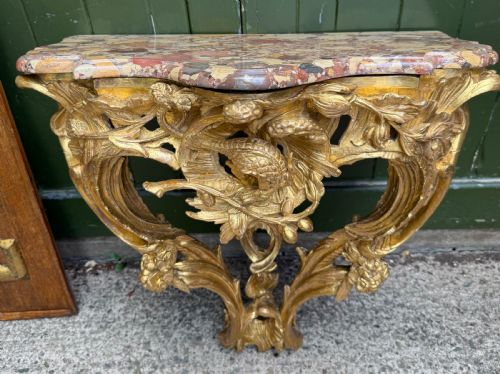
Marble tops, including verd de mer and breche d'alep varieties, are frequently inset into moulded wooden frames or supported by heavy stone and gilt bases. Secondary materials such as brass, ormolu, and silver plating provide structural mounts and decorative highlights across various pieces.
Listings feature marble, giltwood, gesso, brass, and lacquer across pieces spanning the eighteenth century to the mid-twentieth century.
Distinctions in execution
Depth and crispness of hand-carved gesso ornament separate ambitious cabinet work from standard commercial production. Superior examples display undercut foliage and finely chased metal mounts that integrate harmoniously with the primary wooden structure.
The integrity of the gilded surface and the selection of materials, such as heavy polished marble versus simpler painted tops, govern the visual weight and longevity of the object. Masterful joinery ensures that heavy stone slabs rest securely without straining the supporting frieze.
Hindley & Sons·Mappin & Webb
The Gilded Side Table Glossary
- Giltwood
- Timber coated with thin gold leaf applied over a prepared gesso ground. This finish defines much of the traditional seating and case furniture found in elite European interiors.
- Console table
- A wall-mounted or freestanding table designed to stand against a vertical surface, frequently topped with marble. These pieces often feature elaborate underframes and front legs.
- Gesso
- A plaster mixture applied to wood to create a smooth surface for gilding or painting. It permits sharp, moulded relief decoration before the application of metal leaf.
- Ormolu
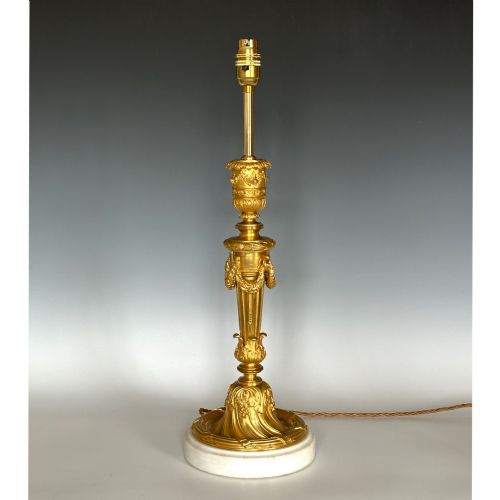
- Gilded bronze used for decorative mounts, feet, and handles on fine furniture. The technique involves applying a mercury and gold amalgam to bronze before firing.
- Breche d'alep
- A variegated continental marble featuring rich tones of brown, cream, and purple. It appears frequently on eighteenth and nineteenth-century console tables.
Gilded Side Table: Frequently Asked Questions
How do I style a gilded side table?
Pair the reflective surface with understated ceramics or bronze lighting to balance the ornate framing of the base.
Position the piece against a plain wall to let the carved details and marble top command visual attention.
Are these tables sturdy enough for daily use?
Most antique console tables rely in part on wall fixings for absolute stability, particularly designs carrying heavy marble slabs.
Free-standing occasional tables handle general placement well, though care should be taken to protect gilded edges from knocks.
How do I distinguish eighteenth-century pieces from later revivals?
Early pieces typically exhibit hand-carved timber construction beneath the gesso, showing tool marks appropriate to the period.
Revival pieces from the nineteenth and twentieth centuries often employ machine-cut elements or standardised plaster composition work.
What maintenance does gold leaf require?
Dusting with a soft, dry cloth preserves the fragile metal leaf without abrading the burnished finish.
Avoid liquid cleaners and polishing agents entirely, as chemical solvents strip the delicate leaf from the gesso.