

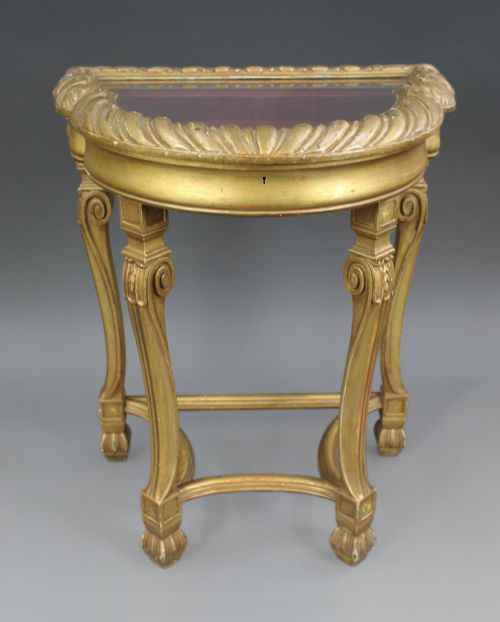


Curio Side Table
A curio side table is a glass-topped display piece designed to show small treasures, bringing both surface utility and visible storage to a room.
Curio Side Table
When searching for a curio side table, buyers encounter a selection of display tables, bijouterie tables, and bijouterie cabinets dating from the nineteenth and early twentieth centuries. These pieces function primarily as compact tables with integrated glass display cases, allowing items such as jewellery and small curiosities to be viewed from above.
The versions most frequently met on this page are Edwardian mahogany display tables and French pieces from the nineteenth century. Makers offered various forms, ranging from simple oval vitrine cabinets to inlaid mahogany pieces influenced by Louis XV styles and Edwardian revivals.
Origins span English workshops and continental makers, incorporating stylistic elements like French Rococo revivalism and Edwardian Chippendale forms. Buyers select these items to exhibit collections while maintaining the practical footprint of a conventional side table.
How they were made
Construction relies heavily on timber carcases, with mahogany forming the primary structure across the majority of pieces. Finer examples incorporate kingwood veneers and detailed marquetry inlay to enrich the exterior surfaces.
Metal mounts in brass, ormolu, and gilt bronze accentuate the glazed display sections and legs, providing structural trim and decorative framing. Glazed panels and fabric or velvet linings create enclosed compartments designed for the preservation and presentation of delicate objects.
Curio Side Table Retail Price Guide 2026
Typical asking prices for curio side table among the pieces listed under this phrase on Sellingantiques today, from the lower quarter to the upper quarter. They describe what is for sale here now, not the wider market.
Makers designed these miniature glass display cases so Victorians could proudly supervise their collection of pocket watches and trinkets while sipping tea.
What varies in quality
The standard of timber selection and veneer work creates a distinct tier between basic production and finer examples. Simple mahogany tables contrast with pieces employing kingwood veneers, intricate marquetry, and precise brass stringing.
Metalwork execution defines another level of distinction, differentiating plain brass mounts from heavily chased ormolu and gilt bronze decorations. The integration of the glass display case and the refinement of the revival styling further separate ordinary items from superior ones.
The Curio Side Table Glossary
- Bijouterie table
- A specialised display table featuring a glazed compartment beneath the top surface for showing small valuables and ornaments. These pieces typically stand on slender legs and serve as both furniture and vitrine.
- Ormolu
- Gilded bronze mounts applied to furniture for decorative effect. This technique was widely utilised in French cabinet making during the nineteenth century.
- Marquetry
- The art of applying pieces of veneer to a structure to form decorative patterns and pictures. Craftsmen used various coloured woods to create detailed top surfaces.
- Kingwood
- A dense, heavily figured timber prized for fine cabinet work. It appears frequently in veneered borders and decorative panels on continental pieces.
- Vitrine
- A glass-fronted or glass-topped cabinet designed for display. These sections protect contents from dust while offering clear visibility from multiple angles.
Curio Side Table: Frequently Asked Questions
What is a curio side table used for?
These tables provide a functional surface alongside a secure, glass-enclosed compartment for displaying small collectibles, jewellery, and curiosities. They allow owners to exhibit delicate items without exposing them to dust or handling.
The dual purpose makes them suitable for drawing rooms and reception spaces where surface area and display capacity are both required.
How do I date an antique display table?
Dating relies on examining the timber species, construction methods, and prevailing decorative styles. Pieces from the Edwardian era often display simpler mahogany framing, while nineteenth-century French examples frequently utilise elaborate ormolu mounts and kingwood veneers.
Hardware, fabric linings, and the manner of wood joinery offer further clues to the specific decade of manufacture.
What is the difference between a bijouterie table and a display cabinet?
A bijouterie table is generally lower and built specifically on slender legs with a shallow glazed tray top meant for viewing items from a standing position. A display cabinet usually offers greater vertical storage with full glass doors.
Both serve to exhibit objects, but the table form functions more directly as a piece of occasional furniture.
How do I care for velvet and fabric linings?
Original velvet or fabric linings require gentle maintenance to preserve their texture and colour. Regular light dusting with a soft brush prevents debris accumulation within the glass compartment.
Avoiding direct sunlight helps protect dyed textiles from fading over time.