



English Marble Console
An English marble console brings weight and polish to a hall or drawing room, resting on carved timber or gilt frames.
English Marble Console
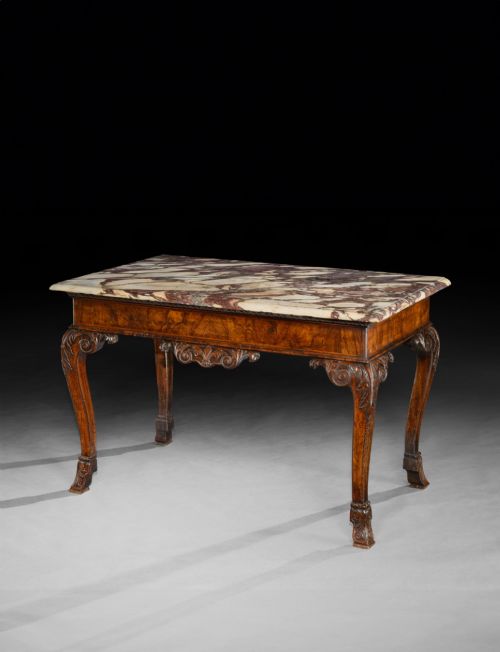
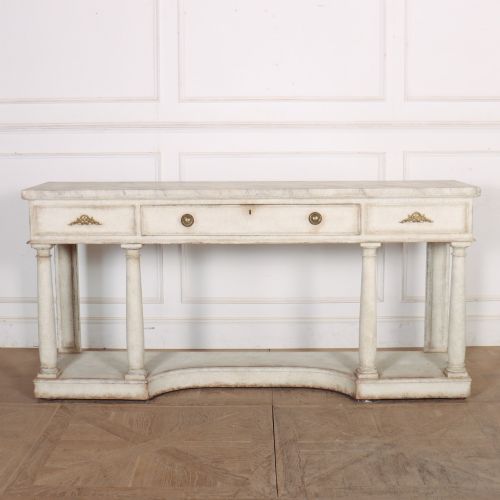
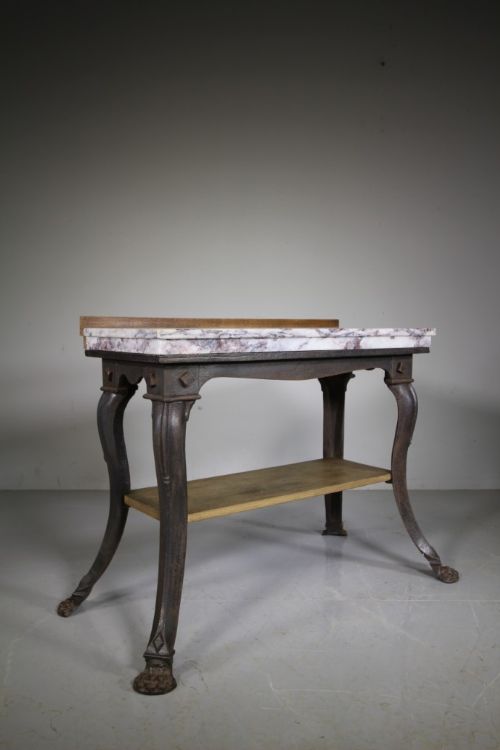
An english marble console combines a heavy stone top with a supportive wooden base designed to stand flush against a wall. The pieces on this page span from the eighteenth century through to the early twentieth century, taking forms such as side tables, centre tables, washstands, and hallway stands.
You will encounter distinct stylistic periods in these examples, including George II, Regency, Victorian, and Neoclassical designs. Many pieces rely on painted pine, walnut, oak, or giltwood frames to support their stone surfaces.
The form ranges from simple painted side tables to elaborate giltwood creations in the Kentian and Rococo Revival manners. Alongside traditional console tables, the selection includes demi-lune side cabinets and marble-topped washstands.
Materials and construction
Makers built the structural frames of these consoles using native timbers such as oak, pine, and walnut, often applying layers of paint or rich gilding to the exterior. Giltwood and painted wood dominate the decorative output, particularly in the nineteenth-century examples.
The heavy stone slabs utilise various forms of marble, including rich Breccia and Siena varieties, paired securely with wooden or iron bases. Carved detail appears across the wooden components, from classical motifs to ornate rococo scrollwork.
English Marble Console Retail Price Guide 2026
Typical asking prices for english marble console among the pieces listed under this phrase on Sellingantiques today, from the lower quarter to the upper quarter. They describe what is for sale here now, not the wider market.
Listings feature marble, giltwood, paint, pine, walnut, and oak across pieces dated from the eighteenth to the twentieth century.
Assessing quality and execution
The standard of a console rests largely on the depth and crispness of the timber carving, especially on giltwood and walnut frames where hand-tooling defines the ornaments. Superior examples display precise joinery and well-balanced proportions that integrate the heavy stone top seamlessly.
The choice of materials also dictates the character of the piece, with richly figured marble and high-grade gilt finish marking out the more ambitious workshops. Simpler painted pine and iron variations rely instead on honest utility and clean lines for their appeal.
The English Marble Console Glossary
- Giltwood
- Timber that has been coated with a thin layer of gold leaf. This finish is frequently found on formal eighteenth and nineteenth-century frames.
- Demi-lune
- A half-moon shape used for table tops and cabinets. This curved profile allows the furniture to sit flat against a wall while projecting into the room.
- Breccia marble
- A variegated stone composed of angular fragments embedded in a finer-grained matrix. It provides strong pattern and colour to the top surface.
- Kentian
- A heavy, architectural style associated with the designer William Kent. It draws heavily on Palladian principles with bold carving and classical details.
English Marble Console: Frequently Asked Questions
Where should I place an english marble console?
These tables suit hallways, corridors, and reception rooms where their shallow depth allows them to sit neatly against a wall without blocking movement.
Because the top is solid stone, they also function well as serving surfaces or display areas for heavy decorative objects.
How do I care for the marble top?
Marble is porous and sensitive to acidic liquids, so it requires prompt wiping with a damp cloth to prevent staining.
Avoid harsh chemical cleaners and use coasters or mats beneath glasses and ceramics to protect the polished surface.
Are these tables free-standing?
Traditional console tables were often secured to the wall for stability because of the heavy stone top, though many surviving examples stand independently on four legs.
It is worth checking the base construction of older pieces to see if wall fixing remains necessary for safety.
How can I tell the period of a console?
Dating relies on the stylistic vocabulary, such as the heavy classical motifs of George II work or the elaborate curves of Victorian Rococo Revival pieces.
Timber choice and construction methods underneath the top also offer clear clues to the era of manufacture.