




Gilded Oval Frame
A gilded oval frame holds centuries of portraiture and reflective glass, bringing warmth and proportion to a room.
Gilded Oval Frame
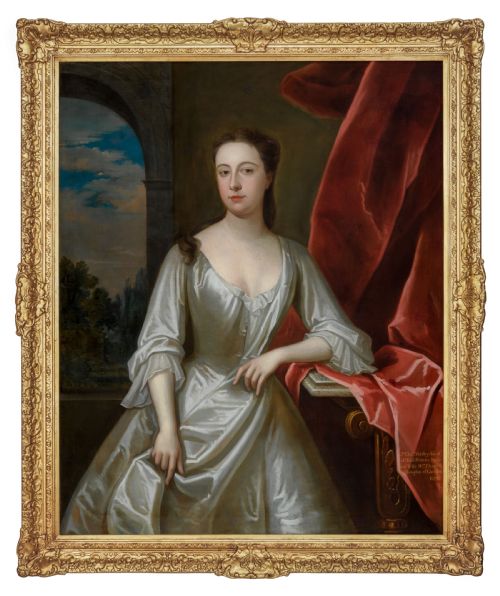
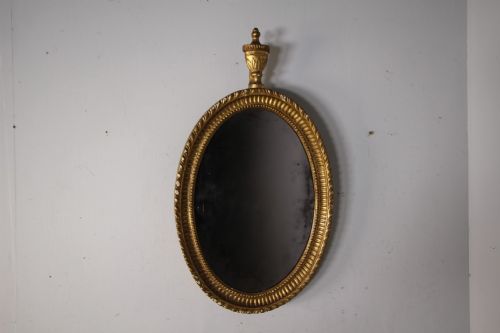
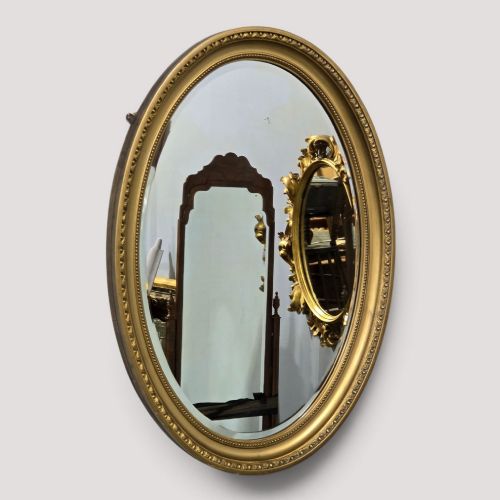
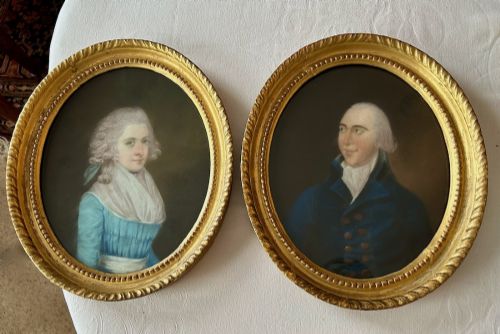
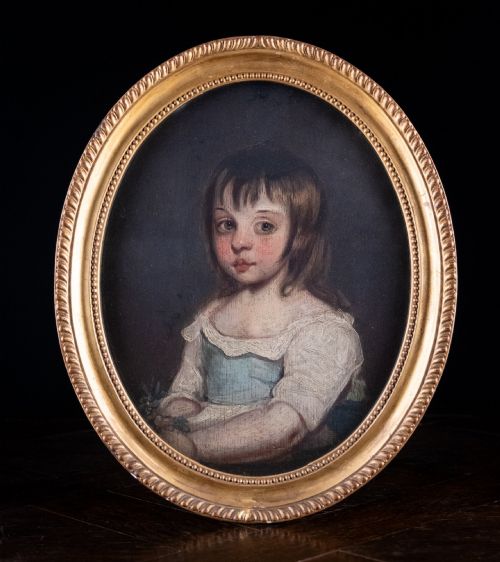
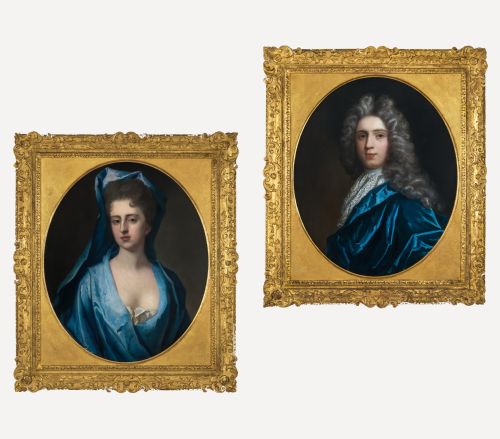
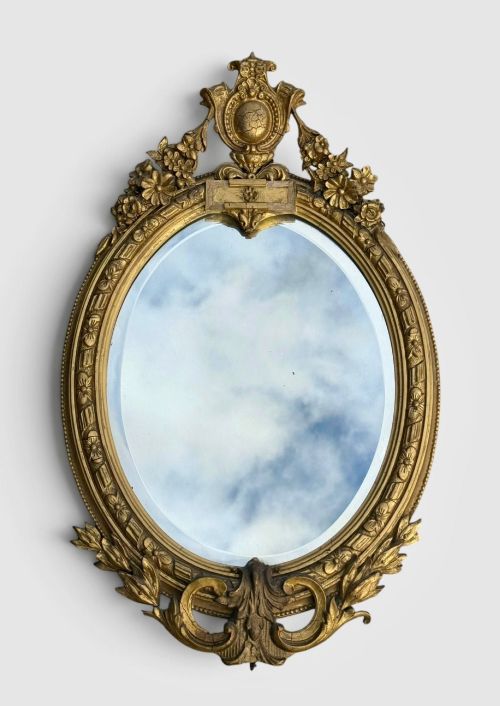
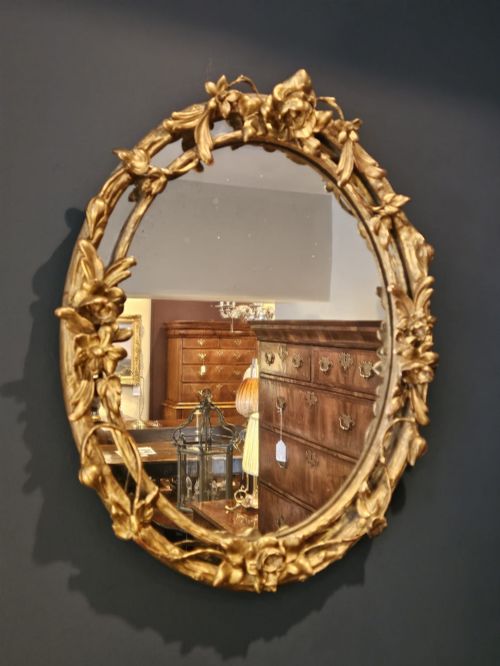
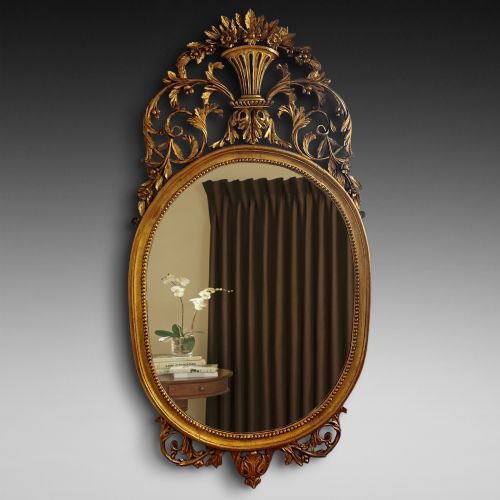
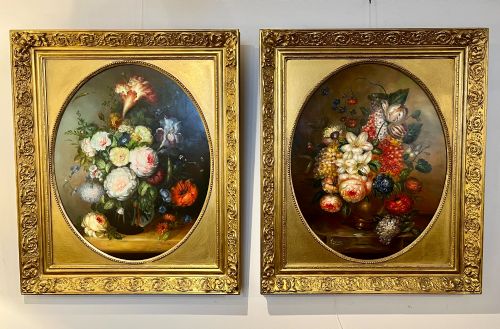
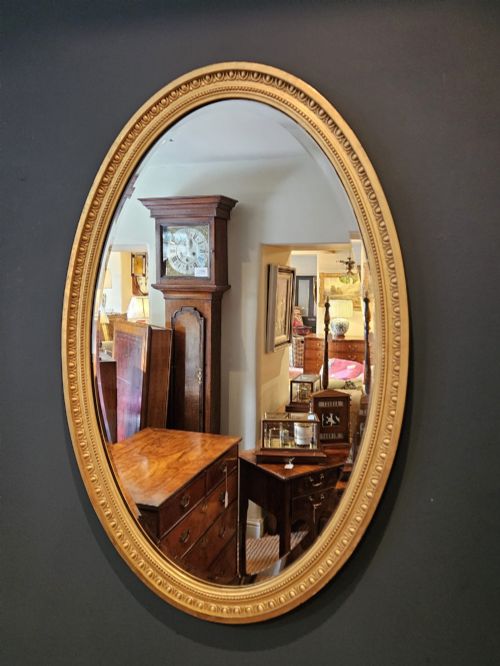
A gilded oval frame most commonly surrounds either a wall mirror or an oil painting, spanning periods from the seventeenth century through to the Edwardian era. These pieces appear in styles ranging from British Baroque and Georgian to Victorian gesso and French Louis XVI revival.
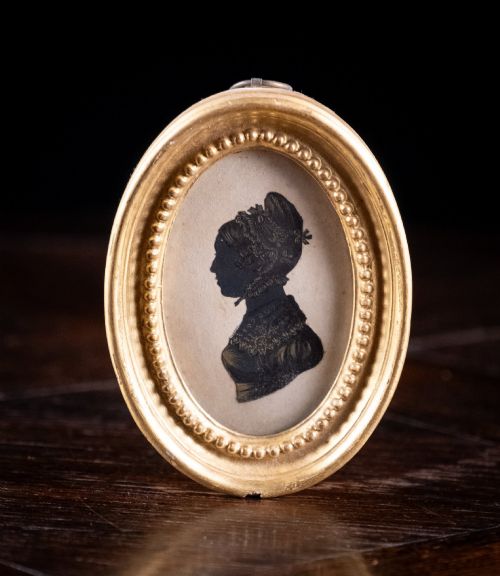
The wall mirrors vary from modest timber and plaster mouldings to large, highly decorative carved giltwood creations with vine leaf motifs. Meanwhile, the paintings housed within these curved borders are predominantly historical portraits, pastels, and silhouettes.
Materials and construction
The foundation of these frames typically relies on carved wood or moulded timber, layered with gesso to build up smooth surfaces and intricate relief details. Gold leaf or gilt finish is then applied over the prepared ground to achieve the characteristic metallic sheen.
Glass elements include hand-bevelled or flat mirror plates, alongside glazed panels protecting portrait miniatures and oil on canvas works. Bronze and plaster also appear in specific nineteenth-century and revival pieces, adding weight and distinct textural depth.
Listings span from the seventeenth century through to the 1920s, featuring timber, glass, gesso, and oil on canvas.
Assessing craftsmanship and condition
The distinction between ordinary and exceptional quality rests in the depth and crispness of the hand-carved ornament rather than a simple moulded finish. Superior examples display sharply defined foliage, scrollwork, or bead details that retain their original gilding without heavy over-painting.
The structural integrity of the timber joinery at the curved corners dictates longevity, alongside the preservation of the original glass or historical canvas contained within the border.
Sir Godfrey Kneller·Michael Dahl·Thomas Murray·John Scougall·Jacob Philipp Hackert·Thomas Beach·Pieter Borseler·Jeremiah Davison·Allan Ramsay·Arthur Percy Dixon
The Gilded Oval Frame Glossary
- Gesso
- A plaster-like mixture applied to wood frames to create a smooth surface for gilding. It is built up in layers before being carved or impressed with decorative motifs.
- Giltwood
- Timber that has been coated with gold leaf or a gold-coloured finish. This material forms the primary structure of many traditional decorative mirrors.
- Rococo
- An ornate design style popular in the eighteenth century and later revived, characterised by asymmetrical scrollwork, C-curves, and naturalistic plant forms.
- Silhouette
- A solid dark profile portrait, typically cut from paper or painted on card and glass, frequently housed in small oval surrounds.
- Baroque
- A flamboyant artistic style spanning the seventeenth and eighteenth centuries, known for dramatic proportions, heavy relief carving, and rich ornamentation.
Gilded Oval Frame: Frequently Asked Questions
How do I hang a heavy antique mirror safely?
Heavy frames require fixings secured directly into wall studs or masonry using appropriate weight-rated brackets. The original wooden backing and hanging rings should be inspected to ensure they can support the vertical load.
Professional mirror hangers often recommend French cleats for large pieces to distribute the weight evenly across the structure.
Can I clean the glass inside an old frame?
Cleaning should be approached with caution to avoid moisture seeping behind the glass plate or damaging vulnerable gesso edges. Use a slightly damp cloth rather than spraying liquid directly onto the surface.
Keep moisture entirely away from unsealed canvas edges and historical paper silhouettes mounted within the frame.
How do I distinguish Georgian from Victorian frames?
Georgian frames usually exhibit hand-carved wooden details with finer proportions and traditional gesso work over pine or hardwood. Victorian examples often utilise heavier plaster compositions and machine-moulded components with deep ornamentation.
Examining the corner joints and the composition of the underlying material reveals the manufacturing methods characteristic of each era.
What is the best way to light a framed oil painting?
Low-heat LED picture lights mounted directly above the frame help illuminate the canvas without causing thermal damage to the oil paint or aged varnish. Positioning the fitting at the correct angle prevents harsh glare on the glazed surface.
Natural sunlight should be avoided to prevent fading on both the painted surface and the gilded finish.