




Bow Crest Wall Mirror
A bow crest wall mirror brings architectural elegance and classic French decorative flair to an interior scheme.
Bow Crest Wall Mirror
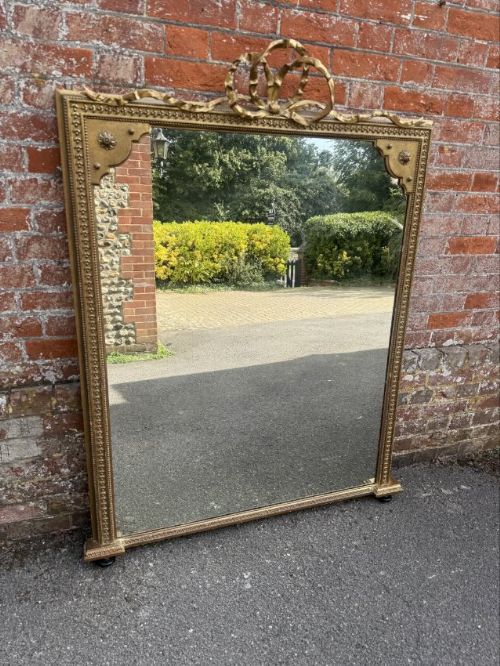
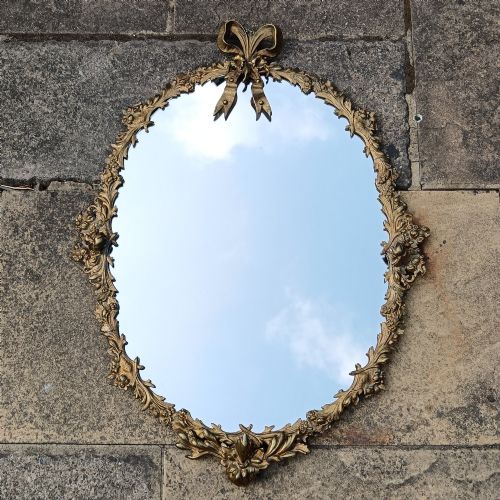
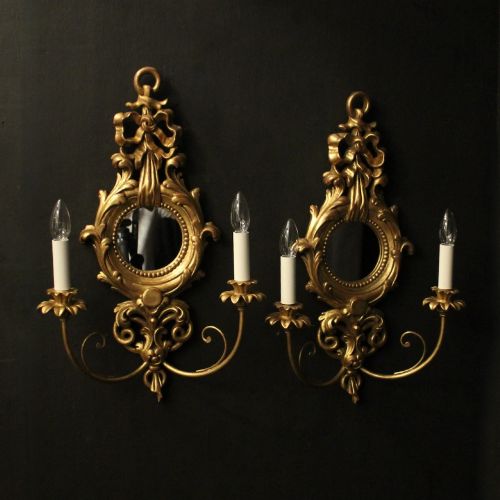
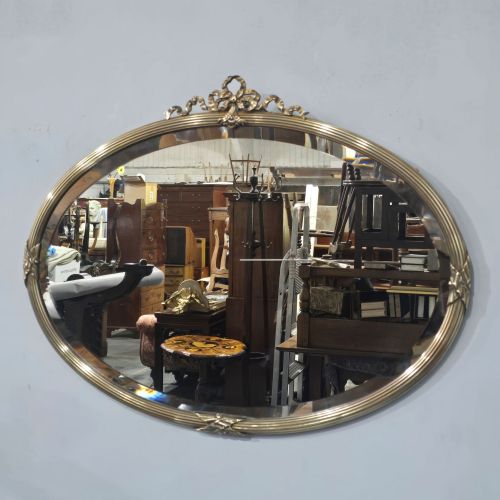
A bow crest wall mirror unites classical ornamentation with functional glass, focusing attention on a distinct tied ribbon or bow motif at the top of the frame. These decorative looking glasses take several distinct forms on this page, ranging from grand Victorian overmantle mirrors to smaller oval wall mirrors and pairs of twin arm girandoles.
The aesthetic leans heavily on historical revivals, particularly Louis XVI, Adam, and Regency styles. Buyers searching for a bow crest wall mirror will most frequently encounter 19th-century pieces, including Victorian and Edwardian examples featuring traditional giltwood or brass frames.
How they were made
Makers constructed these frames using timber enriched with gesso to hold crisp, intricate relief ornament, which was then gilded. Gilt bronze and brass also appear in the evidence, offering alternative metallic finishes for the structural surrounds and decorative bow details.
Glazing techniques included both standard mirror glass and bevelled glass plates set within oval or rectangular formats. Wall sconces and girandoles incorporated metal arms to hold candles alongside the central reflecting surface.
Bow Crest Wall Mirror Retail Price Guide 2026
Typical asking prices for bow crest wall mirror among the pieces listed under this phrase on Sellingantiques today, from the lower quarter to the upper quarter. They describe what is for sale here now, not the wider market.
Listings feature 19th-century and Victorian periods alongside Edwardian examples, spanning materials from giltwood and gesso to brass and gilt bronze.
What varies in quality
The definition and depth of the carved or moulded gesso relief dictate the visual success of the piece, particularly around the delicate folds of the ribbon bow cresting. Crisp detailing separates finer atelier work from simpler commercial production.
The preservation of the original gilding and the clarity of the mirror glass plates influence the integrity of the object. Overmantle scales and paired girandoles demand greater structural stability in their joints and arm fixings.
The Bow Crest Wall Mirror Glossary
- Giltwood
- Timber coated with gold leaf or metal leaf over a prepared gesso ground. This traditional finish provides a warm reflective sheen.
- Gesso
- A plaster-like mixture applied to wooden frame bases to create a smooth surface for carving or moulding relief decoration. It allows crisp, sharp details on ornamental crests.
- Girandole
- A decorative wall mirror fitted with one or more candle branches or arms. The candle light reflects directly into the room from the glass.
- Overmantle mirror
- A large horizontal mirror designed specifically to hang above a fireplace mantelpiece. These pieces often anchor the decorative scale of a reception room.
- Louis XVI Revival
- A decorative style drawing on French 18th-century classical restraint, straight lines, and symmetrical ornamentation. Bows and ribbons feature prominently in this vocabulary.
Bow Crest Wall Mirror: Frequently Asked Questions
Where should I hang a bow crest wall mirror?
These mirrors suit principal reception rooms, hallways, or above bedroom fireplace mantels where their decorative cresting can act as a focal point. Their vertical or oval proportions help draw the eye upward and enhance the sense of light in a space.
Ensure the wall construction safely supports the weight of giltwood and plaster frames, particularly larger Victorian overmantle versions.
How do I identify a Louis XVI style bow mirror?
Look for symmetrical framing, neoclassical motifs, and a carved ribbon bow element perched centrally at the top of the glass. These designs often employ oval formats and delicate beaded borders.
They emerged strongly during nineteenth-century revivals of French eighteenth-century aesthetics.
How do I care for antique giltwood frames?
Dust the gilded surfaces gently with a soft, dry brush to prevent accumulating debris in the recesses of the gesso ornament. Avoid using liquid cleaners or commercial polishes that can strip delicate gold leaf.
Keep the mirrors away from direct dampness and extreme temperature shifts to protect the underlying timber and plaster.