

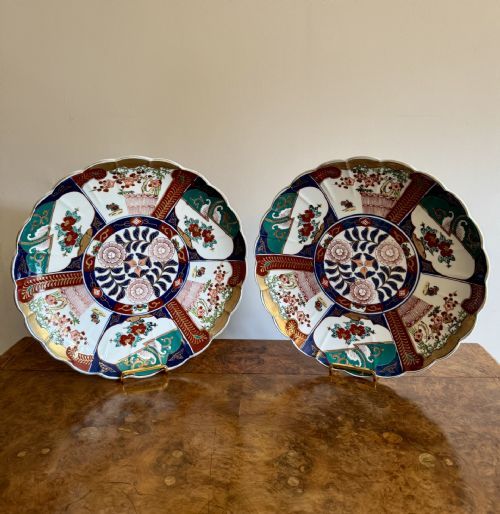


Gilded Imari Ceramic Platter
These gilded imari ceramic platters bring rich blue and iron red palettes alongside gleaming metal leaf into domestic spaces.
Gilded Imari Ceramic Platter
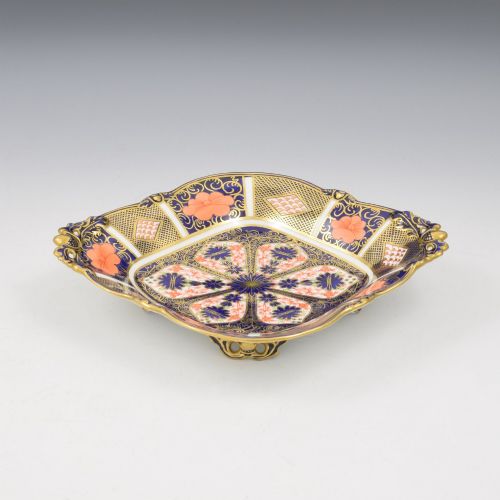
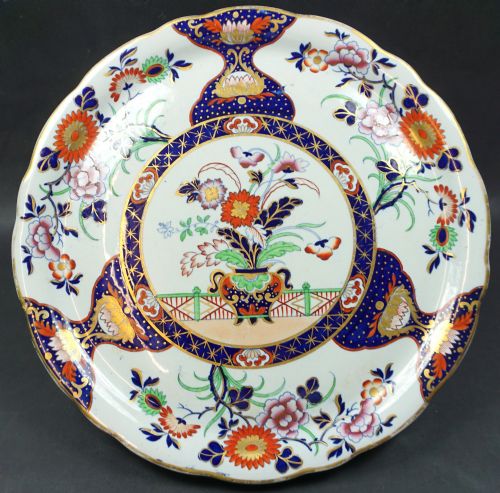
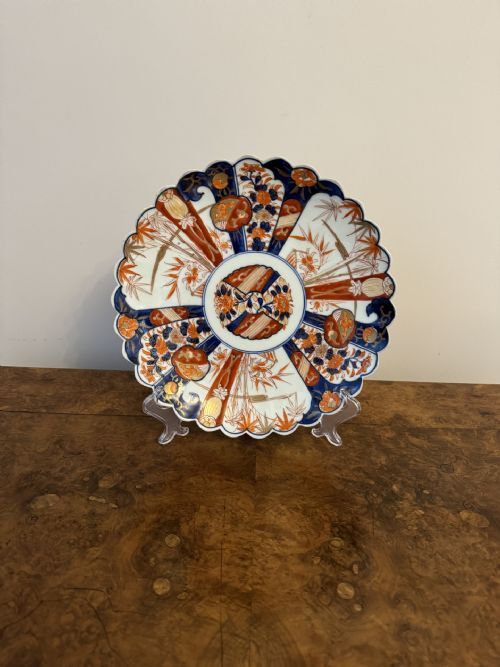
A gilded imari ceramic platter encompasses large chargers, decorative plates, and serving dishes created in distinct regional traditions. You encounter both Japanese imports from the Edo and Meiji periods and English interpretations produced by Victorian potteries.
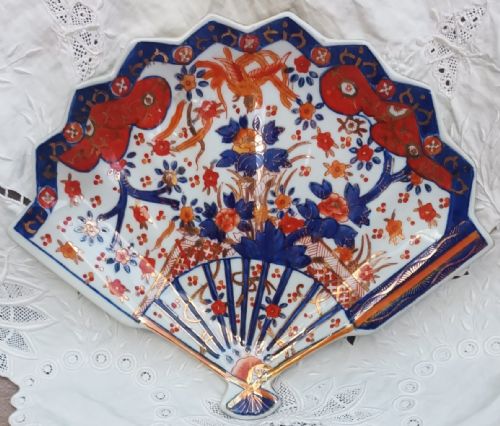
The Japanese examples display hand-painted floral and bird motifs across scalloped, octagonal, fan-shaped, and round porcelain bodies. English variations utilise earthenware, ironstone, and bone china to render similar decorative schemes upon traditional service forms.
Most items on this page date from the nineteenth century into the early twentieth century, reflecting a sustained domestic appetite for vibrant ceramic display pieces.
What varies in quality
The refinement of the hand-painted brushwork distinguishes standard production ware from superior examples. Precision in the application of the blue pigment, iron red enamel, and gold leaf determines the visual depth of the surface.
Structural complexity in the ceramic body, such as scalloped edges, octagonal facets, pierced rims, or unusual shapes, requires greater technical skill from the potter.
The listings span porcelain, ironstone, and earthenware, incorporating materials such as enamel, glaze, and gold leaf.
Hicks and Meigh·Royal Crown Derby·Mintons
The Gilded Imari Ceramic Platter Glossary
- Imari
- A style of ceramic decoration originating in Japan featuring a distinctive palette of underglaze blue and iron red, frequently accented with gold. English potteries later adopted this visual vocabulary for their own ironstone and porcelain services.
- Charger
- A large ornamental plate utilised primarily for presentation or serving during formal meals. These wide vessels provide a generous surface area for intricate hand-painted compositions.
- Meiji Period
- The era in Japanese history spanning from 1868 to 1912, noted for porcelain production geared towards international export markets. Pieces from this time often exhibit confident brushwork and vibrant enamel colours.
- Ironstone
- A durable type of earthenware patented in the nineteenth century to imitate porcelain. It offered sturdy practical utility while supporting rich polychrome and gilded decoration.
- Enoch and Meigh
- Historical English ceramic manufacturers noted for producing decorated tableware during the nineteenth century. Their pieces demonstrate the translation of Asian motifs into domestic earthenware services.
Gilded Imari Ceramic Platter: Frequently Asked Questions
How do I hang a heavy charger safely?
Large chargers require purpose-built brass or coated wire wall hangers that distribute the weight evenly across the base and rim. Ensure the fixing is secured directly into wall studs or appropriate masonry anchors.
Avoid spring-clip hangers with excessive tension that might chip the ceramic edges over time. Check the stability of the mount periodically to keep the piece secure.
Can I use these plates for serving food?
While these platters were originally designed for culinary presentation, antique pieces with delicate overglaze enamels and gold leaf are best reserved for display. Modern detergents and cutlery can wear away the historic surface decoration.
Dry dusting with a soft cloth is sufficient for routine maintenance. Hand washing in tepid water without soaking should be employed only when strictly necessary.
How do I distinguish Japanese Imari from English Imari?
Japanese examples are typically formed from true porcelain and exhibit body characteristics specific to the Edo and Meiji periods. The clay body and glaze texture differ from the ironstone and bone china utilised by nineteenth-century English factories.
English pieces often carry maker marks or pattern numbers associated with domestic potteries. Examining the foot ring and weight provides further clues regarding origin.
What periods are most common for these ceramics?
The listings on this page concentrate heavily on the nineteenth century, spanning the Victorian era and the Japanese Meiji period. Production extends into the early decades of the twentieth century with later porcelain and earthenware items.
Stylistic shifts between early nineteenth-century earthenware and later Meiji porcelain reflect changing international trade patterns and manufacturing techniques.