



Victorian Imari Plates
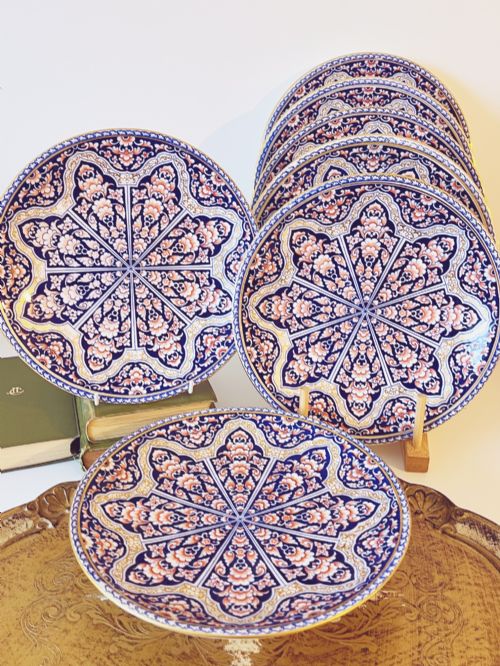
Victorian Imari plates bring bold palettes of cobalt blue and rust red to the table, pairing English ceramic forms with Japanese decorative influence.
Victorian Imari Plates
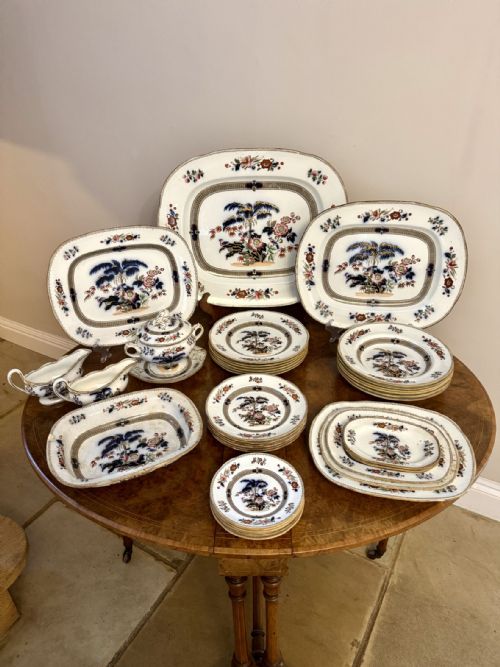
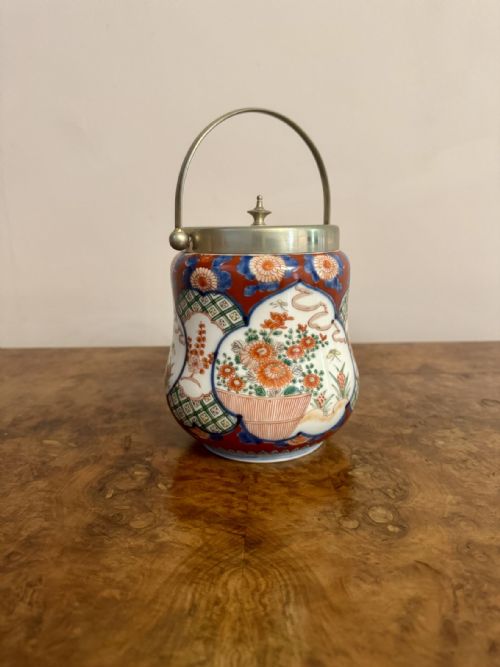
When searching for victorian imari plates, collectors encounter nineteenth century ceramics that appropriate traditional Japanese motifs onto English earthenware, ironstone and porcelain bodies. The examples met on this page range from individual decorative plates and large chargers to expansive dinner services and dessert sets produced during the Victorian era.
The aesthetic bridges domestic utilitarian dining ware and vibrant display pieces designed to catch the eye in a Victorian interior. While some pieces originate directly from Japanese export production of the period, British potteries readily adopted the palette to satisfy nineteenth century taste for exotic goods.
Materials and construction
The pieces recorded on this page rely on durable ceramic bodies such as ironstone, earthenware and porcelain, glazed to provide a smooth ground for decoration. Manufacturers applied rich enamel pigments alongside gold leaf highlights to achieve the characteristic depth and sheen associated with the style.
Firing techniques allowed cobalt blue underglazes to combine with overglaze iron red and gilt details, fixing the complex patterns permanently to the ceramic surface. Ironstone bodies offered the necessary strength for heavy daily dining sets and large serving platters.
Listings feature items from the nineteenth century, including specific dates from 1800, 1845, 1850s, 1880, 1881, 1882 and 1900.
Judging quality in the range
Quality separates through the precision of the hand-painted enamel work and the crispness of the underglaze cobalt transfer or brush application. Finer specimens display a careful balance between the cobalt blue, iron red and gilding without crowding the ceramic ground.
The weight, resonance and uniformity of the ironstone or porcelain body also indicate the standard of production, alongside the clarity of period date marks or maker stamps pressed into the ceramic.
Royal Crown Derby·Wedgwood·John Ridgway·Mintons·Masons
The Victorian Imari Plates Glossary
- Imari
- A style of ceramic decoration originating from Japan, defined by a palette of cobalt blue, iron red and gold, which British potteries eagerly imitated during the nineteenth century.
- Ironstone
- A heavy, durable type of earthenware patented in the nineteenth century that resists chipping and served as a sturdy base for dinner services and large platters.
- Charger
- A large ornamental plate intended primarily for display on a sideboard or wall rather than for serving food at the dining table.
- Enamel
- Opaque glass-like paint applied over the fired glaze of a ceramic piece and subsequently fixed in a second, lower-temperature kiln firing.
- Comport
- A raised dish or bowl elevated on a pedestal, traditionally used to serve fruit or sweetmeats as part of a Victorian dessert service.
Victorian Imari Plates: Frequently Asked Questions
What are victorian imari plates?
These are nineteenth century ceramic plates decorated in the distinctive Japanese Imari palette of deep cobalt blue, rust red and gilt highlights.
British potteries and Japanese workshops produced them across the Victorian period for both functional dining use and decorative display.
How were they used?
Victorian households utilised them as part of large dinner services, dessert sets and meat serving platters during formal meals.
Larger chargers and display plates were also hung on walls or stood on sideboards to showcase their vibrant colours to guests.
How do I care for them?
Wash these antique ceramics gently by hand in warm water using mild soap, avoiding abrasive scrubbers that might wear the gold leaf.
Keep them away from modern dishwashers and sudden thermal shocks to protect the fragile overglaze enamels from damage.
How are periods told apart?
Examine the ceramic body, weight and any factory stamps or date marks pressed into the underside of the earthenware or ironstone.
Mid nineteenth century pieces often display heavier ironstone construction, while later Victorian and turn-of-the-century examples reflect evolving aesthetic tastes.