




Gilded Floral Tray
A gilded floral tray brings painted blooms and bright metal leaf to a table, combining utility with nineteenth-century decorative polish.
Gilded Floral Tray
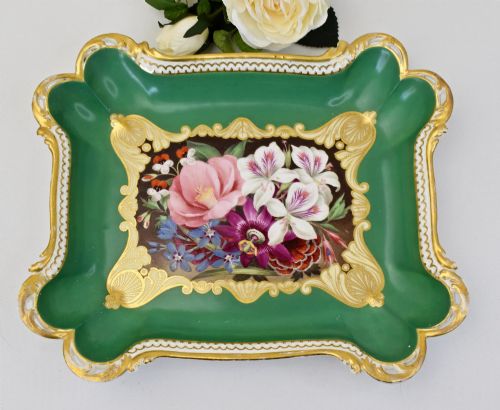
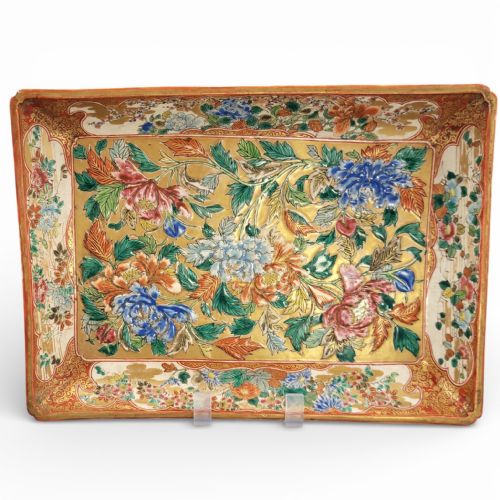
A gilded floral tray encompasses various serving dishes, cabinet pieces, and decorative plates created across the nineteenth and early twentieth centuries. These items appear in materials such as porcelain, papier-mâché, and toleware, adorned with painted floral motifs and metallic highlights.
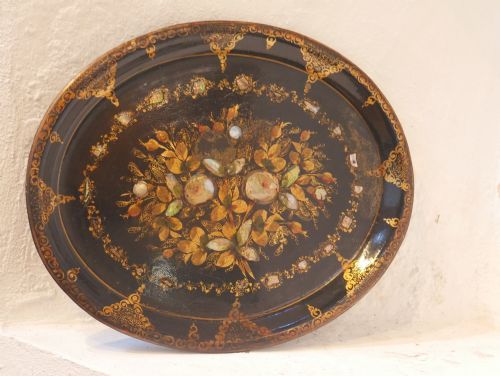
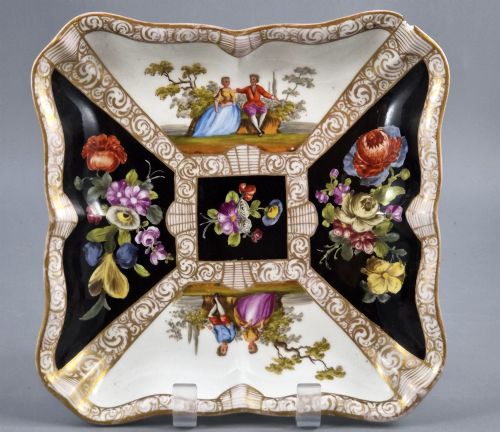
The most frequent examples on this page date from the Regency and Victorian periods, often taking the form of oval or rectangular serving trays and shaped cabinet dishes. Makers applied gold leaf and gilding to accentuate painted bouquets, floral sprays, and scenic borders.
Buyers encounter everything from large papier-mâché tea trays to delicate porcelain cabinet dishes from English and continental factories. Each piece balances functional capacity with ornamental surface design.
How they were made
Papier-mâché trays started as compressed paper pulp or layered paper sheets treated with size and varnish, then shaped and lacquered to form a rigid base. Artisans applied paint and gold leaf by hand to the hardened surfaces.
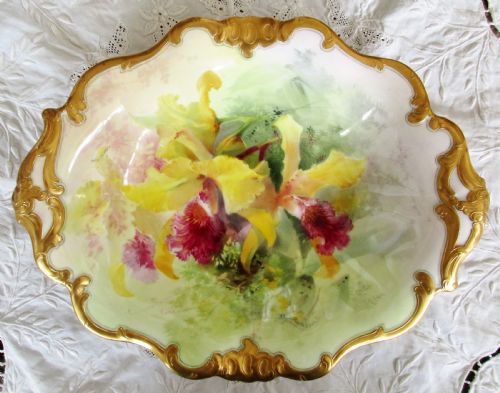
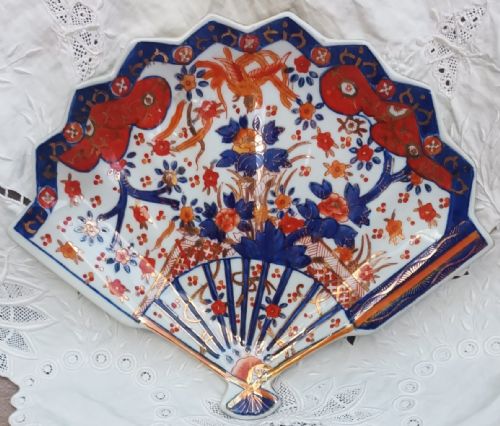
Porcelain dishes and trays underwent high-temperature firing before receiving hand-painted enamel decoration and gilt edges. Factories utilised moulded blanks, applying floral transfers or direct brushwork alongside gold leaf highlights.
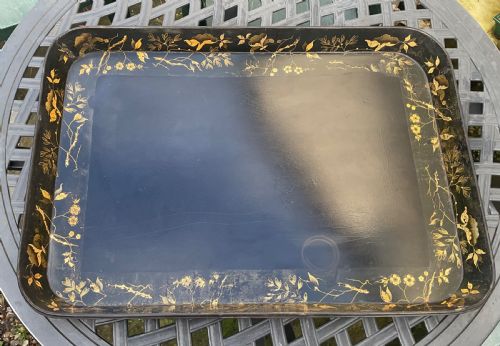
Toleware items relied on shaped sheet metal coated in dark lacquers or paint, finished with gilt embellishments and painted botanical details.
Even a humble desk accessory from the George V era manages to sneak in some gold leaf.
What varies in quality
The precision of the hand-painted floral decoration dictates much of the distinction between standard and superior pieces. Fine examples display detailed botanical rendering and careful brushwork rather than mechanical uniformity.
The application and preservation of the gold leaf or gilding mark the grade of a tray or dish. Intact metal leaf with burnished highlights separates exceptional items from those with worn or flat surfaces.
Meissen Porcelain·Royal Doulton·Doe and Rogers·Minton·Carlton Ware·Paul Müller Selb·Royal Worcester·Kutani·Ridgway·Spode·Sevres·Wedgwood·Royal Crown Derby
The Gilded Floral Tray Glossary
- Gilding
- The application of gold leaf or powdered gold to a surface. It provides the metallic sheen seen along the rims and borders of these trays.
- Papier-mâché
- A composite material made from paper pulp or layered paper mixed with glue and resin. It offered a lightweight yet durable base for Regency and Victorian serving trays.
- Toleware
- Painted or lacquered sheet metal items produced in various forms. These pieces often feature dark backgrounds contrasted with gilt embellishments.
- Cabinet dish
- An ornamental plate or tray intended for display rather than heavy dining use. They frequently feature detailed painted scenes or botanical studies.
- Bespoke
- Made to individual order. This term occasionally applies to custom factory commissions.
Gilded Floral Tray: Frequently Asked Questions
How do I clean a papier-mâché tray?
Dust gently with a dry, soft cloth to protect the surface lacquer and delicate gilt work. Moisture can damage the paper core and lift the painted decoration.
Avoid chemical cleaners, abrasive sponges, and immersion in water entirely. Preservation relies on dry maintenance.
Were these trays used for serving tea?
Larger papier-mâché and toleware trays accommodated heavy teapots, cups, and silver service sets during the Regency and Victorian eras. Their sturdy composition supported daily domestic routines.
Smaller porcelain dishes served decorative functions on cabinets or held calling cards in parlours. Form usually followed the intended household purpose.
How can I tell a Regency tray from a Victorian one?
Regency pieces often exhibit neoclassical restraint with dark lacquered grounds and refined gilt borders. Papier-mâché examples from this era tend towards deep oval shapes.
Victorian items frequently introduce bolder polychrome florals, Rococo revival shaping, and varied pastel grounds. Manufacturing stamps on porcelain backs also help confirm dating.
What is toleware?
Toleware refers to enamelled or lacquered metalware, typically fashioned from tinned sheet iron. Makers applied dark paint finishes and gold leaf decoration to create durable household objects.
These pieces mimic the aesthetic of lacquered papier-mâché while offering a rigid metallic structure. They appear as bowls, trays, and serving dishes.