
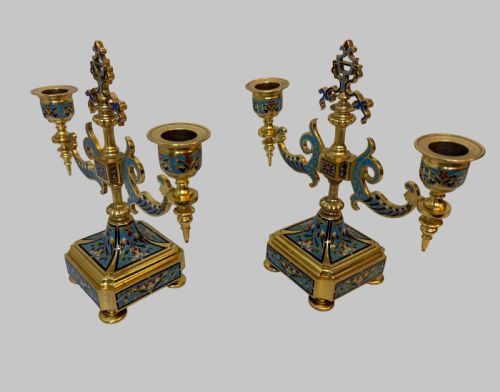


Gilded Candle Stand
A gilded candle stand brings warmth and metallic sheen to a room through centuries-old craftsmanship.
Gilded Candle Stand
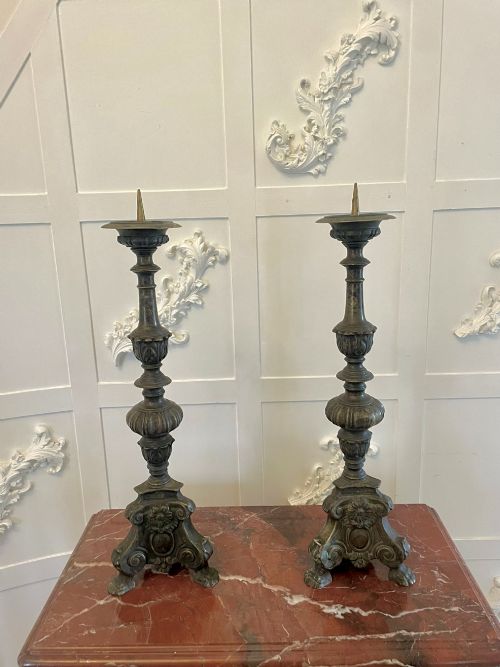
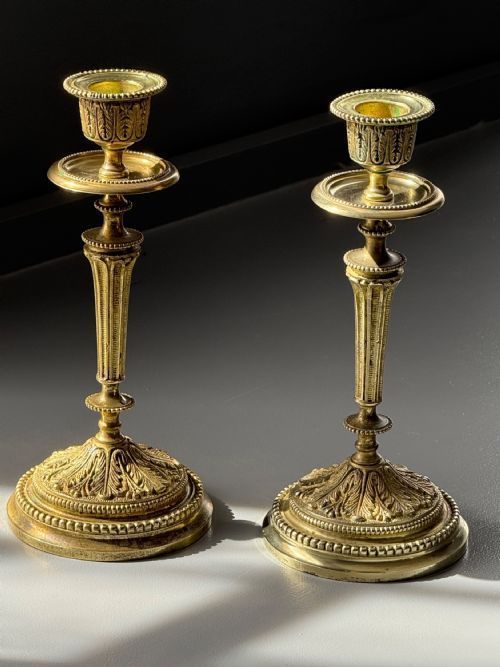
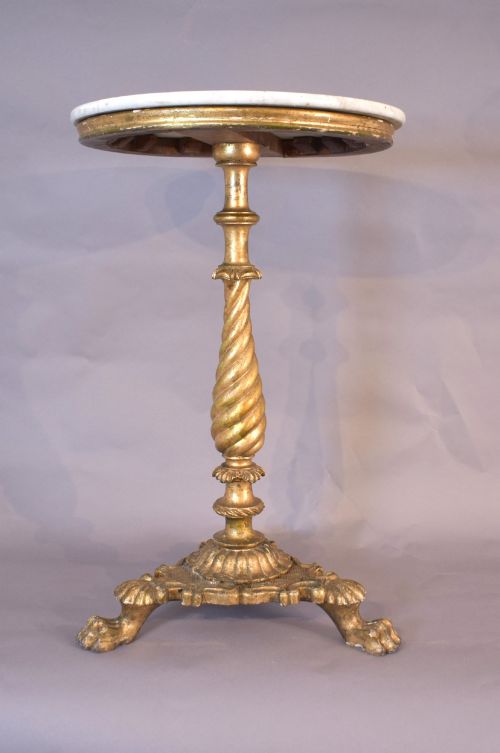
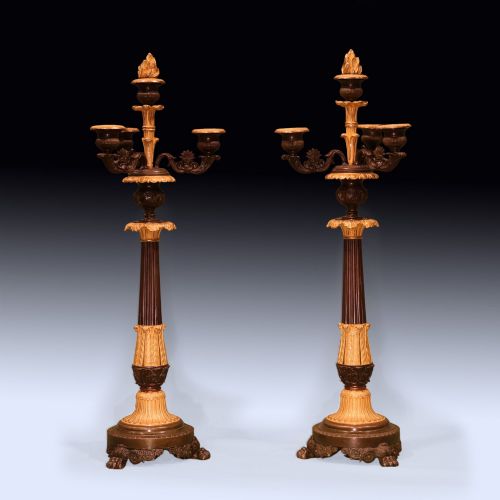
A gilded candle stand encompasses tall torchères, floor-standing prickets, and smaller table candleholders finished in gold leaf, giltwood, or ormolu. These pieces appear in periods ranging from the eighteenth century through the Victorian era and into the early twentieth century.
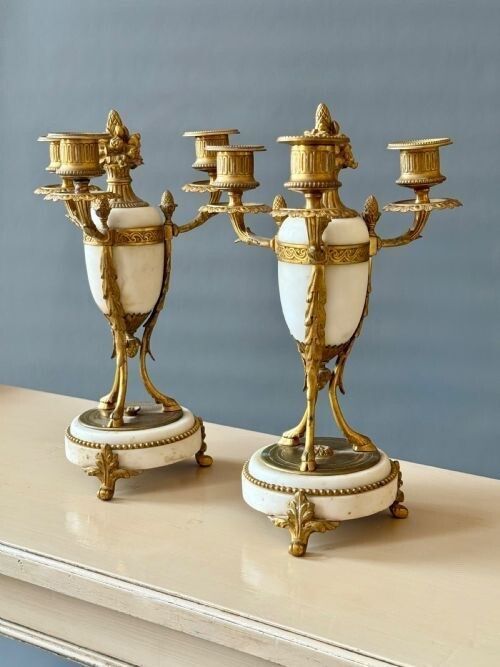
The materials and forms vary widely, from carved wooden standards to cast bronze candelabra mounted with marble or onyx. Buyers frequently encounter French Neoclassical, Louis XVI, and Baroque revival designs among the current selections.
How they were made
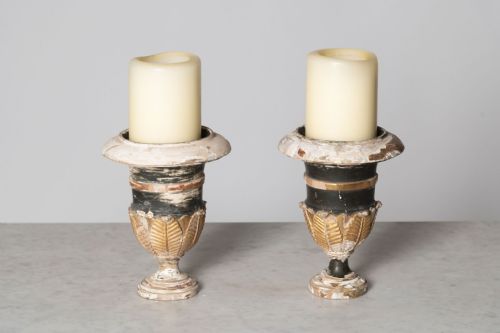
Craftsmen built these stands using carved wood, gesso, and cast metals such as bronze, brass, and ormolu. Gilding was applied using thin layers of gold leaf over gesso or through mercury-gilding processes on bronze elements.
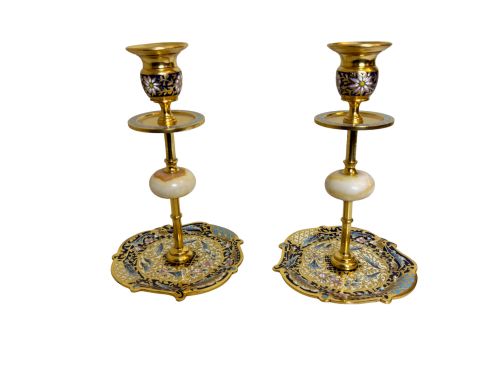
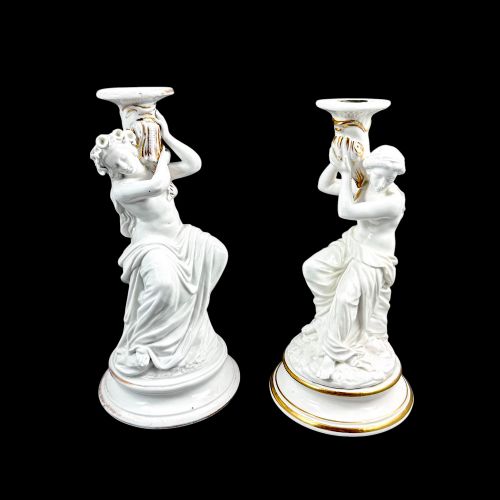
Many examples incorporate secondary materials like white marble bases, porcelain figures, or champlevé enamel details. Joinery on wooden torchères and standard lamps relies on traditional turning and carving techniques.
Several stands feature carved wooden Blackamoor and cherub figures holding aloft candle arms from the nineteenth century.
What varies in quality
The distinction between standard and superior pieces lies in the crispness of the metal chasing and the depth of the wood carving. Finer casts exhibit sharp relief work and smooth finishing on hidden undersides.
The preservation of the original gilding surface dictates much of the standing value. Pieces retaining their genuine aged gold leaf or ormolu without excessive modern over-painting demonstrate superior historical integrity.
The Gilded Candle Stand Glossary
- Ormolu
- Finely ground high-carat gold applied to a bronze base using a mercury amalgamation technique. This process creates a durable, rich metallic lustre.
- Gesso
- A plaster-like mixture applied to wood surfaces to prepare them for gilding. It provides a smooth base for carving intricate details.
- Pricket
- A sharp metal spike on a candlestick designed to secure a candle from the base. These are frequently found on church and altar candle stands.
- Torchère
- A tall ornamental stand or candlestick designed to hold a light source. They are often carved from wood or cast in metal.
- Champlevé
- An enamelling technique where troughs are dug into a metal surface and filled with vitreous enamel. The surrounding metal partitions remain visible.
Gilded Candle Stand: Frequently Asked Questions
What is a torchère stand used for?
A torchère serves as an elevated support for candles or lighting fixtures, designed to illuminate dark corners of a room.
In historic interiors, these tall stands positioned light higher off the ground to distribute illumination more effectively across a space.
How do I clean a gilded candle stand?
Dusting requires only a very soft, dry brush to prevent disturbing delicate gold leaf or aged ormolu surfaces.
Water and chemical cleaning agents should be avoided entirely, as moisture strips thin metallic finishes from wood and gesso.
Are these stands suitable for modern candles?
Many antique candle stands accommodate standard taper candles, though older pricket styles require candles with a pierced base.
Measurements vary across nineteenth-century and eighteenth-century pieces, so checking the socket diameter ensures a proper fit.
How can I tell a Louis XVI style stand apart?
Louis XVI style pieces display straight lines, symmetrical neoclassical motifs, and restrained geometric ornamentation.
This aesthetic contrasts sharply with the earlier curved asymmetry found in Rococo revival examples from the same era.