




French Giltwood Pedestal
A French giltwood pedestal brings gilded warmth and architectural presence to a room, holding a bust, urn or lamp with effortless theatre.
French Giltwood Pedestal
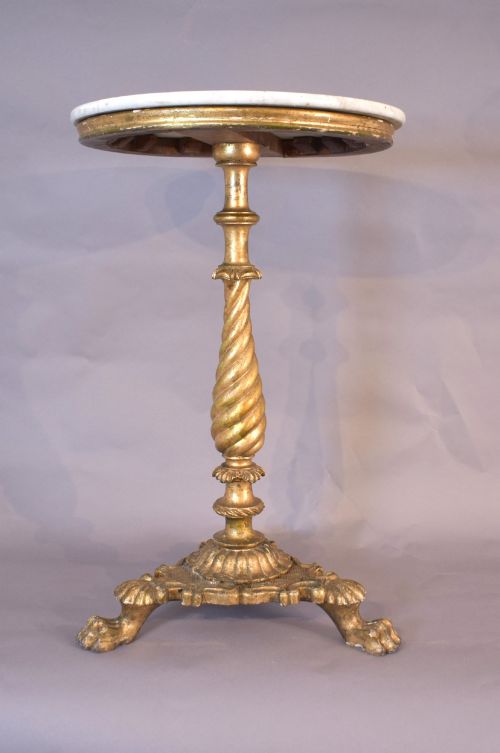
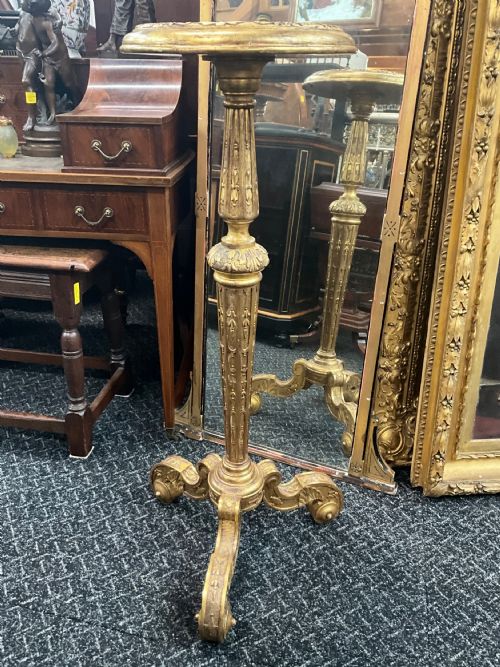
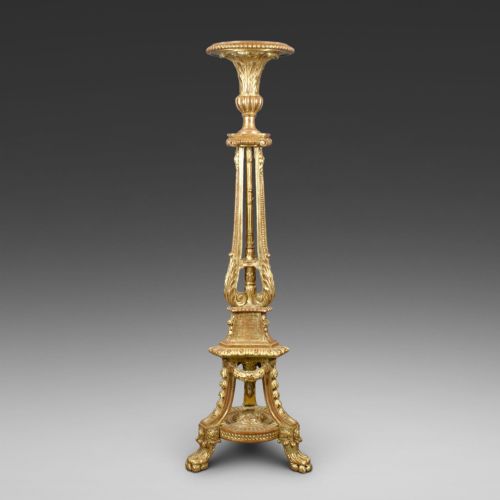
A french giltwood pedestal serves as an elevated support for display, taking the form of torchères, columnar stands and tripod tables. These objects originate across the eighteenth, nineteenth and early twentieth centuries, drawing on French Neoclassical, Louis XVI and Empire design vocabulary.
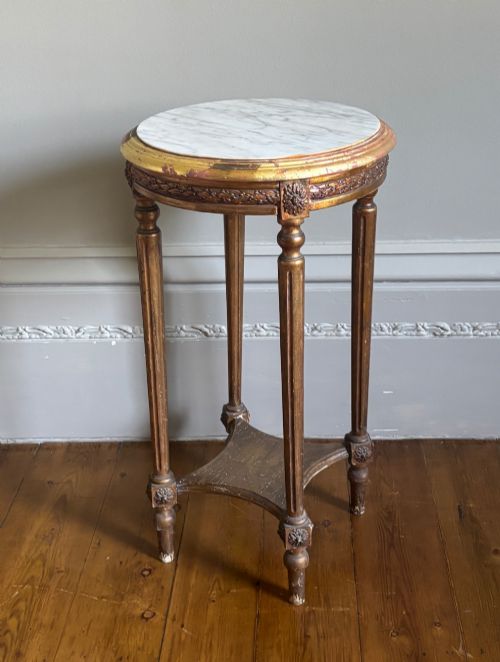
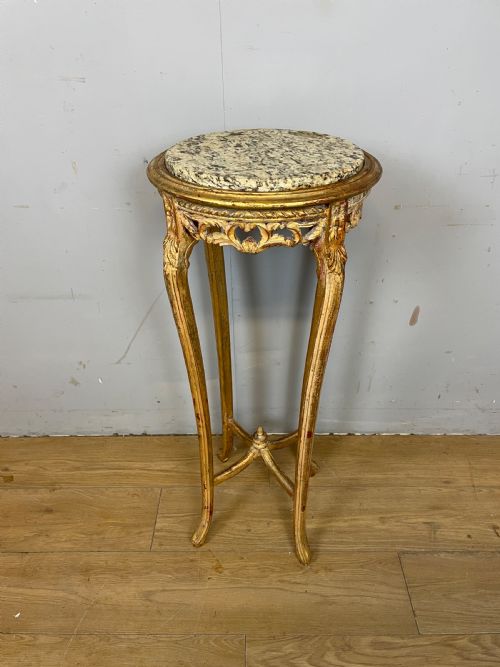
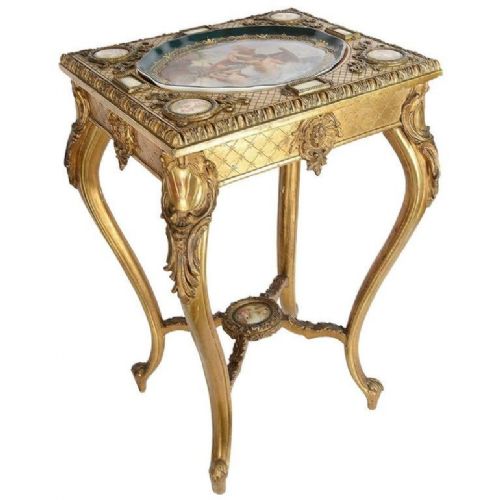
The version most commonly met on this page combines a carved giltwood or gesso frame with a marble top, often circular or triform in shape. They function as plant stands, urn supports and occasional tables within traditional and country house interiors.
How they were made
Carved wood and gesso form the structural base of these stands, providing a receptive surface for the application of gold leaf or paint. Artisans carved intricate flower mouldings, fluting and structural supports directly into the timber before applying the metallic finish.
Insets of white or coloured marble and onyx provide contrasting, durable tops designed to hold heavy decorative objects. These stone slabs sit flush within the gilded wooden rims, secured by the precision of the underlying joinery.
Listings span the eighteenth to the early twentieth century, featuring styles from Italian Baroque to Edwardian revival.
What varies in quality
The depth and crispness of the carved detail separate standard production from superior examples, particularly where acanthus leaves, flower mouldings and fluted columns meet. Hand-carved elements display a sharper relief and more fluid movement than pieces relying heavily on moulded gesso over softer timber bases.
The quality of the gilding itself determines the piece's visual resonance, with genuine gold leaf ageing with a softer, warmer patina than modern metallic paints. Additionally, the selection and thickness of the fitted marble or onyx top reflect the original maker's investment in materials.
The French Giltwood Pedestal Glossary
- Giltwood
- Timber coated with gold leaf or powder over a prepared gesso ground. This finish provides the characteristic metallic sheen seen across French furniture of the period.
- Torchère
- A tall, slender stand designed to hold a light source, plant or decorative urn. They frequently feature tripod bases and elevated platforms.
- Gesso
- A plaster-like mixture applied to wood surfaces to create a smooth base for gilding and fine carving. It allows artisans to shape intricate decorative reliefs.
- Triform
- Having a three-sided or triangular plan, commonly found in the bases and tabletops of nineteenth-century stands. This configuration offers stability to tall, slender furniture.
- Guéridon
- A small French table supported by one or more central columns, often utilised for display or as an occasional piece.
French Giltwood Pedestal: Frequently Asked Questions
How were pedestals used originally?
These stands functioned primarily to elevate candelabra, porcelain urns, sculptures and large floral arrangements in reception rooms.
By lifting decorative objects to eye level, they added vertical rhythm and reflected candlelight through their gilded surfaces.
Can these stands support heavy items?
Most pieces with solid wood frames and fitted marble or onyx tops possess considerable structural stability for displaying heavy table lamps or bronze sculptures.
Tripod designs and triform bases distribute weight effectively, though care should be taken with slender antique joints.
How do I identify the period?
Dating relies on stylistic clues such as the severity of Neoclassical lines, the extravagance of Rococo curves or the restrained geometry of the Regency era.
Material composition, joinery techniques and the wear patterns on the gold leaf and gesso also help determine the age of the piece.
Where should I place a pedestal?
These pieces suit corners, blank wall spaces or flanking positions beside larger case furniture where vertical interest is required.
They perform well carrying plants, lamps or collections of small ceramics, benefiting from placement away from heavy household traffic.